
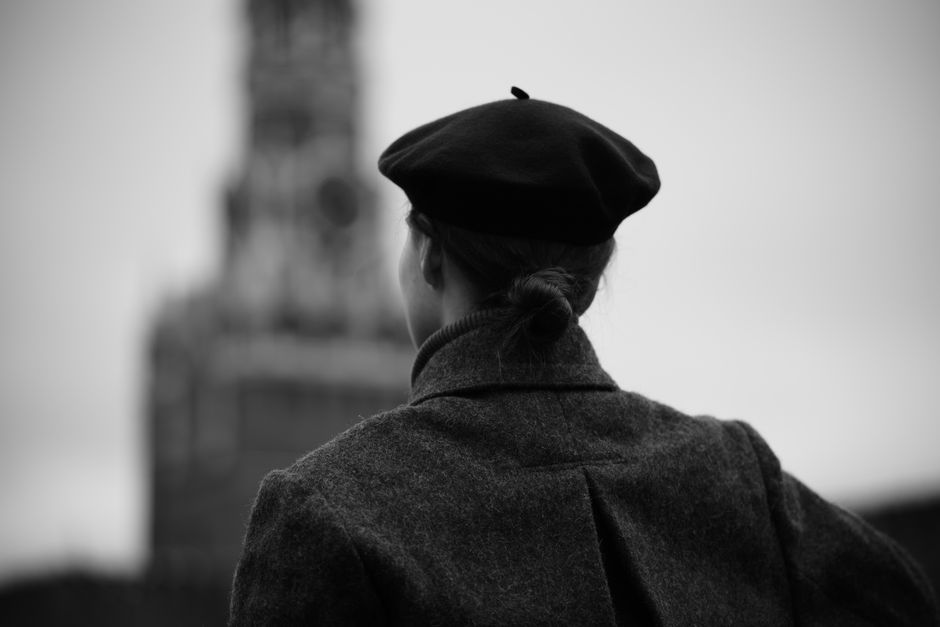
A wool beret, loose hair, and a simple coat can make an ordinary cold-day outfit feel considered without requiring much else. The appeal is in the balance: the hat adds a soft shape near your face, your hair keeps the look relaxed, and the coat gives everything a clean outline. If a beret has ever felt a little theatrical on you, small adjustments usually help more than adding another accessory. Start with clothes you already enjoy wearing, then work on where the beret sits and how your hair falls beneath it.
Give the beret a quiet background
A plain coat makes this combination easier to judge. Look for an uncluttered front, straightforward buttons, and a shape that feels comfortable over your usual clothes. A straight coat, a gently fitted style, or a relaxed single-breasted cut can all work. The important detail is having enough visual space around your head and shoulders for the beret to register.
You do not need a particular coat length. A shorter coat gives the combination an everyday, practical feeling, while a longer one creates a more continuous line beneath the hat. Put on the coat before adjusting the beret. A hat position that looks balanced over a thin top can feel quite different once your shoulders have the extra presence of outerwear.
Set the band before shaping the crown
Begin by opening the beret gently and placing the band around your head. Let it sit securely without pulling it tight. The front edge can rest above your eyebrows, leaving some forehead visible, but there is no universally flattering measurement. Move it slightly higher or lower until your eyes feel comfortably framed and the band does not press against your skin.
Once the band feels settled, use your fingertips to guide the soft crown to one side. Think of a small sideways drape rather than a dramatic diagonal. You can leave a little fullness on top or flatten it slightly, depending on the beret’s construction. Avoid repeatedly stretching the opening to make the crown behave; reposition the fabric above the band instead.
Check the view from the side
A beret can look pleasing from the front while bunching at the back. Turn sideways in the mirror and check that the crown follows a soft curve. If it forms an unwanted point, smooth that section gently. If the hat slips when you look down, reconsider the fit or placement. A comfortable beret should not need constant rescuing during a walk.
Let loose hair provide the softness
Arrange your hair in its usual part before putting the hat on. This helps you see where the beret naturally meets your hairstyle, instead of creating a new part around the hat. Leave the lengths free, then bring forward only the sections you want visible beside your face. You do not need equal amounts of hair on each side.
For a simple starting point, tuck one side behind your ear and leave the other loose. This opens a little space between the hat and coat without making the whole hairstyle look arranged. If you prefer both sides forward, separate the front sections gently so they do not form a solid curtain over the coat’s upper front.
Work with the volume you have
With finer hair, keep the band from sitting so low that it presses every visible section flat. A slightly higher placement can leave more of your natural shape showing. With thick hair or curls, choose a beret that accommodates your volume comfortably and settle it without forcing the hair underneath. Release any caught strands gently rather than pulling them against the band.
Long layers can fall over the coat, while shoulder-length hair may sit partly above it. Both are useful shapes. The goal is simply to see a little movement below the beret. There is no need to straighten curls, add waves, or disguise silver hair to make the combination feel polished.
Choose color by the effect you want
A beret close to your coat color creates a quiet, connected look. Charcoal with charcoal or brown with brown lets texture do much of the work, especially when your hair provides some contrast. The shades do not have to match exactly. Slight differences can keep the outfit from feeling overly coordinated.
A contrasting beret brings attention upward. Try a deep green hat with a gray coat, or a dark blue beret with a light neutral coat, using colors you already like near your face. Check the combination in daylight if possible. What matters is whether you enjoy the relationship between your hair, the hat, and the coat when they appear together.
If the beret is your strongest color, give it room to be the focus. A bag or shoe in a familiar neutral can finish the outfit without introducing another decision. Repeating the hat color elsewhere is optional; one deliberate accent is enough.
Keep the rest of the outfit familiar
The easiest way to feel comfortable in a beret is to pair it with everyday pieces. Straight trousers, a plain knit, and comfortable boots give it a natural setting. Dark denim and a simple sweater work just as well. Choose the trouser shape and footwear you would happily wear without the hat, then add the coat and beret as the finishing layers.
For a slightly dressier version, wear your plain coat over a knit dress with opaque tights and understated shoes. Let the loose hair soften the more continuous outfit underneath. You can change the mood through the clothes you already own, without assembling a themed look around the beret.
- For daytime errands: combine a straight coat, relaxed jeans, a plain sweater, and flat boots with a softly tilted beret.
- For a casual lunch: try a simple coat over straight trousers and a fine knit, leaving one side of your hair tucked back.
- For an evening plan: use a darker coat and an uncomplicated dress, allowing the wool hat and loose hair to add texture.
Make the final adjustments after getting dressed
Fasten your coat as you expect to wear it outside, put your bag on your shoulder, and look at the whole outline. Sometimes the beret needs only a small nudge once everything else is in place. If your face feels crowded, expose a little more forehead or move one front section of hair behind your shoulder. Change one thing at a time so you can see what helps.
Then test ordinary movement. Look down, turn your head, and walk around the room. Notice whether the hat stays comfortable and your hair falls freely. If the wool feels scratchy or the band leaves uncomfortable pressure, choose a different fit or fabric blend. Styling should not require putting up with irritation.
Before leaving, smooth the crown once and release any strands trapped at the edge. After that, let the outfit move. A little asymmetry and a few loose lengths suit the softness of wool. When the beret sits comfortably and the coat feels like something you would wear anyway, the combination becomes an easy part of getting dressed.