
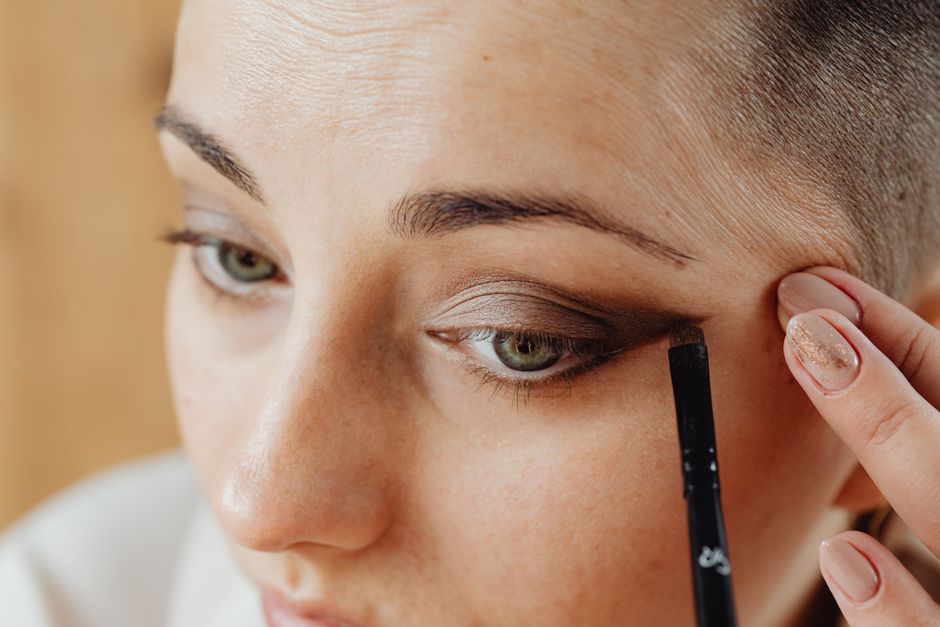
A soft wing gives your eyes a little extra definition without demanding a perfectly crisp flick. Powder eyeshadow is useful because you can build the shape gradually and soften an edge before it becomes too bold. The aim is a narrow sweep of color that extends from the outer lashes, then fades toward the tip. Whether you prefer barely visible makeup or a more defined eye for dinner, careful placement can make the result feel easy and wearable.
Choose a shadow that leaves room to adjust
Start with an eyeshadow intended for use around the eyes, in a shade that shows against your skin without creating more contrast than you want. Brown, taupe, charcoal, or a muted neutral can all work. Look at the color on your own skin rather than judging it only in the pan: a seemingly gentle brown may appear quite deep once applied.
A matte or softly satin finish makes it easier to see the wing’s shape. Very sparkly powder can scatter beyond the intended line, while a strongly reflective finish may make its outline harder to judge. Choose a texture that transfers in a thin, even layer. If the first touch looks faint, that is useful; you can add definition exactly where you need it.
Keep the tools small
A small angled brush with a reasonably firm edge gives you control over the base and tip. The bristles should feel comfortable against the skin, never scratchy. A separate clean detail brush helps soften the upper boundary without spreading dark color across the whole lid. Keeping the application brush and blending brush separate makes adjustments easier.
Prepare a comfortable, settled surface
Begin with clean hands and clean, fully dry brushes. Let your usual eye-area skincare settle before applying makeup; a slippery surface can make powder deposit unevenly. If you use an eye primer, apply a thin layer according to its directions. Avoid adding several extra layers just to achieve a completely blank canvas. The wing needs a surface that feels comfortable and allows controlled placement.
Patch test unfamiliar products according to their directions before using them near your eyes. Keep powder away from the waterline and do not apply it to irritated skin. Stop using a product if it causes discomfort. Persistent irritation or recurring eyelid skin problems are reasons to see a dermatologist rather than keep adjusting your makeup routine.
Map a short wing before adding depth
Sit with your elbow supported and your mirror at a comfortable height. Look straight ahead with your face relaxed. Identify where your upper lash line ends and imagine a small extension outward from that point. Start shorter than your final preference. A little extra length is easy to add, while a long powder trail can take more work to tidy.
The direction does not need to follow a rigid rule. Try an outward sweep with a slight upward tilt, then judge how it sits with your whole face. Avoid pulling the corner of your eye taut to draw the shape. Once you release the skin, the line may sit differently, and repeated tugging is unnecessary.
Place the faintest first mark
Pick up a little powder on the edge of your angled brush and tap off the excess away from your face. Lightly press the brush where you want the short tail to sit. Think of this mark as a guide, not the finished wing. Check both eyes at this stage, while changes are still simple.
Build the wing with small presses
- Anchor the outer lashes. Press shadow along the outer section of the upper lash line. Keep the color close to the lashes so the wing has a clear starting point.
- Connect to your guide. Use short touches to join the lash line to the tail. Avoid dragging a heavily loaded brush outward in one movement.
- Add a little width at the base. Place a small amount of shadow just above the outer lash line, connecting it to the tail in a narrow tapered shape.
- Keep the tip light. Use what remains on the brush to finish the end. The darkest powder should stay nearer the lashes, with less color toward the point.
Pause between additions and look straight ahead. A soft wing can disappear into a broad patch if you keep filling above it. You only need enough width to make the transition from lash line to tail look connected. Leave the inner part of the upper lash line bare or lightly defined, depending on how much overall definition you enjoy.
Soften one edge while preserving the shape
Use your clean detail brush to make tiny, gentle touches along the wing’s upper boundary. Work over the existing edge instead of sweeping outward into fresh skin. This reduces the appearance of a drawn line while keeping the direction visible. Leave the lower boundary relatively tidy so the wing still reads as a tapered extension.
If your brush has picked up dark pigment, wipe it on a clean tissue before continuing. Otherwise, each attempt to soften the shape may add more color. Stop while you can still identify the narrow tail. Softness comes from a gradual fade, not from blending until the entire outer corner is shaded.
Make small corrections without starting again
If the wing looks too heavy
First, stop adding powder. With a clean brush, gently soften the upper edge in place. If there is still too much color, remove a little with a small applicator lightly dampened with eye-makeup remover, following its directions. Work carefully away from the eye, let the area dry, and rebuild only the missing section. Avoid scrubbing back and forth.
If the two sides look different
Compare their overall direction and visual weight rather than demanding identical outlines. Natural differences between your eyes can make matching shapes look different when worn. Add a tiny touch where one wing needs more connection, then step back from the mirror. Continually extending the shorter side can leave you with two wings much longer than you intended.
If powder falls below the eye
Use less product on the next pass and favor pressing over sweeping. Gently lift loose fallout with a clean, soft brush without rubbing it into your base makeup. For future applications, doing the wing before under-eye concealer can make cleanup easier.
Finish with a deliberate stopping point
Look at the wing from a normal conversational distance. It should connect smoothly to the outer lashes, taper toward its end, and feel balanced with the rest of your makeup. Add mascara if you like, allowing it to dry before making further adjustments nearby. A neutral lid and your usual lip color are enough to let this small detail show.
Once the shape looks comfortable on your face, put the brush down. The appeal of a powder wing is its gentle finish: a defined outer corner, a softened boundary, and just enough length to make your eyes feel dressed.