
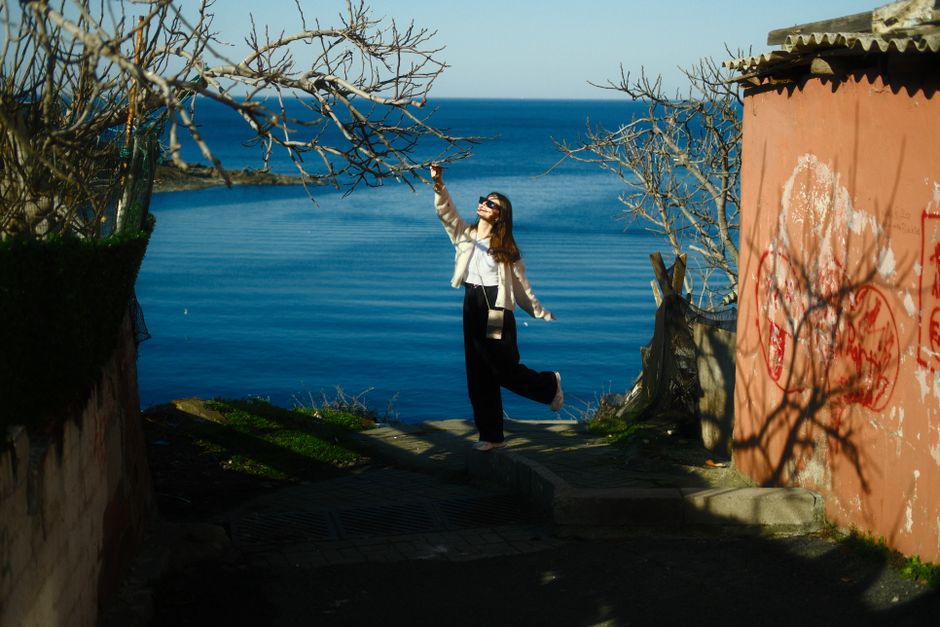
A tunic and narrow trousers can be one of the easiest combinations in your wardrobe: comfortable through the middle, neat through the legs, and adaptable to a busy day. The challenge is getting the two shapes to work together. Too much fabric above a very tight leg can make the outfit feel top-heavy, while an awkward hem can leave the trousers looking like an afterthought. Thoughtful choices about length, drape, and fit help the combination feel intentional without requiring a defined waist or high heels.
Start with trousers that hold a clear shape
Narrow does not have to mean skin-tight. Trousers that skim the thigh and taper gently toward the ankle provide a useful foundation. They create a distinct lower half while allowing you to sit, bend, and walk comfortably. A little space around the knee also keeps the outline from becoming a sharp contrast between a billowing top and a tightly wrapped leg.
Look at the trousers from the side as well as the front. Pulling across the thigh, twisting seams, or fabric catching behind the knees can interrupt an otherwise clean line. Choose the fit that settles smoothly on your body rather than sizing down to make the tunic look looser. If the waistband presses when you sit, try a different rise or cut.
Give the fabric enough substance
A softly structured woven fabric or a substantial stretch knit usually sits well beneath a tunic. Very thin jersey can cling and make the outfit feel closer to loungewear, especially under a casual cotton top. If you prefer softer trousers, check that they stay opaque when you bend and that pocket bags do not create distracting patches beneath the fabric.
Find the tunic hem that works on you
There is no single correct tunic length. The useful question is how much trouser remains visible beneath it. A top ending around the upper or middle thigh gives a different balance from one approaching the knee. As the tunic gets longer, the visible section of trouser becomes more important to the overall shape.
Try the outfit with your intended shoes, then temporarily fold the tunic hem upward while standing in front of a full-length mirror. This makes it easier to see whether a slightly shorter length gives the combination more definition. Check the side view too: a hem that looks right at the front may lift over the seat or hang lower at the back.
If you have a shorter frame, start with a modest tunic length and compare from there. If you are taller, a longer tunic may still leave plenty of trouser showing. Neither approach is a rule about what you should hide or reveal. Find a division between top and trousers that you enjoy wearing.
Choose ease with a little direction
A tunic needs room to move, but extra width everywhere can obscure its shape. Notice where the fabric gets its volume. A gentle flare from the bust, a straight cut with side slits, or a softly gathered back can each work. Combining dropped shoulders, wide sleeves, heavy gathers, and a broad hem gives you several sources of fullness at once.
Let the shoulders provide an anchor
A shoulder seam close to your natural shoulder gives a loose tunic a clearer starting point. If you love a dropped shoulder, try a sleeve that narrows toward the wrist or a fabric that falls softly. You do not need every detail to be fitted; one area of definition can make the looseness feel considered.
Watch how the hem hangs
Side slits allow the front and back panels to move independently, which can help a straight tunic settle over the hips. Check that the slits do not pull open while standing or reveal more than you want when seated. With a curved or uneven hem, keep the trousers simple so the changing outline remains easy to read.
Balance fabric weight before adding accessories
The same silhouette can look very different in crisp cotton, fluid woven fabric, or a soft knit. A crisp tunic holds space around the body, so it often works well with trousers that have enough structure to support the look. A fluid tunic follows movement more closely, making a gently tapered trouser a natural partner.
Pay attention to friction between the layers. A knit tunic that catches on textured trousers may bunch at the hips rather than falling freely. Smooth the top once, walk around, and see whether it stays settled. If it keeps riding up, a different fabric pairing may solve more than repeatedly tugging at the hem.
Use color to control the visual break
Similar colors in the tunic and trousers create a quieter transition at the hem. This can help when you want to wear a longer tunic but find strong contrast makes the visible leg section feel abbreviated. The colors do not need to match exactly; related shades keep the outfit connected while allowing the textures to stand out.
Contrast works too. A pale tunic over dark trousers gives the top a stronger outline, so make sure you like its length and width before adding anything else. With a patterned tunic, picking up one of its quieter colors in the trousers is an easy way to bring the pieces together.
Let shoes complete the outline
Put on your shoes before deciding whether the proportions work. A substantial shoe can give a fuller tunic a grounded finish, while a low-profile shoe keeps a softly draped version light. Neither requires a heel. Focus on whether the shoe feels in scale with the fabric and volume above it.
Check where the trouser hem meets the shoe. Excess fabric stacked at the ankle can make the lower half look busy beneath an already long top. A hem that rests cleanly or leaves a deliberate gap makes the combination easier to read. If you prefer covered ankles, keep the transition smooth with socks or boots that sit comfortably beneath the trouser opening.
Make the final adjustments while moving
Before heading out, give the outfit a practical check rather than judging it only in a still mirror pose:
- Sit down and check that the tunic and waistband remain comfortable.
- Walk a few steps and see whether the top falls back into place.
- Reach forward to check for pulling across the upper back.
- Look from the side to see whether pockets or layers create unwanted bulk.
If something feels off, change one element at a time. Try a less voluminous tunic, a slightly roomier trouser, or a cleaner ankle line before adding a belt or extra layer. You can keep the ease that makes this pairing appealing and still give it a distinct shape. The most useful version looks balanced and lets you get on with your day comfortably.