

The neckline of a T-shirt changes the small but important space inside an open jacket. A high crew creates a solid panel, a V echoes diagonal lapels, and a scoop introduces a softer curve. There is no universally correct choice for a face shape or body type. What matters is the relationship between the opening of the jacket, the coverage you prefer, and the way the T-shirt stays in position when you move.
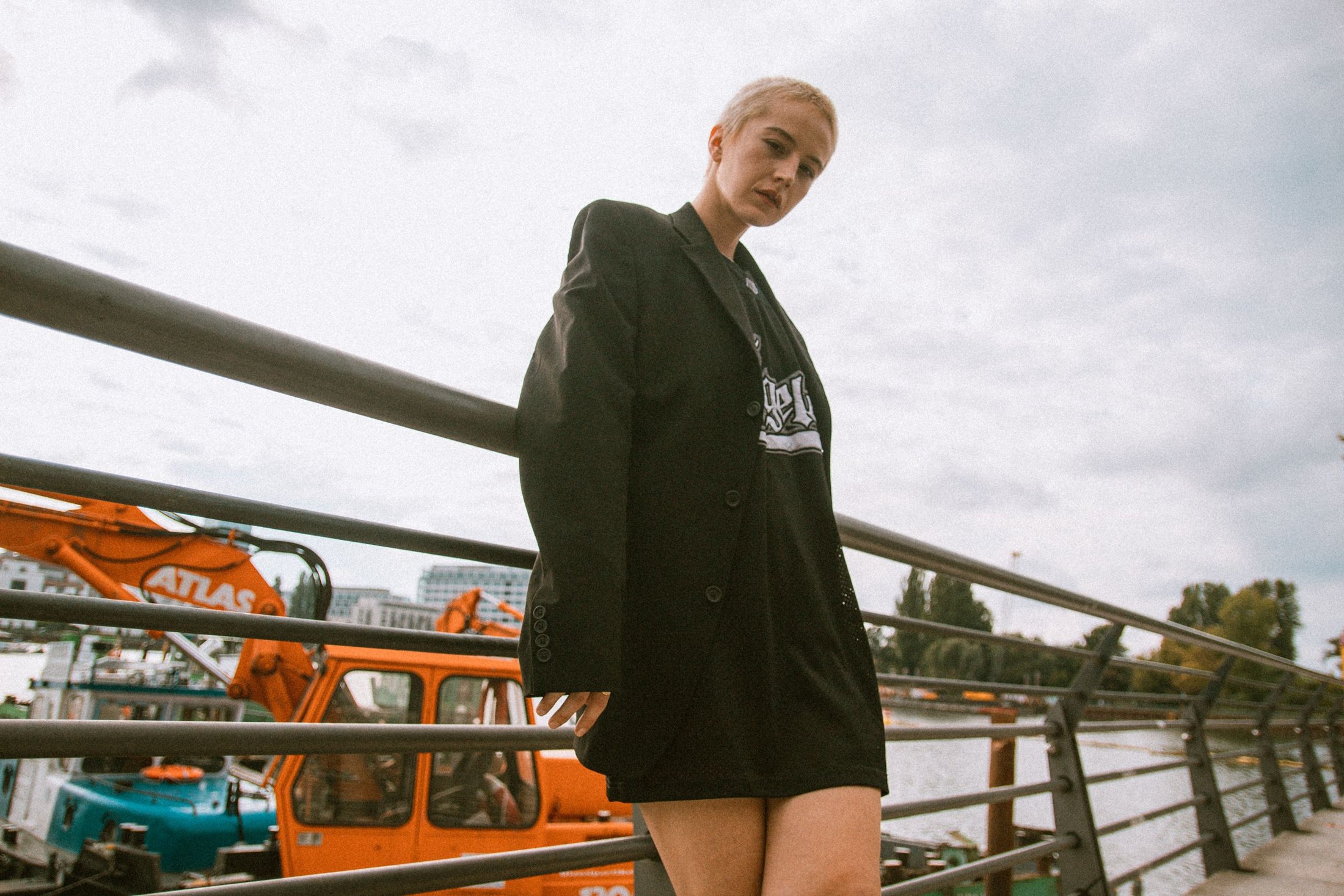
Look at the jacket’s opening first
Hang the jacket open and notice its main lines. A tailored blazer usually creates a V with its lapels. A collarless jacket may create two nearly vertical edges or a round opening. A casual jacket with a stand collar frames the neck differently again. Your T-shirt can repeat those lines or contrast with them; either approach can look intentional.
Try the combination with the jacket buttoned as well as open if you use both arrangements. A neckline that looks clear inside open lapels may become almost invisible once the jacket closes. Check where the jacket fastening sits in relation to the T-shirt opening. An unexpected sliver of fabric can be distracting if it looks accidental rather than like a deliberate layer.
Use a crewneck for a clear inner panel
A plain crewneck is a useful option when you want substantial coverage and a straightforward background for the jacket. Try a white crew under a gray blazer with dark straight trousers. The solid light panel separates the lapels and makes the combination feel less formal than a collared shirt would. A darker crew with the same jacket creates a quieter center.
Pay attention to the neckband. If it ripples, folds, or sits unevenly at the back, the otherwise simple pairing can look fussy. A crew does not have to sit tightly against the throat. Choose a comfortable opening and check that the jacket collar does not push the back of the T-shirt upward. Smooth it once, then see whether it stays there.
Try a V-neck when you want open space
A V-neck can sit neatly within a blazer’s lapels, but the two V shapes do not need to have identical angles. The useful check is whether the T-shirt point remains visible where you want it. A deep V hidden below the jacket fastening can make the inner layer disappear, while a very high V may create several crowded points near the neck.
Try a navy V-neck with a tan jacket and cream trousers for a clear example of separated shapes. Bend forward slightly and reach across your body to assess coverage. If the neckline moves more than you like, choose a shallower cut rather than depending on the jacket to hold it in place. The T-shirt should function comfortably when the jacket comes off too.
Use a scoop to soften straight or angular edges
A scoop neckline offers a curved contrast to angular lapels and can work well under a short collarless jacket. Try a black scoop-neck tee with an ivory collarless jacket and dark jeans. The curved opening adds a different shape without introducing print or decoration. Keep the depth within your own coverage preference rather than treating a particular cut as compulsory.
Check the width across the shoulders and the visibility of any underlayer straps. A broad scoop may sit perfectly while standing but shift when you reach for a bag. That is a fit issue, not a reason to keep pulling the neckline upward all day. A slightly narrower scoop or a different shoulder fit can preserve the look with less adjustment.
Check the shirt beneath the whole jacket
Neckline choice cannot compensate for a T-shirt that twists through the torso or bunches at the armholes. Put both garments on and reach forward. If the sleeve fabric gathers beneath the jacket, try a less bulky tee or one with a better-fitting shoulder. If the jacket pulls across the upper back, assess its fit rather than blaming the T-shirt neck shape.
Look at the hem as well. A long untucked tee below a short tailored jacket creates another horizontal line, which may or may not suit the outfit. Tuck it if the waistband has room, choose a shorter tee, or deliberately leave the longer layer visible. Make that decision separately from the neckline so you can identify which part of the combination actually needs changing.
Keep trims and accessories from crowding the frame
A contrast-bound neckline, printed chest, necklace, and pronounced lapels all occupy the same small area. You can combine them, but decide which feature should lead. A plain crew under a checked jacket may need no necklace at all. A small pendant inside a scoop can work if it stays clear of the neckline edge rather than repeatedly catching on it.
With a stand-collar casual jacket, try a simple crew before adding a scarf or chain. The collar already frames the neck. With a V-neck, check whether a necklace follows the same diagonal so closely that it looks tangled with the fabric. Remove one accessory and compare. Often the clearer result comes from editing the frame, not from finding a more elaborate T-shirt.
Choose through a three-neckline comparison
Use the same jacket, trousers, and shoes while comparing a crew, V, and scoop. This keeps the experiment focused. Look at the amount of visible fabric, the distance between neckline and lapels, and how the back collar sits. Take one photograph of each arrangement if the mirror makes it hard to compare quickly.
Finish by wearing the favorite through ordinary movements: sitting, reaching, and removing the jacket. The strongest choice gives you the coverage and visual balance you want without shifting constantly. Save that pairing as a reliable default, then choose another neckline when you deliberately want a different effect. The point is not to collect every cut, but to understand what each one contributes to the jackets you already own.