
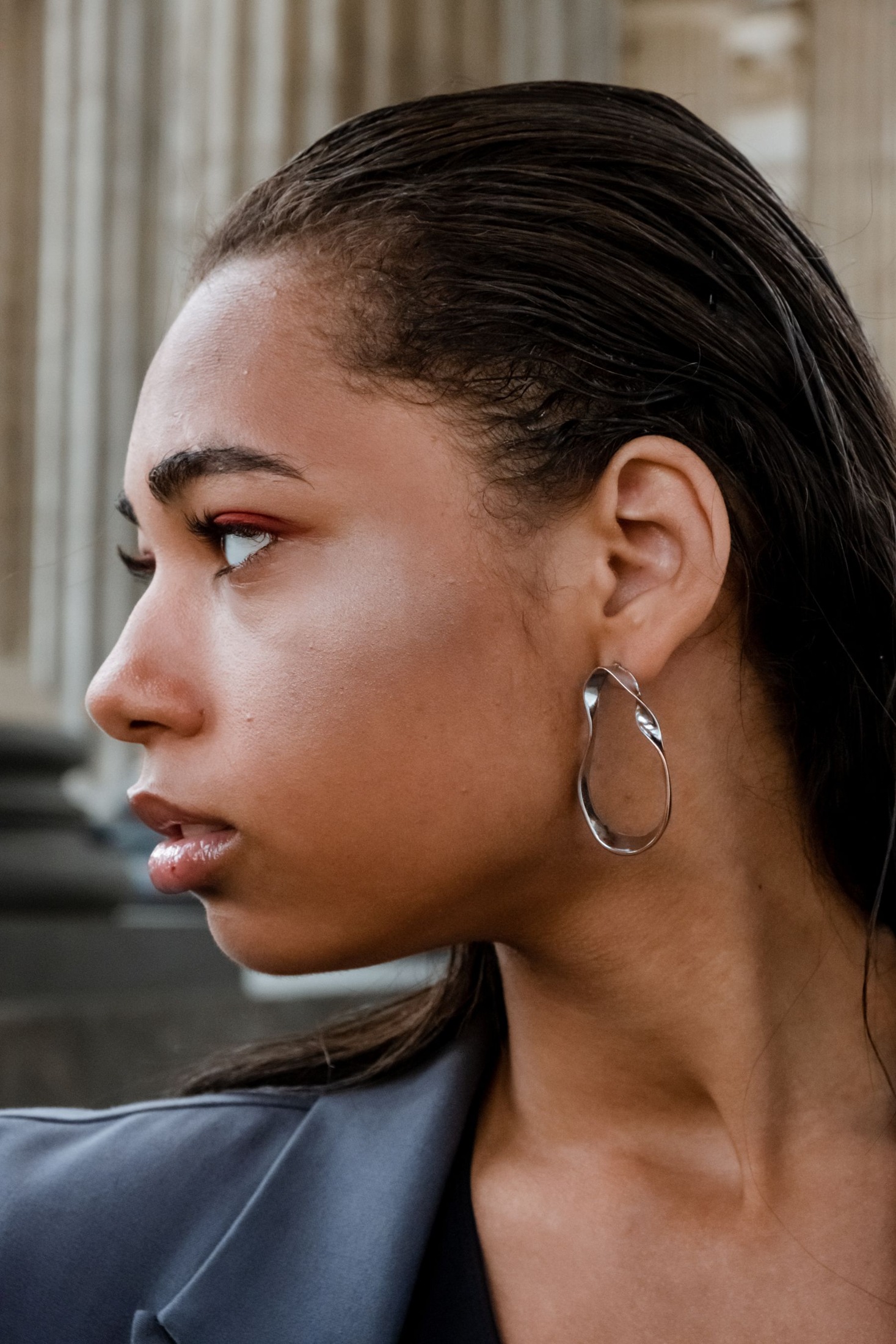
Earrings do not need to copy a neckline to look right beside it. Their job may be to echo its shape, contrast with it, or leave a busy collar alone. The useful question is how much room and visual attention the clothing already claims around your face. Start by putting on the complete top or dress, fastening it as you intend to wear it, and arranging your hair normally. An earring decision made against a bare shoulder can change completely once the actual outfit is on.
1. Map the space around the neckline
Look at the area between your earlobes and the nearest clothing detail. A high collar, shoulder ruffle, or tied bow can occupy the same space as a long earring. A wide scoop or square neckline leaves a different opening. Rather than assigning one earring type to every neckline category, identify the actual edges in your outfit and where a pendant or collar point already draws attention.
Turn your head and look down. The earrings should not constantly strike a stiff collar or catch in a textured shoulder. A design can look perfectly spaced from the front and still collide when you move. Solve that practical issue first by changing the length, shape, or fastening of the earrings.
2. Keep open shirt collars readable
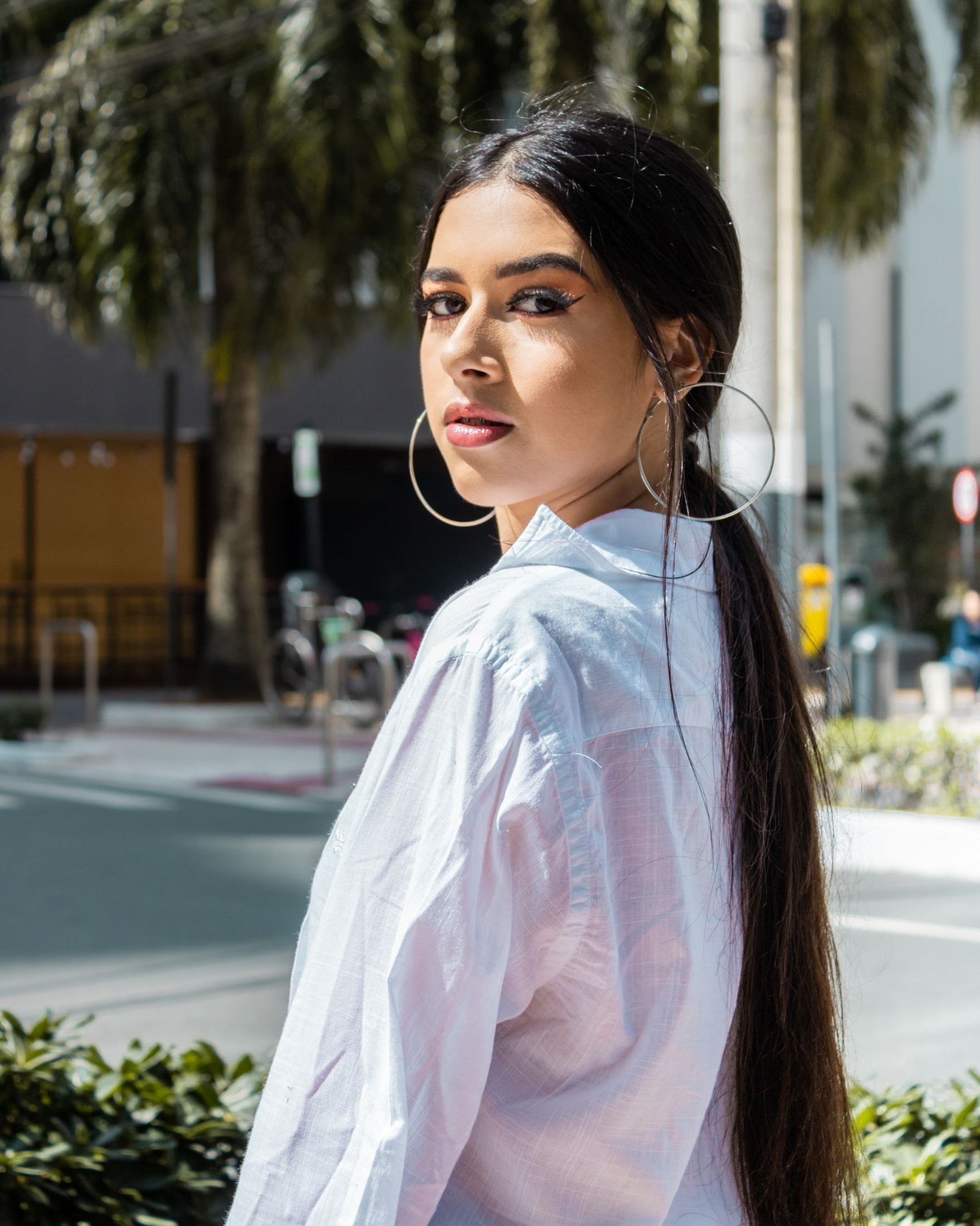
An open shirt collar creates angled lines that frame the upper chest. Small hoops, rounded studs, or compact drops can sit comfortably above that frame. If you prefer longer earrings, try a narrow shape that does not repeatedly meet the collar points. Fasten or unfasten the top button as you normally would before judging the length.
For example, a blue striped shirt with silver hoops and no necklace lets the collar remain the main structure. With a plain white shirt, a colored drop can become the accent instead. If the shirt has embroidery or contrast piping, start with simpler earrings and assess the entire upper half. More detail is a choice, not an automatic improvement.
3. Work with square, scoop, and V openings
A square neckline has a strong horizontal edge and visible corners. Rounded earrings can soften that geometry, while angular earrings can repeat it deliberately. Compare both before assuming they must match. A wide scoop often leaves enough space for a fuller earring, but hair and shoulder details still affect how clearly it can be seen.
With a V-neck, a long slim drop can continue the vertical emphasis. A compact hoop creates a more noticeable contrast. If you add a pendant inside the V, check whether the earrings are now competing with the necklace for the same central attention. You can keep both, but making one quieter usually produces a clearer result than choosing two equally elaborate pieces.
4. Give high necklines a separate strategy
A plain high-neck knit can provide a clean background for earrings because there is little exposed neckline space to fill. Try a sculptural stud or a medium drop that remains clear of the fabric. If the knit has a thick folded collar, check the side view carefully; a long earring may brush it every time you turn.
For a patterned high-neck blouse, compact earrings can offer definition without adding another moving shape. A black mock-neck top with brushed gold studs looks different from the same top with long polished silver drops, even though both pairings are coherent. Choose according to whether you want a quiet frame or a visible focal point beside the face.
5. Balance earrings with necklaces and hair
Put on any necklace before making the final earring decision. A substantial chain close to the neckline already creates a bright band. Smaller earrings can support it, while larger ones make the overall jewelry more prominent. If your earrings are the main event, compare the outfit without a necklace rather than filling every available area automatically.
Hair changes visibility and movement. Earrings that disappear into loose hair may become very noticeable with it tied back. Try your usual hairstyle and check for tangling, especially with open hoops or detailed drops. Do not choose solely from a close-up photograph with hair held away if that is not how you expect to wear the outfit.
6. Let one unusual clothing detail lead
Asymmetric necklines, one-shoulder tops, and tied neck bows create strong directions on their own. A compact pair of earrings can leave those shapes legible. Alternatively, a deliberate statement earring can work if its position and scale do not merge with the clothing detail. This is worth checking in a full upper-body view rather than only around the ears.
Consider a one-shoulder black top with small bright studs: the clothing supplies the asymmetry and the earrings provide a tidy finish. On a plain sleeveless top, longer textured earrings have more room to stand out. You do not need to create additional asymmetry simply because the neckline already contains it.
7. Do a final movement and emphasis check
Look straight ahead, turn both ways, sit, and reach forward. Check that earrings clear the collar, do not catch the shoulder fabric, and remain manageable with your hair. If they repeatedly interfere, choose another pair rather than planning to hold your head differently all evening. Appearance should survive ordinary movement.
Finally, step back and name the focal point: the earrings, the neckline, the necklace, or a deliberate combination. If you cannot distinguish the pieces because everything overlaps, remove or shorten one element. The aim is not a rigid neckline chart. It is an outfit in which each visible detail has enough room to look chosen.