
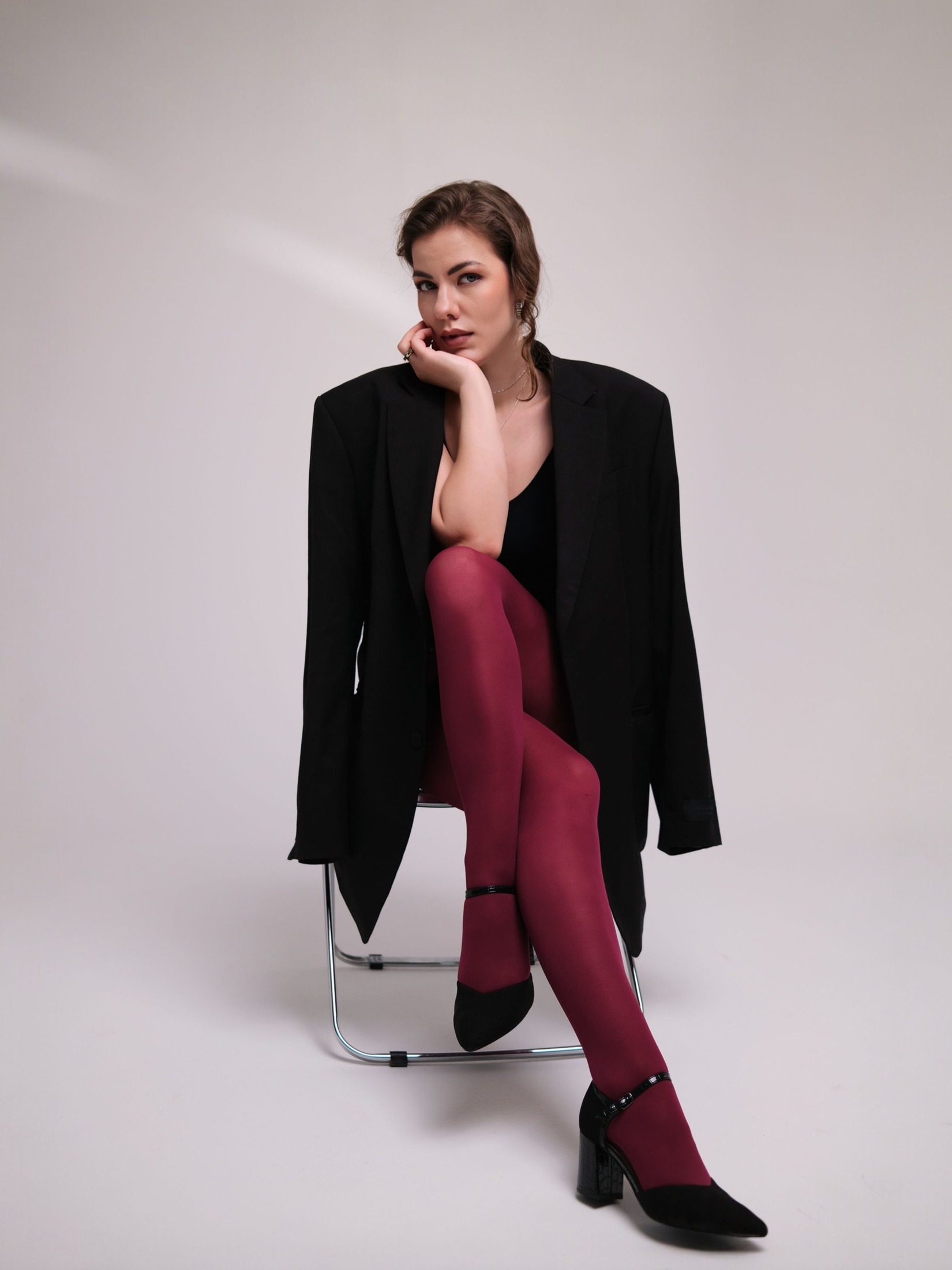
Sheer and opaque tights change more than coverage. They affect how much contrast appears between a hem and a shoe, how heavy an outfit feels visually, and whether a delicate dress or textured skirt remains the focus. Neither finish is inherently more elegant. Choose the effect you want, then check the actual pair on your legs: product labels alone cannot tell you exactly how the tights will look when stretched.
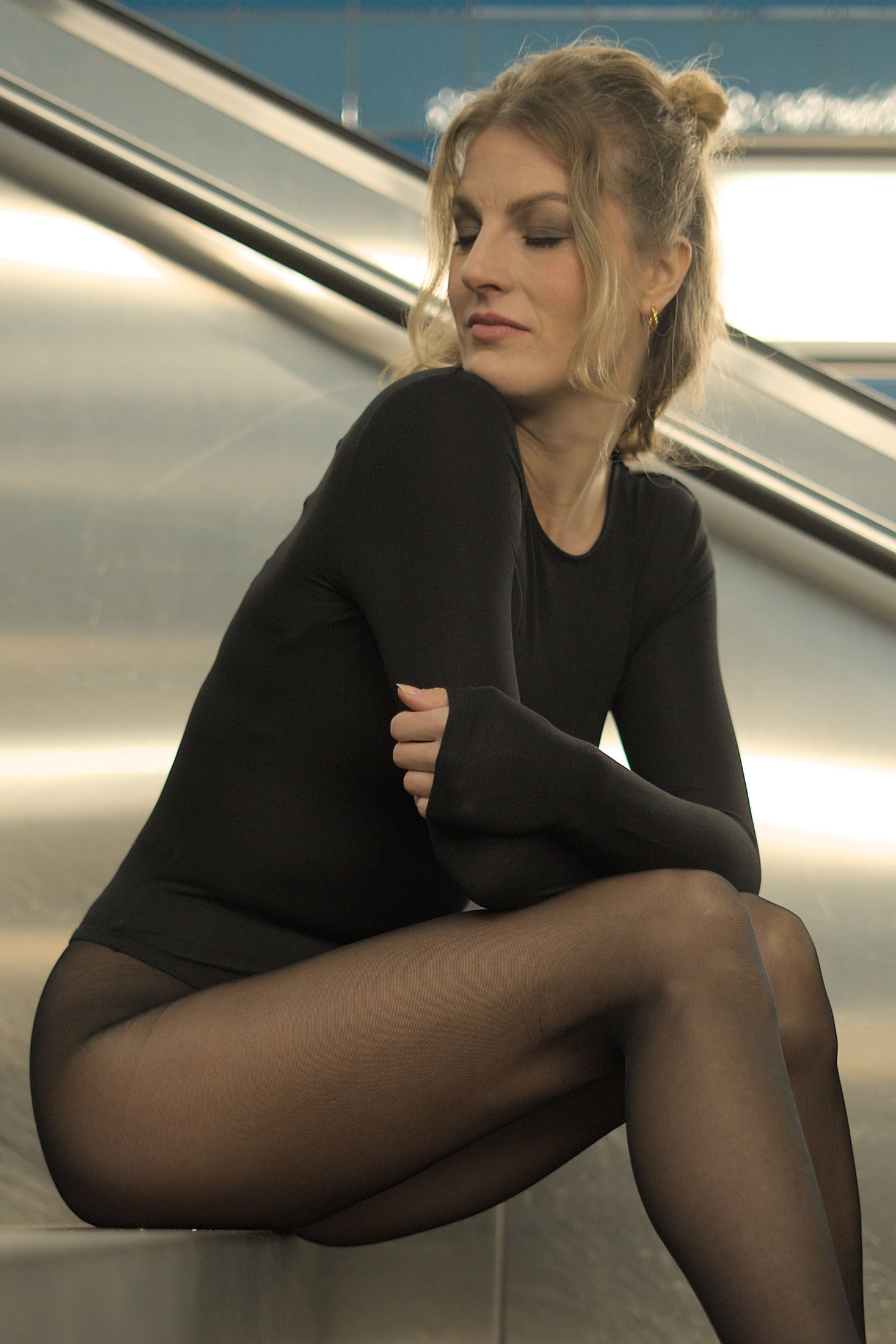
Begin with the amount of visible leg you want
Sheer tights allow more of the skin beneath them to remain visible. Opaque tights create a more solid block of color. Semi-opaque versions sit between those effects, though the appearance varies with the product, fit, and lighting. Decide whether you want the leg area to feel open and light or more continuous and covered.
Do not make the choice from a folded packet alone. A pair that looks dark in your hand may appear much lighter when worn. If trying them on is possible, inspect the knee and thigh as well as the ankle because stretch can change the visible density. Choose a size that follows the maker’s guidance rather than buying smaller in the hope of a neater fit.
Understand labels without treating them as promises
Denier describes yarn linear density, not a guaranteed visual result. It can help you compare products, but weave, fiber, color, and stretch also affect appearance. For styling purposes, the decisive check is the actual coverage on your body. Two pairs with similar labeling can still look different against the same skirt.
Likewise, matte and glossy finishes change the impression independently of opacity. A shiny sheer pair may attract more attention than a matte opaque pair. If you want a quiet background for a patterned dress, examine the finish under ordinary indoor light rather than relying only on a bright display. Read the packaging and care label for product-specific information; do not assume all tights in one visual category behave identically.
Match the visual weight to the garment
A textured wool-look skirt and substantial shoes often sit comfortably with opaque tights because the materials share a solid appearance. Try a charcoal A-line skirt, black opaque tights, black loafers, and a cream knit. The tights connect the hem and footwear while allowing the lighter top to provide contrast.
With a fine fluid dress, sheer tights can preserve a lighter impression. A navy dress with sheer black tights and simple black pumps is one possible combination. Opaque tights can work with a delicate dress too, but they make a stronger contrast in texture. If the lower half starts to dominate, compare a less dense pair or a quieter shoe before assuming the dress needs different styling.
Decide whether shoes should connect or stand apart
Dark tights with dark shoes create a relatively continuous lower line. That can simplify a busy outfit, particularly when a patterned skirt already supplies several colors. The tights and shoes do not have to match perfectly, but a large difference in shine or undertone may make the boundary more noticeable. Look at the whole outfit rather than inspecting each shade separately.
Contrasting shoes create a deliberate endpoint. Burgundy flats with black tights can provide a small, clear accent. Pale shoes against dark opaque tights make a stronger break and may become the outfit’s focal point. Neither combination is prohibited. Check that the shoe shape, hosiery finish, and clothing texture seem to belong in the same level of formality for your intended setting.
Use color with a clear role
Black is useful but not obligatory. Charcoal can look softer with gray tailoring, navy can connect to a blue skirt, and brown can sit comfortably beneath olive or warm-toned fabrics. Compare the tights against the actual garment because similar dark colors can diverge noticeably in daylight. Repeating one color somewhere else can help the choice feel deliberate.
If you prefer a skin-adjacent sheer effect, compare the shade on your leg rather than against your hand or the package. Check whether the finish creates the amount of visibility you want under your usual lighting. Avoid treating one shade name as suitable for everyone. The aim is a result that suits your preference, whether that is discreet coverage or a visibly styled hosiery choice.
Test the fit beneath the entire outfit
Put the tights on with the skirt or dress and your actual shoes. Check the waistband while sitting, the toe area inside the footwear, and the way the garment moves over the tights. If the skirt catches or rides up, try a compatible slip where appropriate rather than repeatedly pulling the hem down. Check the garment’s existing lining before adding another layer.
Opaque does not automatically mean warmer in every product, and sheer does not guarantee greater comfort. Choose based on the specific construction and your experience of the pair. Avoid a waistband that folds or digs in, and do not rely on shoes to hold tights that are slipping. A good fit lets the styling choice remain a choice instead of becoming an all-day adjustment.
Make one controlled comparison
Keep the dress and shoes unchanged and try one sheer pair and one opaque pair. Look at the outfit from a normal viewing distance. Does the hem feel lighter or heavier? Are the shoes more prominent? Does a print become easier to read? Those questions reveal the actual styling effect more clearly than a list of rules about age, skirt length, or body shape.
Choose the pair that supports the outfit and your coverage preference, then check it after sitting and walking. For a textured everyday skirt, that may be matte opaque tights. For a fluid dress, it may be a sheer finish. The useful habit is not always choosing the same density, but understanding how coverage and finish alter the relationship between the clothes and shoes.