
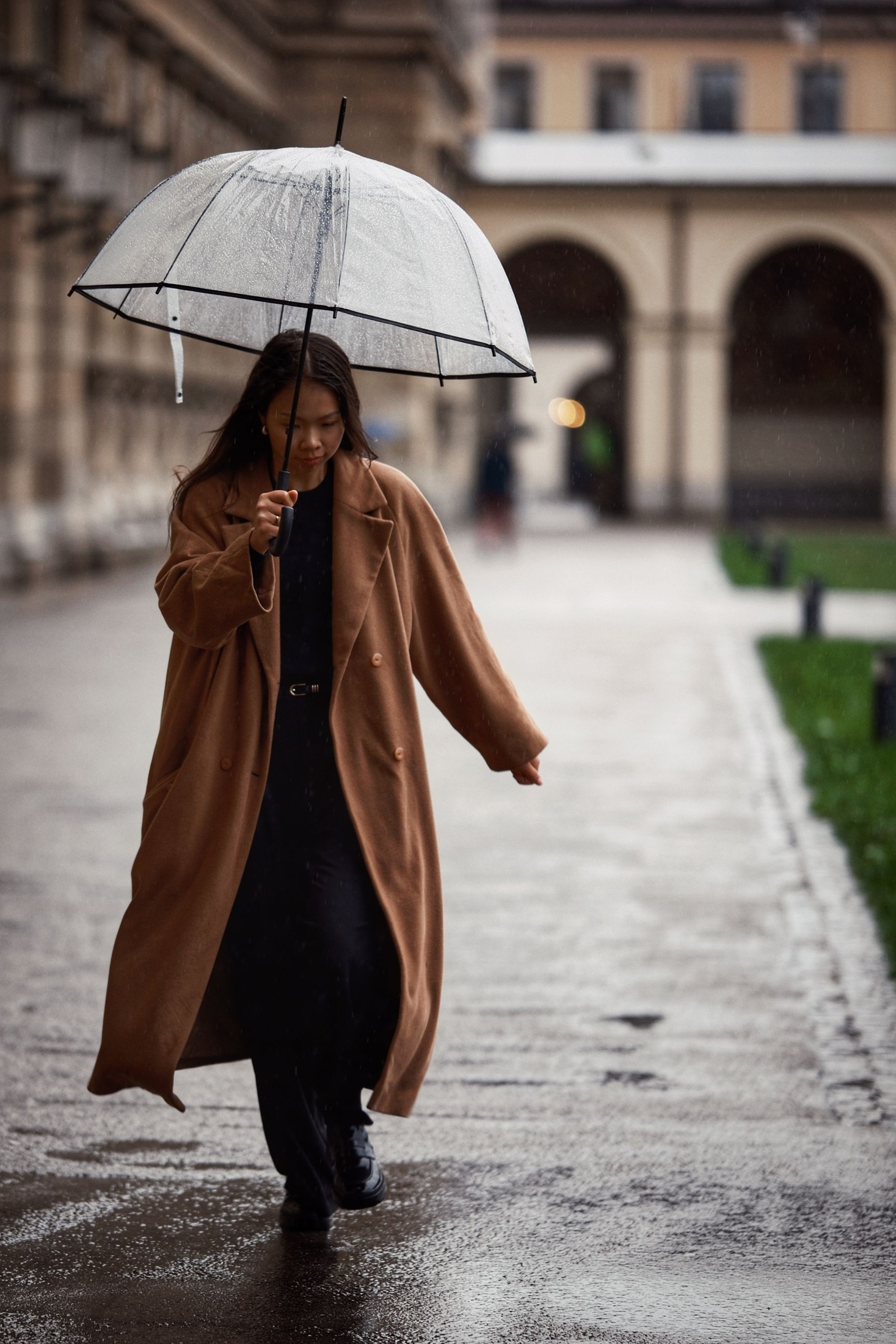
A rain-friendly commute outfit starts at the ground. A coat can cover your shoulders while an overlong trouser hem collects water at every step, and polished shoes can become impractical if they were never intended for wet conditions. Build from footwear and hem clearance upward, then decide how the outer layer and work clothes will fit together. The aim is a manageable outfit, not a promise that ordinary fashion pieces can handle every forecast.
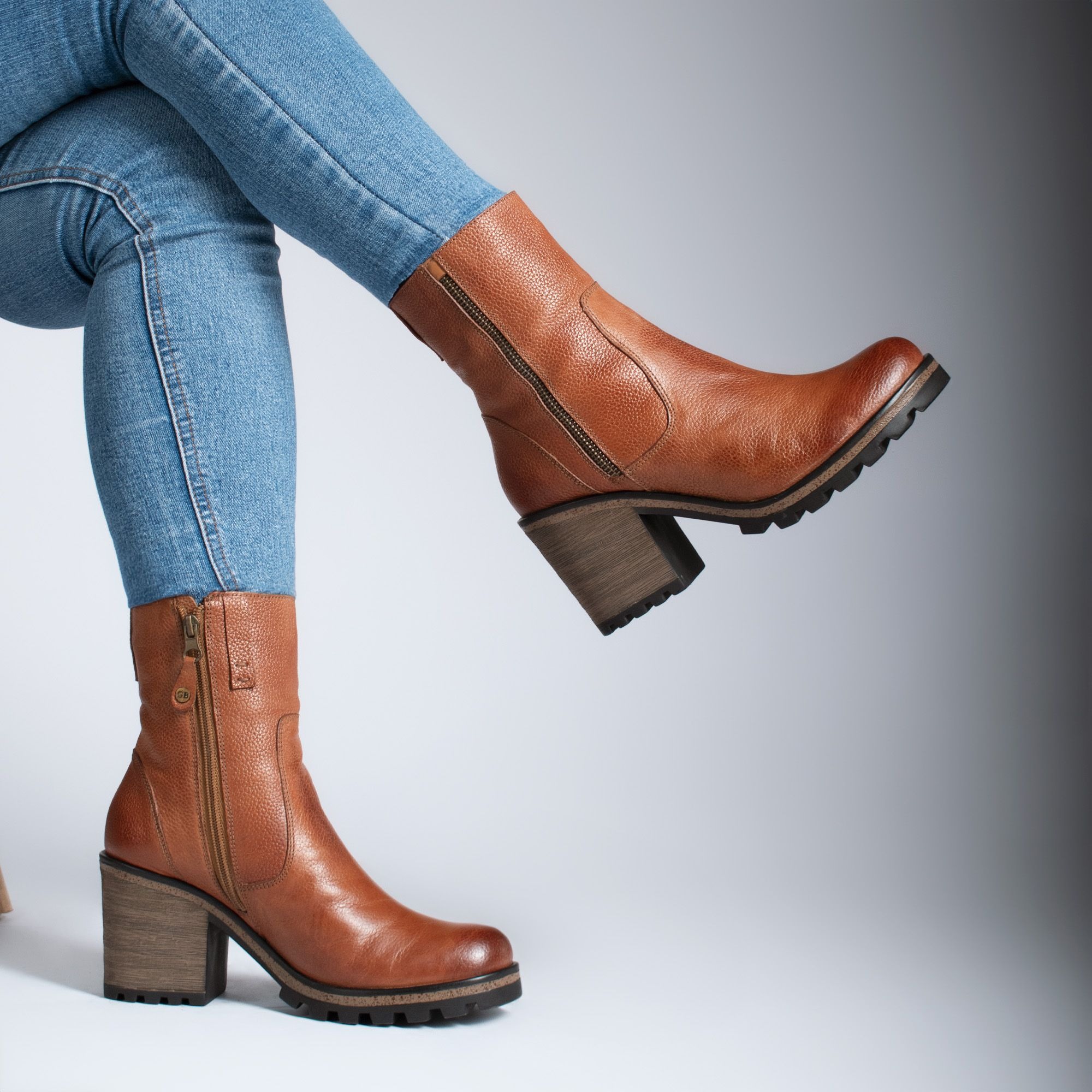
Choose shoes by their stated purpose and actual fit
Look at the manufacturer’s description and care guidance for the specific footwear. Do not assume that a smooth upper, thick sole, or boot shape makes a shoe waterproof. Water resistance and waterproof claims need to come from the maker, not from appearance. Select a pair suited to the conditions you expect, and recognize when heavy rain requires a different option from a brief shower.
Try the shoes with the socks you plan to wear. Check toe space, heel movement, and comfort while walking. Inspect the sole condition, but do not treat any tread pattern as a guarantee against slipping. Wet surfaces vary. A practical styling choice is one you can walk in comfortably without depending on a delicate shoe to perform beyond its stated use.
Lift vulnerable hems away from the ground
Cropped or ankle-length trousers can reduce the amount of fabric near wet pavement. The exact length should work with the shoes, not with a universal ankle rule. Put the whole lower half on and check the back hem while walking. It should not slide beneath your heel or brush the ground when you step off a curb.
Wide full-length trousers may need a different plan on wet days, especially if their usual hem sits close to the floor. Choose another pair rather than making a thick temporary roll that changes the entire silhouette and comes loose. A straight dark trouser with a clean ankle-length hem can look work-ready with low rain-appropriate boots and a simple knit, while avoiding fabric dragging around the footwear.
Make the coat fit over the actual work layers
Put your coat over the shirt, cardigan, or jacket you intend to wear indoors. Reach forward and raise your arms. If the outer layer compresses the sleeves or pulls across the upper back, the combination may be uncomfortable before you have even left home. A little extra room can be useful, but the coat should still fasten and sit securely.
Check its stated weather protection and features rather than relying on its name. A trench-style coat is not automatically a rain shell. If you use a hood, make sure its adjustment works comfortably and that you can turn your head. Keep scarves and collars from interfering with the fastening. Choose the level of protection according to the forecast and the garment’s actual specifications.
Build two outfits with clear indoor transitions
For a trouser-based option, try charcoal ankle trousers, a cream fine knit, a hooded outer layer, and dark low boots intended for wet weather. Indoors, the knit and trousers already form a complete outfit. You can keep the boots on if they suit the workplace, or change into loafers if that is more appropriate for your day.
For a skirt option, combine a practical knee-length or midi skirt with tights, suitable boots, and an outer layer that allows your normal stride. Check where the skirt falls relative to the coat and boot tops. Avoid relying on a long fluid hem that can sweep against wet surfaces. The skirt should work as workwear after the coat comes off, without requiring several damp layers to stay on for appearance.
Keep small layers and carried items manageable
A scarf tucked neatly inside the coat can be easier to manage than long ends swinging outside it, provided the collar has room. Keep trouser turn-ups, dangling belt ends, and oversized sleeves in mind too. These details can become awkward when you are holding an umbrella or carrying a bag. Simpler does not mean plain; it means fewer loose components to control.
Choose a bag according to its stated materials and weather suitability, not because it looks sturdy. Check that its strap works over the coat and does not force the shoulder fabric into a tight fold. Keep the overall outfit proportion in view: a very large bag, broad coat, and bulky boots create a different silhouette from a compact bag and straighter outer layer. Pick that shape deliberately.
Plan a small, realistic change of footwear
If your commuting shoes are not suitable indoors, keep the change straightforward. Carry the work shoes in a separate bag or leave an appropriate pair at work if that is practical and permitted. Choose a trouser hem that works with both pairs, or accept a more visibly cropped indoor length. A floor-length hem tailored to high heels may not function with low wet-weather boots.
Allow damp footwear to be handled according to its care guidance rather than rushing it onto a strong heat source. Likewise, follow the coat’s label for drying and cleaning. The styling decision is to make the transition easy: shoes you can change without rebuilding the outfit, layers that remain presentable, and a sensible place for the outerwear rather than leaving it draped across the clothes you plan to wear all day.
Run the doorway check
Before leaving, fasten the coat, put the bag on, and take a few full steps. Check hem clearance, sleeve movement, hood position, and the way the shoes feel with the chosen socks. Imagine arriving indoors and removing the outer layer. If the remaining clothes do not form a complete outfit, add or change one workwear piece now rather than relying on the coat to supply all the structure.
The most useful rain-friendly outfit is a coordinated set of ordinary decisions: appropriate footwear, clear-of-ground hems, enough room for layers, and a manageable indoor change. Keep one version ready for predictable wet mornings, then adapt it to the actual conditions. You do not need to make weather claims for fashion pieces; you need to choose garments whose stated purpose and comfortable fit support the day ahead.