
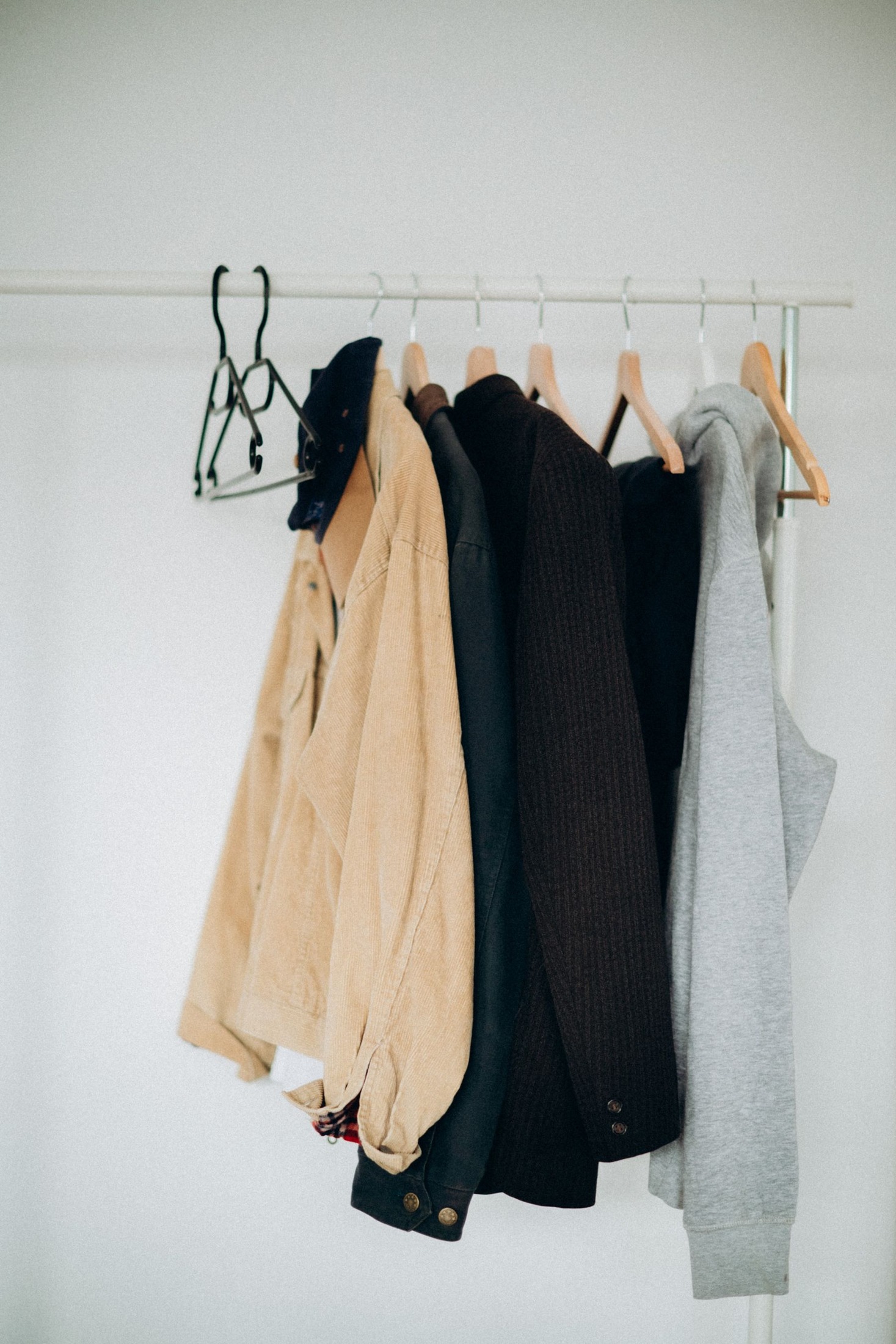
The right hanger supports a garment at the places designed to carry its weight. The wrong one can leave shoulders misshapen, stretch delicate straps, or create unwanted pressure marks. This is a clothing-shape decision, not a reason to replace every hanger with one matching style. A small selection chosen for specific garments is more useful than a uniform rail. Start by checking the clothing label and construction, then decide whether the piece should be hung at all.

1. Separate garments that need different support
Group clothing by construction rather than color: structured jackets and coats, woven shirts, delicate dresses, trousers and skirts, and knits. Look for hanging loops, reinforced waistbands, shoulder structure, and vulnerable trims. These details show where a garment may tolerate support, but they do not override explicit storage or care guidance from the manufacturer.
Set aside heavy or loosely knitted pieces for a separate decision. Hanging everything simply because there is a free hook can be unhelpful. Likewise, not every dress should be suspended by its thinnest straps. The aim is to understand the garment’s weight and shape before selecting a hanger, rather than trying to make one hanger style solve every clothing problem.
2. Match shoulder width before choosing the finish
Place the hanger inside a shirt or jacket and see where its ends finish. They should support the shoulder area without projecting into the upper sleeve or leaving a broad shoulder unsupported. A hanger that is too wide can push the fabric outward; one that is too narrow may let a structured shoulder collapse around it.
Judge the match on the actual garment, since sizes and cuts differ. A broad jacket and a narrow blouse may need different hanger widths even when they belong to the same person. Take the garment off after a trial and inspect the shoulder line. If you see an obvious point forming, change the support rather than assuming it will disappear during wear.
3. Use shaped support for structured clothing
A jacket or coat with defined shoulders benefits from support that follows its shape. Compare a broad contoured hanger with a thin flat one and look at how the shoulders rest. The broader option may distribute support more comfortably across the construction, provided it is the correct width and does not push into the sleeves.
Empty heavy pockets before hanging and arrange belts or removable details without uneven pulling. Leave enough room between garments that lapels and sleeves are not crushed. Choosing a supportive hanger does not help much if the coat is then compressed tightly between several others. Preserve the shape around the garment as well as beneath its shoulders.
4. Give delicate straps and slippery fabrics appropriate help
For a strapped dress, inspect any internal hanging loops and follow the maker’s guidance on their use. They may help support the garment without placing its full weight on a narrow outer strap. Use notches or suitable hanger features only where they do not snag or stretch the clothing. Check the inside surface for rough edges before introducing a delicate fabric.
A padded or appropriately covered hanger may be useful for some delicate pieces, while a non-slip surface can help a smooth woven garment remain in place. Neither is universally suitable. A textured hanger that grips securely may also catch a vulnerable weave. Test gently and watch how the fabric releases rather than pulling it free.
5. Support trousers and skirts without unwanted marks
Clip hangers can work for garments with a waistband able to carry the weight, but the clips need suitable placement and pressure. Avoid fastening them over delicate trim, a zip, or a decorative feature. If padding is appropriate, check that it is clean, stable, and does not transfer color. Do not improvise with materials whose effect on the fabric you do not know.
For trousers folded over a bar, align the legs and consider whether the bar leaves a visible crease where you do not want one. Some trousers are better hung from a reinforced waistband; others may be folded according to their construction. Compare the result after storage rather than assuming the first arrangement is automatically harmless.
6. Recognize when folding is the better option
A knit that becomes longer or develops shoulder points when hung may need folded storage, subject to the garment’s guidance. Lay it smoothly and fold without pulling the fabric into sharp tension. Keep decorative elements from pressing directly into delicate stitches. Do not hang a wet garment merely because you plan to fold it later if its drying instructions require another method.
Heavy embellished pieces also deserve garment-specific advice. Their weight can place stress on a small support area, and folding may need cushioning or a different arrangement. If the item is valuable or unusually constructed, ask the maker or a clothing-care professional. General hanger advice should stop where the garment’s construction requires specialist judgment.
7. Check the garment after storage, not just on the rail
Take a recently stored shirt, jacket, or dress off its hanger and inspect the shoulder, strap, and waistband areas. Look for points, pulling, clip marks, or a new fold that was not there before. This tells you whether the support is working better than judging how tidy the rail looks while everything is hanging.
Keep a few hanger types that earn their place through actual use. A broad jacket hanger, a smooth shirt hanger, and an appropriate clip option may cover many garments, with folded storage for others. The right system is the one that preserves clothing shape and makes items ready to wear, not the one that makes every garment look identical in storage.