
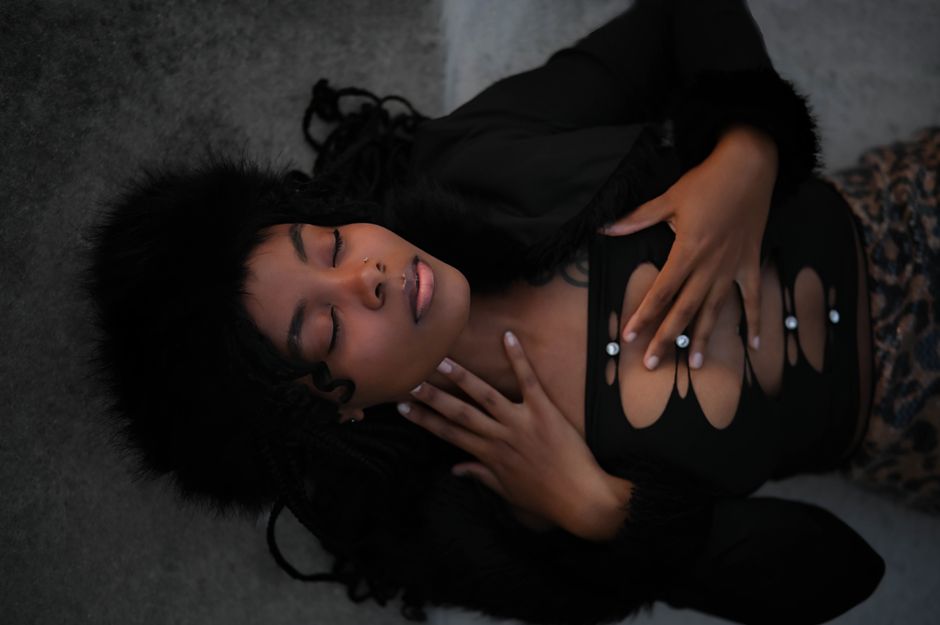
A feather-trim top brings movement to an evening outfit before you add a single accessory. With simple trousers underneath, it can feel playful, elegant, and easy to wear. The useful distinction is that feathers occupy space beyond the fabric itself: they brush your wrists, overlap a waistband, and move when you sit. Getting those small interactions right makes the outfit feel comfortable and considered, whether you are heading to dinner or a party.
Let the placement of the feathers guide you
Start by looking at where the trim sits. A feathered neckline draws attention upward and leaves the waist relatively straightforward. Feather cuffs create movement around your hands. A feathered hem changes the outline of the top and its relationship with your trousers. Each version needs a slightly different arrangement, even when the trousers stay exactly the same.
If this is your first feather-trim piece, choose a placement that fits how you spend an evening. Cuffs may be delightful for standing and chatting, but less convenient at a crowded dinner table. A trimmed hem keeps the detail away from your plate, although you will want to check how it behaves against the chair. Enjoying the clothes matters as much as liking them in the mirror.
Look for space around the trim
The feathers should have room to move without being trapped beneath another edge. At the neckline, check that they do not continually brush your mouth or catch in your earrings. At the cuffs, bend your elbows and reach forward. At the hem, let your arms fall naturally and see whether the trim tangles against your hands or bag.
Give the trousers a quiet, clean shape
Plain evening trousers provide a steady background for all that airy texture. Look for a smooth front, a waistband that lies comfortably, and fabric that hangs without clinging. A matte finish makes the contrast especially clear. You do not need decorative buttons, statement pockets, or an elaborate belt to make the lower half feel dressed.
Straight legs are an easy starting point because they create a calm line beneath a lively top. A gently tapered pair works well when the feather trim spreads outward at the waist. Wider legs can also look beautiful, particularly with a top whose fabric sits fairly close to the body. The aim is to see the shape of both pieces instead of having every edge expand at once.
Check the trousers while seated as well as standing. A waistband that digs in will become more noticeable over dinner, and pulling at it can disturb delicate trim. Choose the rise that meets the top comfortably when you move. There is no need to select a higher waist unless it improves that particular pairing.
Settle the hem before deciding on a tuck
A feather-trimmed hem usually works best outside the trousers, with the fabric edge resting freely and the feathers extending below it. Tucking the trimmed section into a waistband can crush the detail and leave an uneven bulge. If the top feels too long, try trousers with a different rise or choose another top length rather than forcing the trim into place.
Look at the actual fabric hem as well as the tips of the feathers. A top can appear to cover the waistband while still revealing skin through the airy trim. Lift your arms, turn sideways, and sit down to check whether that feels right for you. If you prefer more coverage, look for a longer fabric body or a discreet underlayer that stays hidden during movement.
When the feathers sit only at the neckline or cuffs, a tuck may be possible. Keep it smooth and check that it does not pull the shoulders downward or shorten the sleeves awkwardly. A clean untucked finish is equally useful when the top already meets the trousers at a pleasing point.
Use color to make the texture easy to see
Black trousers with a black feather-trim top create a continuous silhouette while the feathers supply the interest. Check the pieces together under indoor lighting: different black fabrics can read differently, and you may prefer a clear texture contrast to an almost-matching finish. Smooth trousers beneath a softly textured top can look intentional even when their tones differ slightly.
For a gentler contrast, try an ivory top with charcoal trousers or a muted pink top with deep brown trousers. Keep the trouser color solid so the feather outline remains easy to appreciate. If your top is brightly colored, you can simply repeat a neutral already present in your shoes or bag.
Make room for your hands, bag, and chair
Feather cuffs deserve a practical rehearsal. Sit at a table and move your hands as though you were picking up a glass or reaching for cutlery. If the trim trails across the surface, consider a different top for a meal. Do not rely on repeatedly pushing the sleeves up; they may slide back down, and a tight roll can compress the feathers.
Bag placement matters too. A shoulder strap can rub against neckline trim, while a bag held tightly under the arm may flatten feathers at the side of the top. Try carrying a small, smooth bag by its handle, or hold a clutch away from the trim. Check for exposed fastenings or rough decoration that could snag as you move.
- Before sitting: make sure hem feathers are free of the chair edge.
- Before putting on a bag: check where the strap crosses the top.
- Before leaving: walk, reach, and sit in the complete outfit.
Choose shoes and accessories with clear lines
A plain closed-toe shoe, a simple sandal, or an evening flat can all finish the outfit. Choose according to the venue, weather, and amount of walking involved. Then check the trouser hem with those exact shoes. Fabric that drags on the floor or catches beneath your heel distracts from the lightness of the top.
Keep jewelry clear of the feathers. With neckline trim, a bracelet or simple ring may be easier than a necklace. With feather cuffs, leave your wrists free and consider small earrings instead. These are practical starting points, not rules about how much sparkle you are allowed. Add a piece, move around, and see whether it complements the outfit without catching.
Plan the journey and the trip home
Try your outer layer over the complete outfit before the evening arrives. Close-fitting sleeves can squash feather cuffs, and a narrow coat body may press down a feathered hem. Look for enough internal room to slip the coat on gently without dragging it across the trim. Once indoors, give the feathers space to settle naturally.
After wearing, follow the garment’s care label, including any separate instructions for the trim. Avoid assuming that the fabric’s usual cleaning method is suitable for its decoration. Let the top air in a suitable dry place, then store it without heavy clothes pressing against the feathers. Keeping that movement intact helps the same simple trousers feel ready for another evening.