
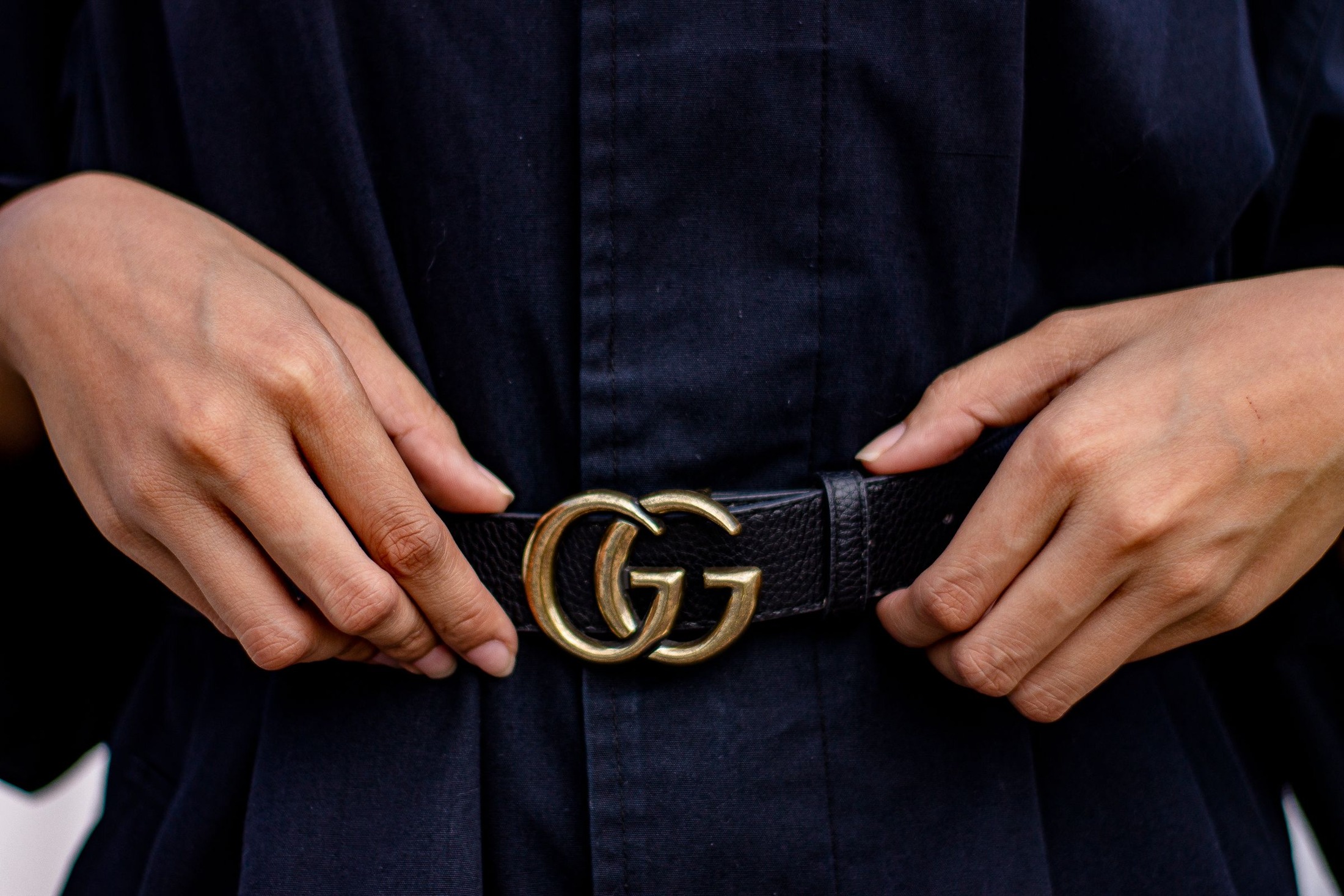
A belt can hold trousers in place, connect colors, or redraw the outline of a dress. Those are different jobs, and they do not always call for the same width or position. Instead of looking for one supposedly flattering belt for your body, decide what the outfit needs. A quiet waistband finish, a pronounced horizontal line, and a gathered outer layer each require a different approach.
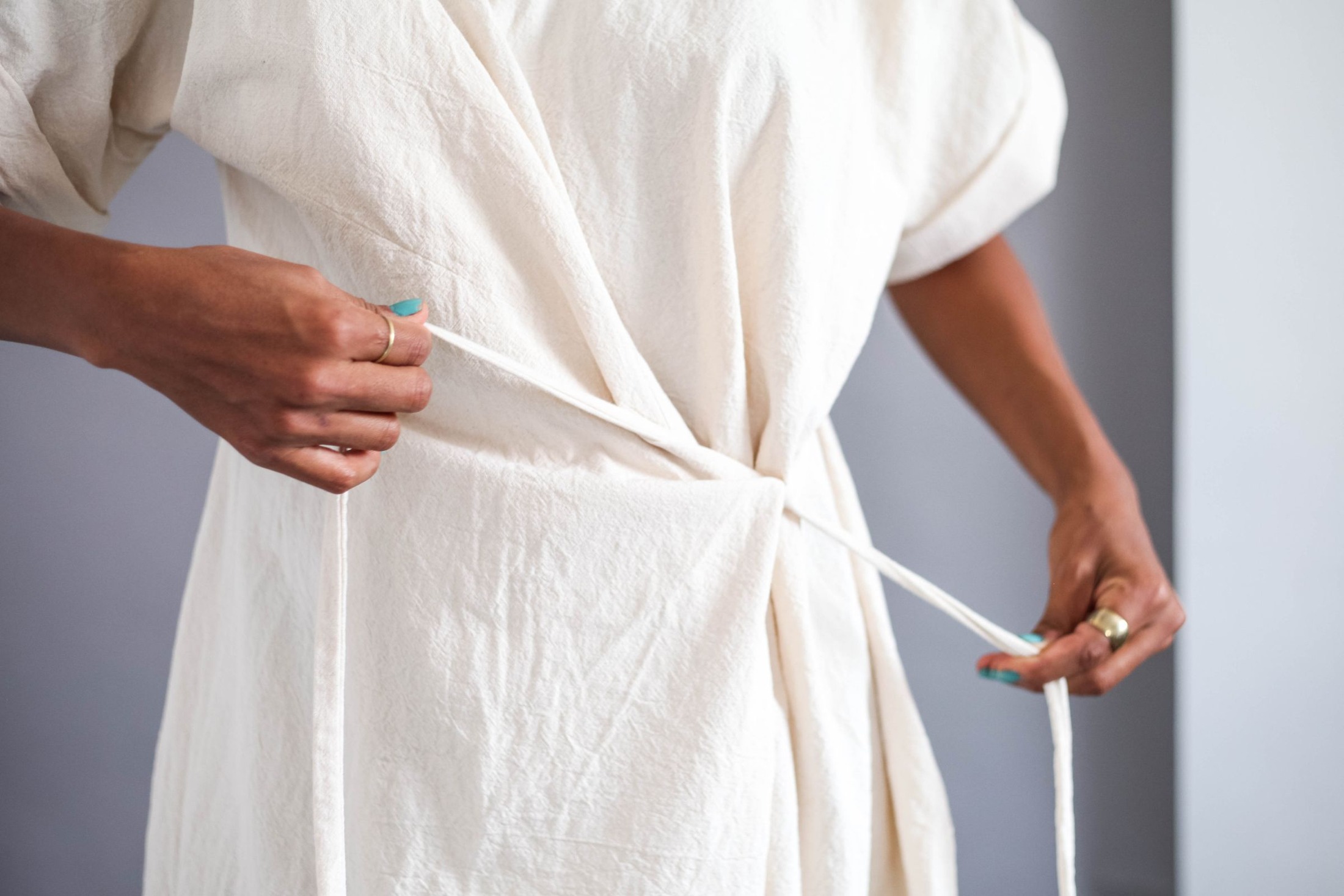
Separate support from decoration
If trousers slide because the waist is slightly roomy, a belt can offer useful support. If they are dramatically oversized, pulling them tight may create folds that disrupt the pockets and fly. Check whether the garment needs an alteration before choosing a wider belt to conceal the problem. A belt cannot correct every mismatch between the waistband and the hips.
A decorative belt over a dress has another purpose: it introduces a focal point and may gather fabric. It should not need to be pulled painfully tight to stay in position. Try the dress without a belt first so you can see what changes. Sometimes the unbelted shape is already strong, and a belt only adds an unnecessary interruption.
Use belt loops as a practical boundary
For trousers and jeans, start with the loops. The belt should pass through easily without folding at the edges or forcing the loops upward. A very narrow belt inside generous loops can work aesthetically, but notice whether it shifts or tilts when you move. A belt almost as tall as the loop opening may be too stiff to thread comfortably.
Also check the buckle against the fly and waistband fastening. A bulky buckle directly above a large trouser button can create an uncomfortable stack. With tailored navy trousers and a tucked cream blouse, a medium brown belt with a compact buckle can look considered without dominating the outfit. Its usefulness comes from fitting the garment, not from following a fixed width chart.
Compare widths at the same position
To judge width fairly, try two belts at the same height over the same outfit. A narrow belt usually makes a smaller visual mark and allows more of the garment to remain uninterrupted. A medium belt can add definition while still behaving like part of the waistband. A wide belt becomes a major feature and may cover seams, gathers, or the lower edge of a top.
These effects are styling tools, not rankings. A wide belt on a plain column dress can create a deliberate graphic center. The same belt over a dress with detailed waist pleats may obscure the design. Take a front and side view before deciding. The side view often reveals whether the belt is pressing excess cloth into a thick ridge.
Move the belt before changing its size
On an unstructured dress, shift the belt slightly higher or lower and watch how the fabric responds. A higher placement may allow more skirt to hang below it, while a lower placement can make the upper section blouse more. The useful position is where the garment settles comfortably and the resulting proportions appeal to you.
Do not assume your preferred place must match someone else’s natural waist. A dress seam, pocket position, or button arrangement may make a different placement more coherent. Avoid fastening over a bulky seam if it causes rubbing or tilting. If a belt repeatedly slides to another level, pay attention: the garment shape and belt construction may be telling you where they can actually work together.
Account for layered fabric
A belt over a cardigan or light jacket has more material to manage than a belt through trouser loops. Spread the fabric evenly before fastening it, then release a little ease above and below. Large folds concentrated at the back can create a silhouette you did not intend, even if the front looks smooth in the mirror.
Try a medium belt over a fine open cardigan and straight dress, then compare the same outfit with the cardigan left unbelted. If the belt makes the cardigan fronts pull apart or traps the pockets at an awkward angle, remove it. Belting a layer is optional. It should make the outfit easier to wear, not turn an otherwise comfortable garment into something you keep rearranging.
Choose contrast and hardware with intention
A belt close to the garment color adds definition quietly. Black on black trousers can finish the waist without dividing the outfit strongly. A contrasting belt draws the eye toward its placement, which can be useful when a plain dress needs a clear focal point. Repeat that color in one small accessory if you like, but the shoes and bag do not have to match exactly.
Hardware changes the emphasis too. A large shiny buckle can be the central accessory, so consider reducing competing details nearby. A compact matte buckle leaves room for a patterned blouse or necklace. Check how the buckle sits under a jacket: if it creates a visible protrusion or catches the lining, a flatter option may serve the outfit better.
Finish with comfort, tail length, and movement
Sit down, bend, and take a few steps. The belt should stay reasonably level without digging into your ribs or pressing hard into your abdomen. Use a hole that feels comfortable rather than tightening until every fold disappears. Check that the tail fits its keeper and does not hang into a pocket opening or curl awkwardly beyond the last loop.
Your final choice should answer a simple question: what improved when the belt went on? Perhaps the trousers stayed in place, the dress gained a pleasing waistline, or brown leather connected the upper and lower parts of an outfit. If nothing improved, leave it off. A good belt decision is about the particular clothes in front of you, not an obligation to define your waist every day.