
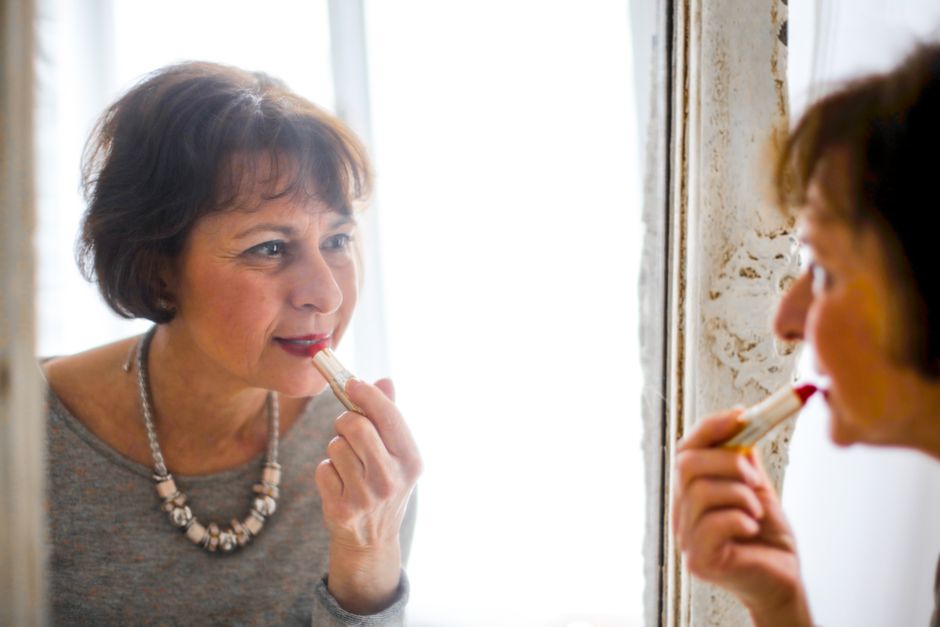
When your lips feel dry, choosing lipstick can become a balancing act: you want color that looks intentional, but you also want your mouth to feel comfortable when you smile and speak. The finish matters because it changes how light falls across the surface and how noticeable uneven texture becomes. Yet a shiny lipstick is not automatically soothing, and a matte one is not automatically uncomfortable. The useful question is how a particular formula looks and feels on your lips today.
Think of finish as a visual effect, then judge comfort separately. That approach gives you more options than ruling out an entire category, especially if your lips have become less predictable over time.
Separate the finish from the feeling
Finish describes the appearance left behind: flat, softly reflective, glossy, or pearlescent. Texture describes what you experience as you apply and wear the lipstick, such as slip, thickness, tackiness, or a setting film. Two lipsticks with similar shine can behave very differently. One may remain flexible, while another feels sticky or begins to tighten as it settles.
Packaging language can help you narrow the field, but words such as creamy, velvet, and moisturizing do not guarantee comfort. Even an ingredient list cannot tell you exactly how a finished formula will feel. Use the description as a starting point, then let the wearing experience decide.
Let the condition of your lips guide the choice
A little tightness without visible flaking is different from a rough, peeling surface. If your lips simply feel less supple than usual, you may still enjoy several finishes. If small flakes are catching color, a thin, forgiving application becomes more useful than strong coverage. If there are painful cracks, bleeding, swelling, or irritation, give lipstick a break while you address the discomfort.
Do not scrub or pick at flakes to make a finish work. Patch test unfamiliar products, particularly if your skin is sensitive, and stop using anything that causes burning or irritation. Seek advice from a dermatologist for persistent dryness, recurring cracks, or other ongoing problems. A cosmetic finish can change the appearance of dry lips; it cannot diagnose or treat the cause.
Compare finishes by what they actually do
Cream: flexible-looking color with some reflection
A cream finish often provides noticeable color with a gentle surface shine. It can be a comfortable candidate when you want your lipstick to look present without a completely flat appearance. Look for an application that moves easily across the lips without requiring repeated pressure.
The trade-off is that richness can turn into buildup. A thick cream lipstick may gather beside a flake or collect where the lips meet. Choose the thinnest layer that gives you the effect you want, and check whether the color remains even after you have spoken for a while. A creamy feel at application is only the beginning of the assessment.
Satin: restrained reflection with visible definition
Satin generally sits between flat color and obvious shine, though brands use the term differently. It can suit you if you want a defined lip with a modest amount of reflected light. On mildly dry lips, that balance may make texture look less stark than a very flat finish would.
Still, satin is not a universal answer. Some formulas settle into a firmer layer, and others stay more mobile. Check the inner lip as well as the outer surface: a polished appearance around the edges is less useful if the center starts feeling tight. Choose satin because its particular balance works for you, rather than because the label sounds gentle.
Glossy lipstick: light and movement, with possible gathering
A glossy lipstick reflects light more strongly and can give the surface a smoother-looking effect from a normal conversational distance. A sheer version may also make uneven fading less noticeable because there is less contrast between bare areas and covered ones.
More shine does not necessarily mean more comfort. A tacky formula can feel distracting, while a very slippery one may move into lines around the mouth. If you like this finish, check whether it spreads beyond where you placed it and whether pigment gathers in rough patches. You want reflection that stays attractive as the lipstick moves, not just immediately after application.
Matte: assess flexibility before dismissing it
Matte lipstick absorbs more of the visual attention into color because there is little surface shine. That flatness can make flakes and creases more apparent, especially with dense coverage. Some formulas also set in a way that feels restrictive on already uncomfortable lips.
However, a soft matte that remains flexible may suit mildly dry lips better than a sticky, highly reflective formula. If you enjoy matte color, assess a light application and pay attention to how your lips feel after the product settles. Persistent tightness is a reason to choose something else. There is no need to endure discomfort for a particular look.
Pearl and frost: examine the light-catching particles
Pearlescent finishes add reflected sparkle or a luminous sheen. Depending on the formula, those particles can draw attention to raised flakes rather than disguise them. A fine, subtle pearl may look quite different from a strongly frosted, opaque lipstick.
Check this finish in ordinary daylight and turn your face slightly. If the shine breaks into bright spots on rough areas, the effect may be less even than you want. This is a texture decision, not an age rule: choose according to how the lipstick sits on your own lips.
Consider coverage alongside shine
Finish and opacity are separate choices. A sheer matte and an opaque cream will not reveal texture in the same way, even if the cream has more shine. Dense pigment makes differences between covered and uncovered areas easier to see, so a very opaque lipstick may demand more maintenance when your lips are uneven.
If you are comparing options, start with similar coverage levels. Otherwise, you might blame the finish for an effect caused mainly by pigment density. You can also try a lighter application of a lipstick you already own. If it still catches or feels uncomfortable, adding more layers is unlikely to improve it.
Use a simple wear check
A hand swatch can show color and reflection, but it cannot reproduce how lipstick behaves on your mouth. When you can try a formula hygienically, assess it through ordinary movement rather than judging a freshly applied, motionless smile.
- At application: Does it glide with light pressure, or drag across the surface?
- After settling: Can you smile and speak without tightness or distracting stickiness?
- In daylight: Does the finish soften the appearance of texture or highlight individual flakes?
- As it wears: Does it fade evenly, or leave concentrated color around rough areas?
The best choice may change from one day to another. Keep the decision practical: choose the finish that gives you the amount of reflection you enjoy, the coverage you can maintain, and a comfortable feeling after the first application has settled. Lipstick should earn its place through wear, not through a promising description on the tube.