
A moisturizer can be a sensible choice on paper and still feel wrong on your face. Perhaps it remains sticky under makeup, disappears before your cheeks feel comfortable, or looks much shinier than you prefer. Texture is not a minor luxury detail when it affects whether you enjoy using the product. Instead of building a seasonal layering routine, focus on choosing one texture that suits the way your skin feels and the finish you want.
Describe the feeling before naming a skin type
Start with ordinary observations. Does your face feel comfortable after cleansing, or does it soon feel tight? Does the center become shiny while the cheeks still feel dry? Does your current moisturizer feel pleasant on bare skin but awkward beneath foundation? These descriptions are more actionable than deciding you must fit perfectly into one permanent skin-type category.
Keep the observation cosmetic and specific. For example, ‘the lotion feels comfortable on my forehead but not rich enough on my cheeks’ suggests a different experiment from ‘the cream leaves a glossy film everywhere.’ Do not diagnose a persistent rash, pain, or other ongoing skin problem through texture shopping. This guide concerns everyday moisturizer selection, not identifying or treating a medical condition.
Use texture names as a starting map
The AAD’s moisturizer guide describes gels as lighter, lotions as lighter than creams, and creams as richer than lotions and gels. It also notes that dry skin may benefit from a cream or ointment, while lighter textures can suit oily skin. These categories help narrow a comparison, but individual formulas still vary.
A gel can leave a noticeable film, and a cream can spread thinly. The label word alone does not tell you the exact finish. Look at how the product behaves at the amount you would realistically apply. You are choosing a complete formula, not buying the dictionary definition of gel, lotion, or cream.
Read useful label information before the promises
Check the intended application area and directions first. A hand cream, body lotion, and facial moisturizer may be designed with different uses in mind. If fragrance tends to bother your skin, look for a fragrance-free label rather than relying on an appealing scent description. The AAD distinguishes fragrance-free products from unscented ones, which may still contain ingredients used to mask odor.
Then consider practical packaging details. Can you dispense a modest amount easily? Is the ingredient list readable? Does the closure work without leaving product around the opening? A beautiful jar is not automatically inconvenient, and a pump is not automatically perfect. Choose a format you can use as directed without routinely exposing or spilling more product than you need.
Compare spread and finish separately
Spread describes how readily a moisturizer moves over the surface. Finish describes what it looks and feels like after it has settled. A product may spread effortlessly but remain tacky, or feel initially substantial and later become less noticeable. Give the comparison enough time to reveal both stages rather than judging solely by the first swipe.
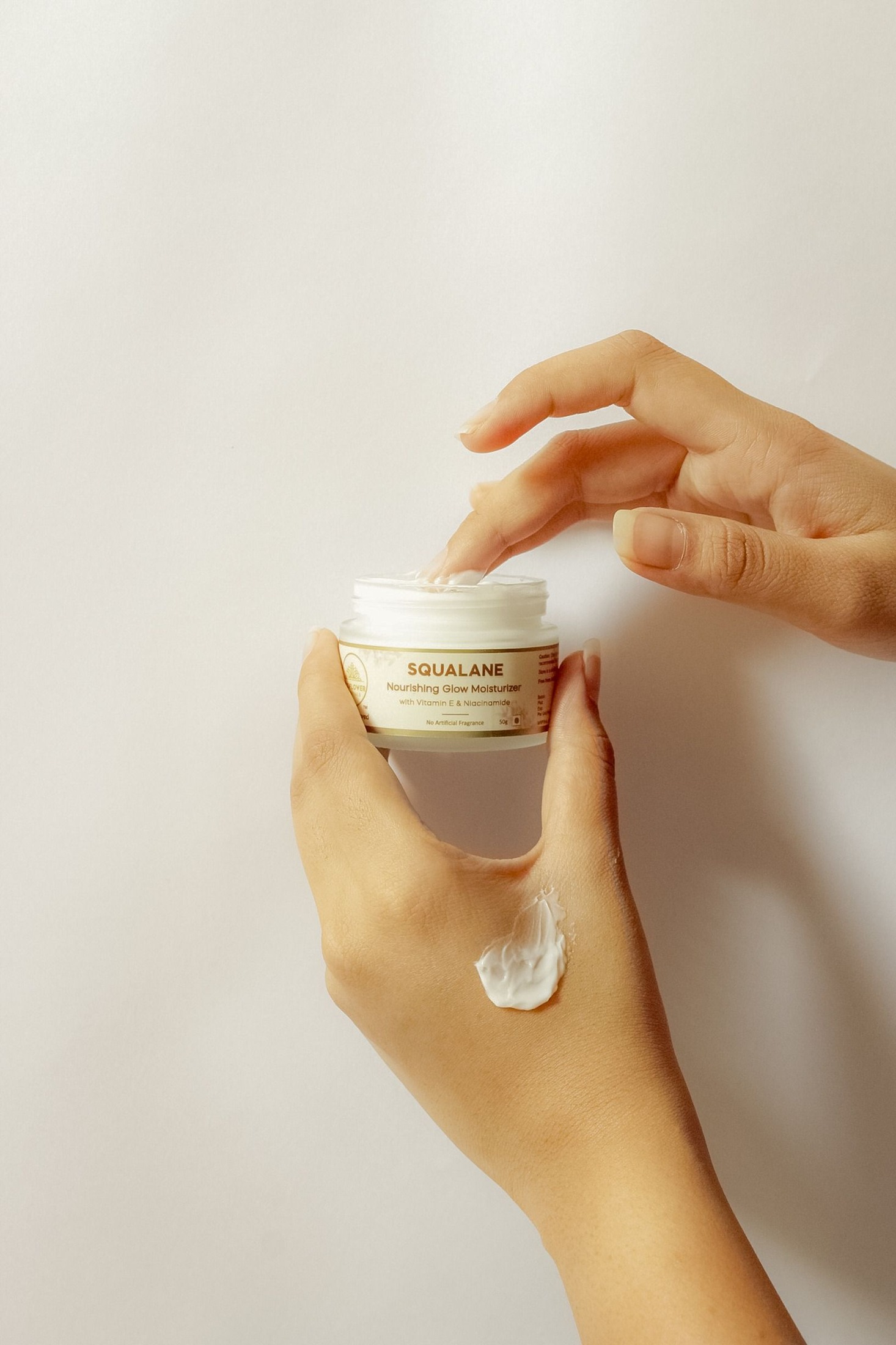
On a permitted sample or personal trial, note three things: whether you have to tug to distribute it, whether it leaves visible shine, and whether the final feel is comfortable. A hand swatch is useful for texture comparison, though it cannot promise how your face will respond. Follow the product’s directions and avoid treating a quick shop-floor swatch as proof of long-term suitability.
Match the texture to the cosmetic job
If your priority is a comfortable bare-face finish, you may prefer a cream that leaves a little sheen. If you want foundation to sit over it, a less slippery finish may make application easier. Neither preference makes one formula universally better. The question is whether the moisturizer does its job in the routine you actually wear.
For example, a person whose cheeks feel dry but whose forehead quickly looks shiny might try a modest cream application on the cheeks while keeping the center lighter. That is a placement decision, not an invitation to stack five moisturizing products. Another person may find one lotion comfortable across the whole face. Begin with the simpler arrangement and add complexity only if there is a clear reason.
Make one change and observe the result
When trying a new texture, keep the rest of your cosmetic routine familiar. If you introduce a new cleanser, primer, foundation, and moisturizer together, you cannot easily tell which caused a change in feel or finish. Use the moisturizer according to its directions and compare the result with the specific problem you identified at the beginning.
If the issue was foundation sliding, check whether it still slides after the moisturizer has settled. If the issue was uncomfortable cheek dryness, note comfort rather than focusing only on shine. A product that feels wrong does not become right because its marketing language is impressive. Stop using a product that causes irritation rather than forcing yourself through discomfort for the sake of finishing the container.
Keep a short, repeatable selection checklist
Before choosing, ask whether the texture spreads comfortably, feels suitable after settling, and works with the makeup you normally use. Check the label for intended use, fragrance information where relevant, and any directions you need to follow. Compare these real properties instead of assuming that a longer ingredient list or a more elaborate product name means a better match.
Once you have a comfortable option, there is no requirement to replace it simply because another texture is fashionable. Reassess when your actual experience changes. A moisturizer decision can remain pleasantly ordinary: the right amount of a suitable product, in a format you can use easily, with a finish you like. That is a more useful standard than assembling an increasingly complicated collection of products that all promise the same feeling.