
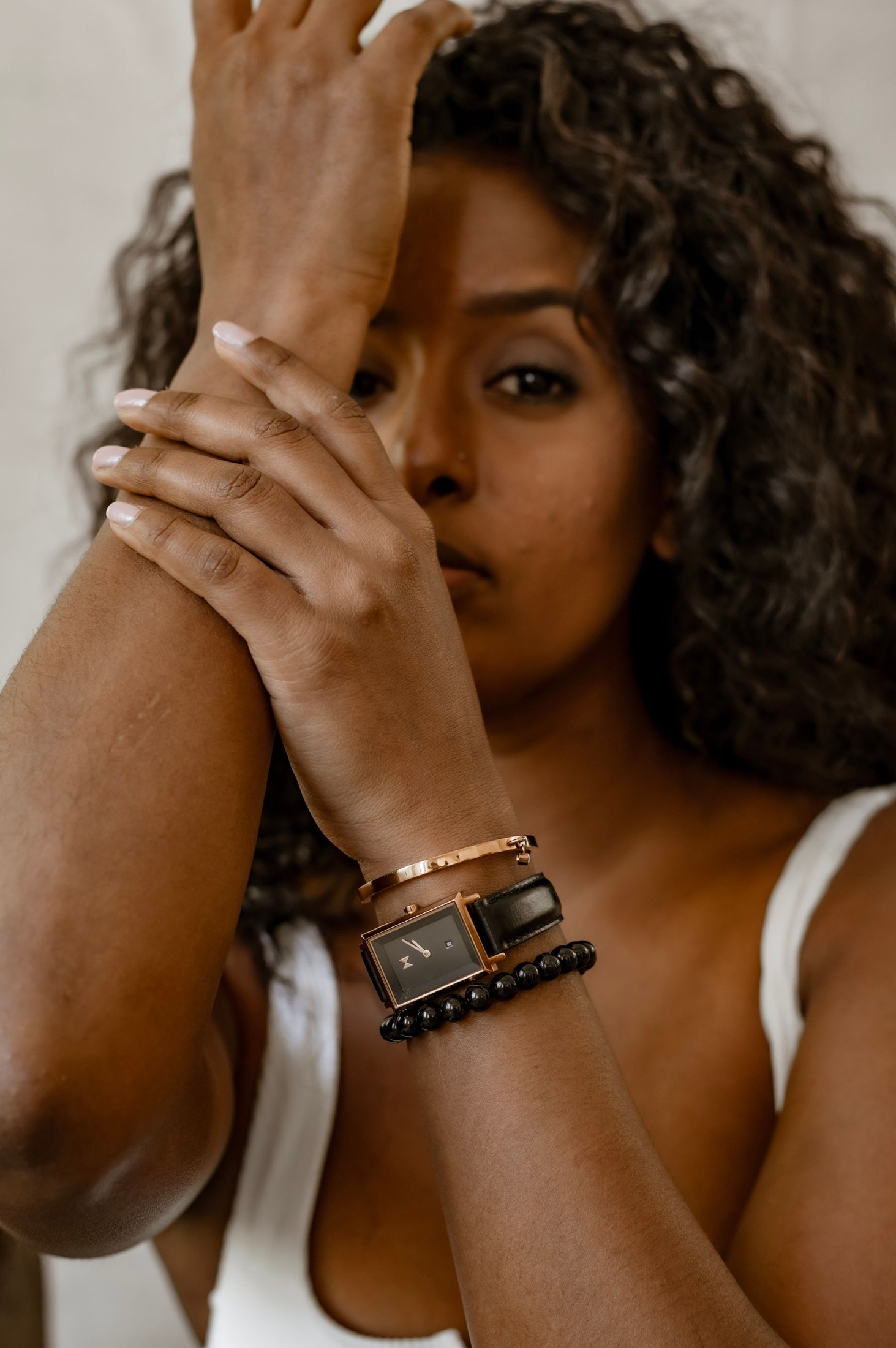
A watch and bracelet combination should look good while your arm is resting, moving, and partly covered by a sleeve. A carefully arranged stack can change as soon as you reach for something, so the goal is not to preserve a product-photo position. It is to choose pieces whose scale and movement remain manageable together. Begin with the watch you actually wear, including its normal strap adjustment, and decide whether the bracelet will share that wrist or balance it from the other side.
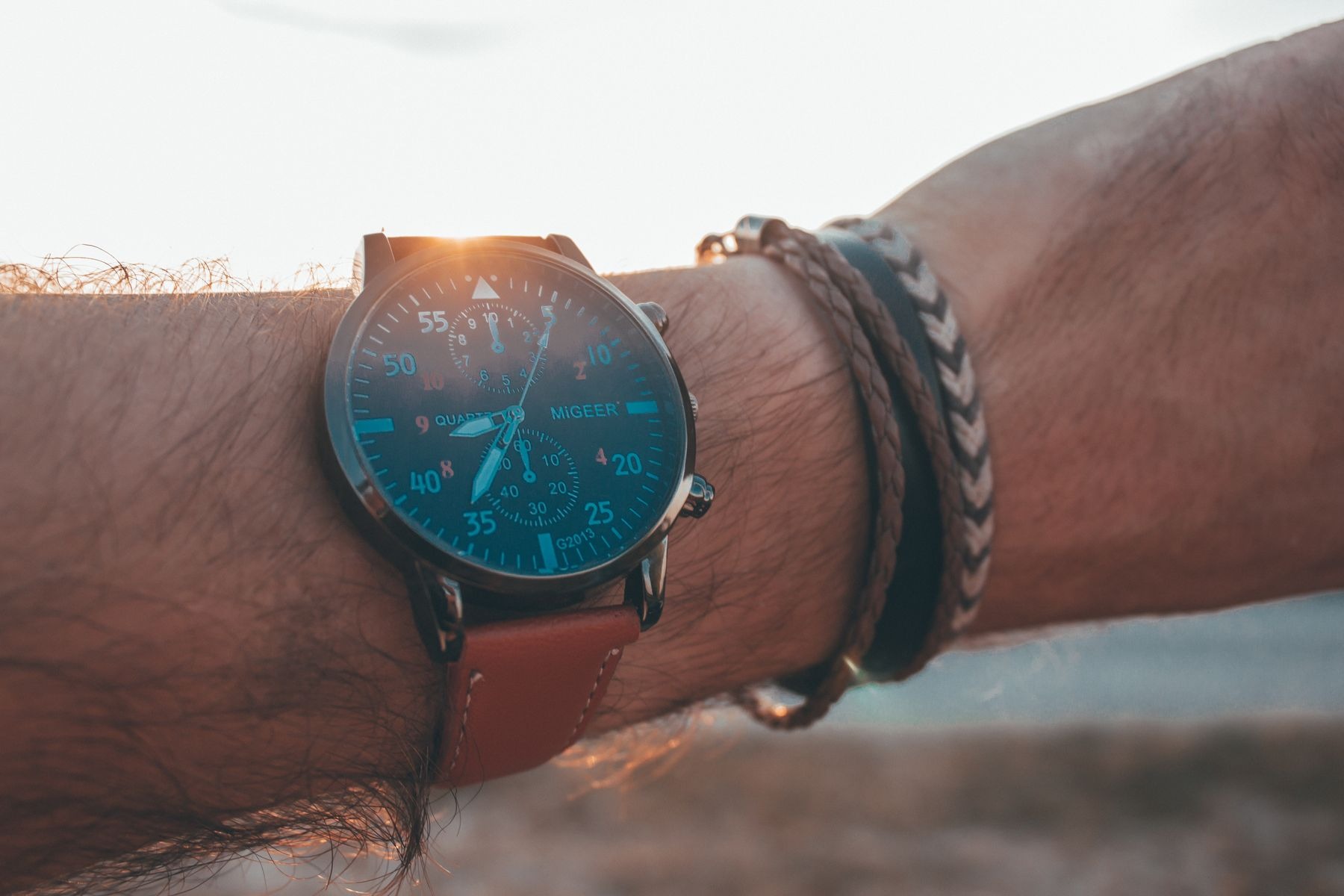
1. Treat the watch as an existing shape
Notice the width of the case, the thickness of the strap, and how reflective the watch appears. A broad polished metal watch occupies more visual space than a small dial on a matte strap. Neither requires a bracelet, and neither should automatically determine the size of every other piece. Put the watch on alone and see what it contributes to the outfit first.
Check its ordinary fit according to the manufacturer’s instructions. Do not tighten it unusually just to stop another accessory moving. If the watch already slides farther than you prefer, solve that separately before building a stack around it. Styling works best when it does not interfere with how the item is supposed to be worn.
2. Compare same-wrist and opposite-wrist arrangements
Wearing the bracelet on the opposite wrist creates separation immediately. This is useful when either piece is broad, ornate, or likely to knock against the other. A watch on one side and a simple cuff on the other can feel balanced without being symmetrical. It also leaves the dial visually clear.
On the same wrist, start with one bracelet rather than several. Let your arm hang naturally and see where both items settle. If the bracelet repeatedly crosses the face or wedges against the crown, another arrangement may be more practical. The best position is not necessarily the one that looks most compact when you carefully hold everything together.
3. Balance width before adding more shine
A slim chain can provide a small contrast next to a substantial watch. A broad rigid bangle may create a second dominant shape. Decide which effect you want before adding rings and other jewelry. If the wrist looks crowded, remove width first: swap the broad bangle for something finer or move it to the other arm.
A small watch can also sit beside a larger bracelet, but the bracelet will probably become the focal point. That is fine if it is intentional and the watch remains usable. Avoid judging balance solely by the number of pieces. One wide cuff may make a stronger statement than three fine chains, especially when its surface is brightly polished.
4. Use color and texture as separate decisions
A silver-colored watch and gold-colored bracelet can work together through deliberate contrast. Repeat one color elsewhere, such as in earrings or a ring, if you want a visible connection. A two-tone watch can offer an easy link, but it is not essential. Judge the visible finish rather than assuming every item with the same color looks identical.
Texture provides another route. A matte strap beside a smooth bracelet creates a quieter contrast than two highly reflective metal pieces. A woven bracelet can introduce a casual note, while a fine chain may feel more polished. Keep the outfit in view: a detailed cuff and patterned blouse may already provide enough texture without a complicated wrist stack.
5. Give the sleeve room to move
Fasten the cuff as you normally wear it, then bend your arm. The fabric should move over or sit above the accessories without becoming permanently trapped. A narrow shirt cuff may work better with a single watch than with several bracelets. A loose sleeve can hide the whole combination until you move, which is not a problem unless you dislike the intermittent effect.
With knitwear, check for contact between open bracelet details and the fabric. If a clasp or decorative edge catches, change the accessory rather than tugging the sleeve free repeatedly. Rolling a shirt cuff can reveal the wrist, but it should look like a natural part of the outfit, not a necessary workaround for an unmanageable stack.
6. Consider contact, closures, and everyday tasks
Hard pieces worn together may knock or rub, so consider what the manufacturers say about avoiding abrasion and contact. Do not assume a soft-looking bracelet cannot affect a watch finish; clasps and beads may still meet the case. If preserving a finish is important, separating the pieces onto opposite wrists is the straightforward option.
Try writing, fastening a jacket, and resting your arm on a table. Listen as well as look. A combination that clatters during every small movement may not suit the setting even if you like its appearance. Check that clasps remain secure and that nothing interferes with operating the watch. These practical details are part of a finished outfit.
7. Build a small set of reliable combinations
For a restrained work outfit, try a watch with a plain strap and one fine bracelet on the opposite wrist. For a relaxed shirt-and-jeans outfit, compare the watch with a single textured bracelet. For an evening outfit, a watch worn alone can look more deliberate than adding every polished accessory you own. The absence of a stack is also a styling decision.
Keep the combinations that remain comfortable and readable after several ordinary movements. When a pairing fails, identify whether the issue is width, noise, sleeve interference, or competing finishes. Change that variable rather than adding a connecting piece automatically. A balanced wrist arrangement has enough presence to look intentional and enough space to function.