
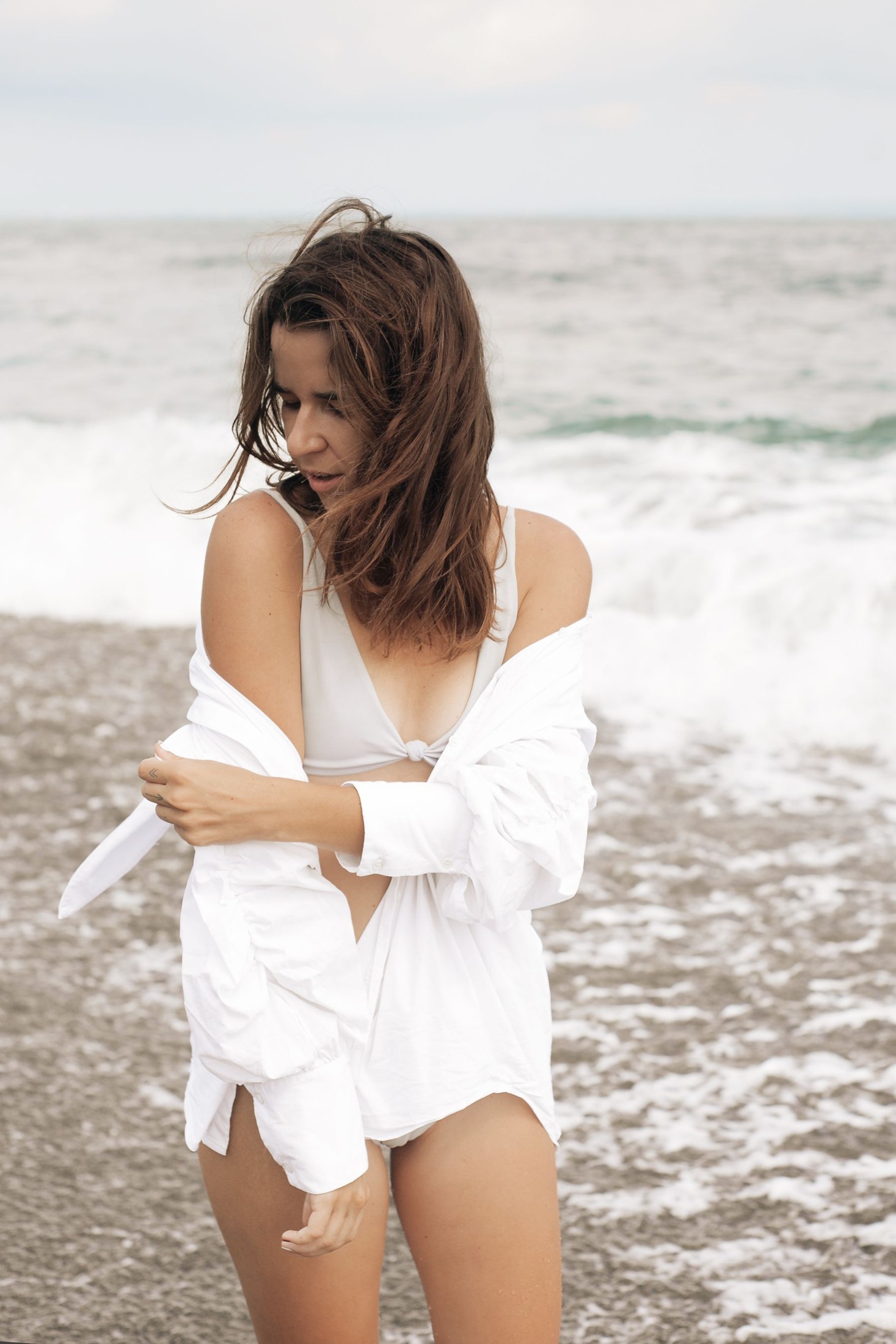
A beach-to-lunch outfit needs a real clothing layer, not just a swimsuit styled more elaborately. The most useful cover-up is one you feel comfortable walking and sitting in, with enough coverage and fastening security for the place you plan to eat. That could be a loose dress, a button-front shirt with trousers, or a properly wrapped skirt with a separate top. Start with the complete outfit you want at lunch, then work backward to the swimwear underneath.

1. Decide what complete coverage means for the setting
A casual beach kiosk and an indoor restaurant may have different expectations, so check the venue rather than assuming any cover-up will be suitable. Even in an informal setting, consider whether you want covered shoulders, a closed front, or a hem that remains comfortable when seated. Your own preferences matter as much as the venue’s requirements.
Try the outfit on over the actual swimsuit. A low-backed suit, a halter tie, and a structured bikini top can show differently beneath the same garment. Decide whether visible straps look deliberate or whether you want a higher neckline or different sleeve. Choosing the clothing around the swimsuit is more reliable than hoping an unfamiliar cover-up will conceal every shape.
2. Check opacity in realistic light
A cover-up may look opaque against a wardrobe door and become much more transparent in bright outdoor light. Hold the garment up, then try it over the swimsuit in daylight where you can check comfortably and privately. Look at the front, back, and side. Pale fabric, open weaves, and stretched areas may show more than you expect.
Also consider the contrast underneath. A dark or strongly patterned swimsuit can remain visible through fabric that seems adequately covered over a similar color. If you want the cover-up to read as an ordinary dress at lunch, choose the opacity accordingly. Do not assume that adding a belt will solve transparency; it may make the fabric closer fitting and more revealing.
3. Evaluate dampness and sitting separately
A garment that feels airy over dry swimwear may cling or become uncomfortable over a damp suit. Follow the swimwear and cover-up care guidance, and plan a dry clothing option if you do not want to wear damp fabric into lunch. Do not assume every fabric will tolerate repeated contact with wet swimwear simply because the item is sold as a cover-up.
Sit in a chair during your trial. Check that the hem stays where you want it and that a front opening does not spread unexpectedly. If the cover-up has a side slit, see how much it opens while seated. The standing mirror view is only half the test; lunch is an activity in which seated coverage matters.
4. Choose a dress for the simplest change
An opaque loose dress can create a complete outfit with one garment. Look for a neckline that works over your swimsuit and a closure you can manage without extensive rearranging. A button-front style offers adjustable coverage, but check for gaps between buttons across the chest and hips. A pull-on style avoids those gaps but still needs enough room to move comfortably.
For example, a blue cotton cover-up dress over a plain swimsuit can feel like regular casual clothing when its fabric, hem, and neckline provide the coverage you want. Keep its shape visible rather than automatically cinching every loose garment. If a belt makes the dress ride up when seated, the unbelted version may be the better outfit.
5. Use separates when you want more control
A long shirt with loose trousers or a skirt lets you adjust top and bottom coverage independently. Wear the shirt open only if the layer underneath is appropriate for the setting; otherwise fasten it as part of the lunch outfit. Check that the trousers are opaque and comfortable over the swimsuit rather than assuming any drawstring pair will work.
A wrap skirt can be useful, but test the overlap while walking and sitting. Pair it with a real top if you want more coverage than the swimsuit provides. A white shirt, navy wrap skirt, and simple swimwear form one possible combination. The key is that the shirt and skirt create the outfit, rather than the swimsuit being asked to do every job.
6. Keep accessories compatible with the clothing change
Choose accessories after the clothing works. A bag should have a manageable place for any garment you remove or change, and jewelry should not catch the cover-up’s weave or closures. A hat can suit the beach portion without being essential to make the lunch outfit feel complete. Check venue expectations about indoor headwear rather than building the whole look around keeping it on.
If you add a belt or tied scarf, consider whether it interferes with fastening or drying the garment according to its care needs. More accessories do not compensate for insecure coverage. First solve the garment fit and closure; then use a small amount of color or texture to make the outfit feel like your usual style.
7. Rehearse the transition before relying on it
Put on the swimsuit, add the cover-up, fasten everything, and walk and sit normally. Check the back with a mirror. If the plan includes changing into dry underwear or another top, make sure those pieces are actually included rather than leaving the step implied. Do not rely on an imaginary extra layer when judging whether the outfit is complete.
The final checklist is practical: appropriate coverage, adequate opacity, secure openings, comfortable movement, and a realistic dry-clothing plan. Once those are settled, choose the color and silhouette you enjoy. A convincing beach-to-lunch outfit is not the most elaborate one. It is the one that becomes ordinary wearable clothing when you leave the sand.