
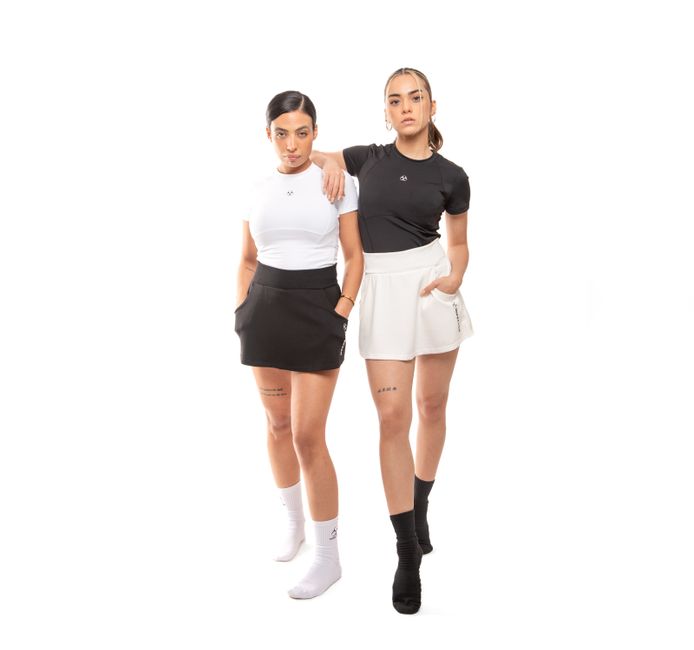
A sightseeing day asks a lot of your clothes. You might climb station steps, wander through a market, sit on a low wall, and stop for lunch without returning to your room. A skort can make those transitions feel easy, combining the appearance of a skirt with shorts underneath. The useful part is finding one that stays comfortable through all that movement. Look beyond the front view in the mirror: the inner shorts, waistband, fabric, and pockets deserve just as much attention as the hem.
Choose for the day you actually have planned
Start with your itinerary rather than a particular silhouette. A mostly indoor day with short walks between galleries places different demands on a skort than a long afternoon exploring steep streets. Think about how often you will sit, whether you will carry a bag, and how warm the route is likely to feel. Those details help you decide which features earn their place.
Check dress expectations at any places you intend to visit, too. Some religious or cultural sites require more coverage than a short skort provides. Built-in shorts do not change the visible length of the garment. If your plans call for covered knees, choose an appropriate alternative instead of relying on the hidden layer.
Give the inner shorts their own fitting
The outer skirt can look lovely while the shorts underneath make every step distracting. Treat the two layers as separate garments during your fitting. The shorts should allow a natural stride without pulling across the crotch, gripping the thighs, or dragging the waistband downward. You should be able to sit without feeling that the rise has suddenly become too short.
Find a leg length that stays where you want it
If you want fabric between your thighs while walking, check where the inner shorts end on your own body. A longer outer hem does not necessarily mean longer shorts underneath. Walk around, sit down, and stand again before deciding. If the legs immediately roll or gather upward, try another cut rather than assuming you will stop noticing it outdoors.
Feel the seams and leg openings with your fingertips. A bulky seam or firm band may become more noticeable during a long walk. Soft, flat construction can be easier to wear, but your movement test matters more than a description on a label. The shorts should feel secure without requiring you to keep tugging them into position.
Let the waistband pass the seated test
A waistband that feels fine while you stand tall can become uncomfortable at a cafe table or on a bus. Sit with your knees bent and breathe normally. Notice whether the top edge presses into your middle, folds over, or leaves the back gaping. Choose a rise that works with your torso rather than one you feel obliged to wear.
An elastic waist can offer flexibility, while a zip fastening may give a smoother front. Neither guarantees comfort. Check that elastic stretches easily and returns without twisting, and that any zip or button sits clear of a pressure point. If there is a drawstring, adjust it while seated as well as standing; tightening it hard to prevent slipping usually signals a fit problem elsewhere.
Compare both fabric layers
Read the fabric information for the shell and the inner shorts. A light outer skirt can hide a much warmer lining. Hold the layers separately and feel their weight, stretch, and texture. For warm outings, look for a combination that feels comfortable against your skin without becoming so flimsy that the skirt clings or catches easily.
Cotton-rich woven fabrics can give a casual, familiar finish, though some crease readily. Stretch woven fabrics may offer useful freedom of movement. Soft knits can feel relaxed but may reveal pocket outlines or cling more closely than you expect. Judge the finished garment rather than choosing by fiber name alone, since thickness and construction affect how it wears.
Consider care before packing it. Check whether the skort can be washed and dried in a way that suits your accommodation and schedule. Do not assume a lightweight garment will dry quickly when its waistband, pockets, and inner layer are much denser than the shell.
Choose coverage you feel relaxed wearing
There is no special skort length you need to adopt at a particular age. The right hem is one that lets you move and sit without constantly checking it. View the skort from the side and back, then sit on a chair. The outer layer will shift, so assess how it feels in that position as well as standing.
A gently flared shape can provide room through the hips and thighs, while a straighter cut gives a simpler outline. With either shape, check for pulling across the seat and enough space for a full step. Extra fabric is not always helpful: a very full shell can feel cumbersome when you are navigating crowded transport or carrying a shoulder bag.
Inspect any wrap-style front
An overlapping panel can give a skort a neat skirt appearance, but check how it behaves when you walk and sit. Notice whether the overlap opens easily or whether its edge catches on your bag. The shorts provide an underlayer, yet you may still prefer a front that stays settled. Choose according to how much adjusting you are comfortable doing.
Make pockets prove their usefulness
A pocket is only useful if you can reach it and carry something without distorting the fit. Try your phone in the intended pocket during a fitting, if permitted. Walk and sit with it in place. Check whether its weight pulls the shorts down, swings against your thigh, or creates a hard edge when you bend.
A secure pocket can be handy for a small essential, but avoid treating the skort as your entire day bag. Overfilled pockets can change how both layers hang. If you plan to use a crossbody, try the strap across the outfit and see where the bag rests. Hardware rubbing against the same spot can also make an otherwise comfortable waistband irritating.
Keep the rest of the outfit straightforward
Once the skort works, build around pieces you already enjoy wearing. A simple tee or an easy shirt suits casual sightseeing without requiring elaborate styling. Leave enough room at the waist for the top to sit comfortably; a bulky tuck can undo a good fit. Bring the shoes you expect to walk in to judge the complete outfit.
Neutral colors are easy to repeat, while a subdued print may make small creases less obvious. Choose whichever fits your existing clothes. Decorative ties, prominent hardware, and complicated panels are worth examining closely if they sit beneath your bag or need frequent straightening.
Do a short rehearsal before a long outing
Before relying on a new skort for a full day away, wear it for an ordinary walk close to home. Include stairs and a seated break, and carry your usual bag. Notice any repeated adjustment: rolling shorts, a slipping waist, or an opening panel. A skort that stays settled leaves you free to read the museum label, browse the next stall, and enjoy the view.