
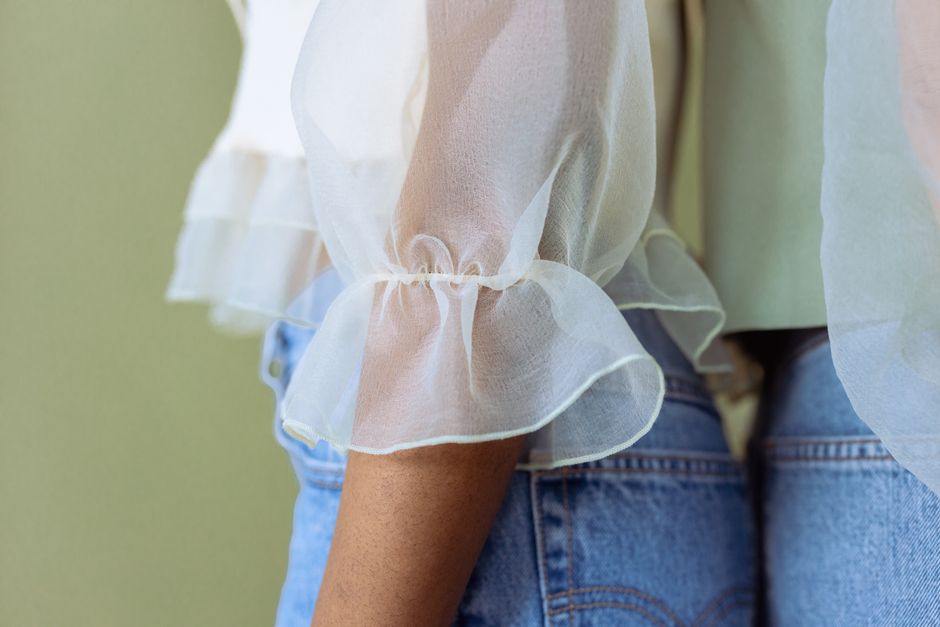
A sheer summer blouse brings lightness to an outfit, but the layer underneath determines how the whole look comes together. A tonal camisole gives the blouse a coordinated foundation while allowing its delicate fabric to remain the focus. The useful details are simple: how the colors look when layered, where the camisole neckline sits, and whether the two pieces move comfortably together. Once those elements work, you can finish the outfit with familiar trousers or a skirt and feel comfortably dressed for your plans.
Find the color match through the blouse
Tonal means staying within the same color family. Your camisole does not need to match the blouse exactly. A dusty blue camisole beneath pale blue fabric can create gentle depth, while warm ivory beneath cream gives a softer effect. The goal is a relationship between the shades that feels deliberate.
Always assess the colors with the camisole underneath the blouse. Holding the garments beside each other tells only part of the story, because transparent fabric changes the shade beneath it. Something that looks slightly dark on its own might soften beautifully under the blouse. An apparent match could look surprisingly yellow or gray once layered.
Start with the undertone
Look for warmth or coolness before worrying about an exact match in depth. A creamy blouse usually sits comfortably over warm ivory, while a cool pink blouse may suit a muted rose camisole. Try the combination near a window and step back from the mirror so you can judge the overall effect.
For a printed sheer blouse, choose a camisole close to the background color. This gives the pattern a steady foundation. A slightly deeper version of that shade can work too, especially if you like the underlayer to be visible as a distinct part of the outfit.
Make the camisole part of the design
Because you will see it, treat the camisole as an intentional garment. Its straps, neckline, seams, and finish all contribute to the finished look. A simple opaque style with minimal decoration usually creates a calm base beneath a sheer blouse.
A matte surface keeps attention on the outer fabric. A softly lustrous camisole can feel dressier, although its shine may stand out more in bright light. Lace trim adds another visible detail, so choose it when you enjoy that extra pattern. There is no need for the camisole to disappear completely.
Arrange the necklines clearly
A scoop or gently squared camisole neckline can sit neatly beneath an open collar or shallow V. Look for enough space between the two edges to make their arrangement feel deliberate. If the camisole only peeks out unevenly, adjust its straps or try a different neckline.
With a high-neck blouse, a simple camisole creates a clear shape across the chest. Check the view from behind as well. A low camisole back leaves a different area transparent, which may or may not suit your preferred coverage. Choose the outline you feel comfortable wearing, without treating age as a rule about what you should conceal.
Give both layers room to move
Sheer fabric reveals folds and pulling underneath, so fit matters more than adding elaborate details. Choose a camisole that follows your body comfortably without stretching tight or bunching into thick folds. The blouse should then have enough room to hang over it freely.
Try the actual garments together. A textured camisole may catch against a fine blouse, while smoother surfaces may move more easily. Reach forward, lift your arms, and sit down. Both pieces should settle again without repeated rearranging. If the blouse twists every time you move, check whether the fabrics are catching before changing sizes.
- Adjust straps so they remain comfortable and do not pull the neckline too high.
- Check for tension at the blouse buttons and across the upper back.
- Look for camisole seams that show more strongly than you want.
- Make sure the underlayer keeps your chosen coverage when you reach up.
Decide where the hems belong
The camisole hem can make a distinct horizontal line beneath sheer fabric. Decide where you want that line before choosing accessories. An underlayer that ends above the waistband leaves a visible strip of skin; a longer camisole gives continuous coverage. Either arrangement should feel intentional when you move.
If you wear the blouse untucked, keep the camisole hem beneath it unless you specifically like a visible layered edge. A smooth hem often hangs more easily than a thick band. Check that the camisole does not catch inside the blouse and create a shelf of fabric around your middle.
Tucking just the camisole can keep its hem steady beneath a loose blouse. Check that the waistband does not pull it down enough to alter the neckline. If you tuck both garments, distribute the fabric around the waistband rather than gathering it at the front, then sit to check comfort.
Build an outfit around the soft layers
Opaque bottoms give the blouse a clear foundation. Consider how its volume works with your trousers or skirt. A loose, floating blouse often pairs easily with a relatively clean trouser shape. A closer blouse can accompany fuller bottoms without creating quite as much fabric around the waist.
An easy daytime combination
Try a pale blue blouse over a muted blue camisole with straight cream trousers and comfortable sandals. The related blues make the upper half feel coordinated, while the trousers add structure. Keep jewelry simple enough that the blouse neckline remains easy to see. A small pair of earrings may be all you want.
A quiet evening combination
Pair a deep plum blouse with a tonal plum camisole and charcoal trousers. The deeper colors let the sheer texture show without a sharp color break across the torso. A simple bag and softly polished shoes complete the outfit. You can keep the neckline relatively closed and still enjoy the airy effect through the sleeves.
Check the result in changing light
Look at your outfit in daylight and ordinary indoor light before leaving. Turn sideways and check the back, paying attention to the camisole edges and the spaces it leaves sheer. What feels comfortably covered in a dim room can look different beside a bright window.
Consider the setting too. If your workplace requires opaque clothing across areas the blouse leaves sheer, choose a different top for that day. For warm weather, remember that two lightweight garments can still feel warm together. Comfortable fabrics and enough room for movement matter as much as the airy appearance.
When the colors sit well together and both layers hang comfortably, the outfit needs very little extra work. Let the camisole give the blouse its quiet foundation, add bottoms and shoes that suit your day, and allow the delicate texture to provide the interest.