
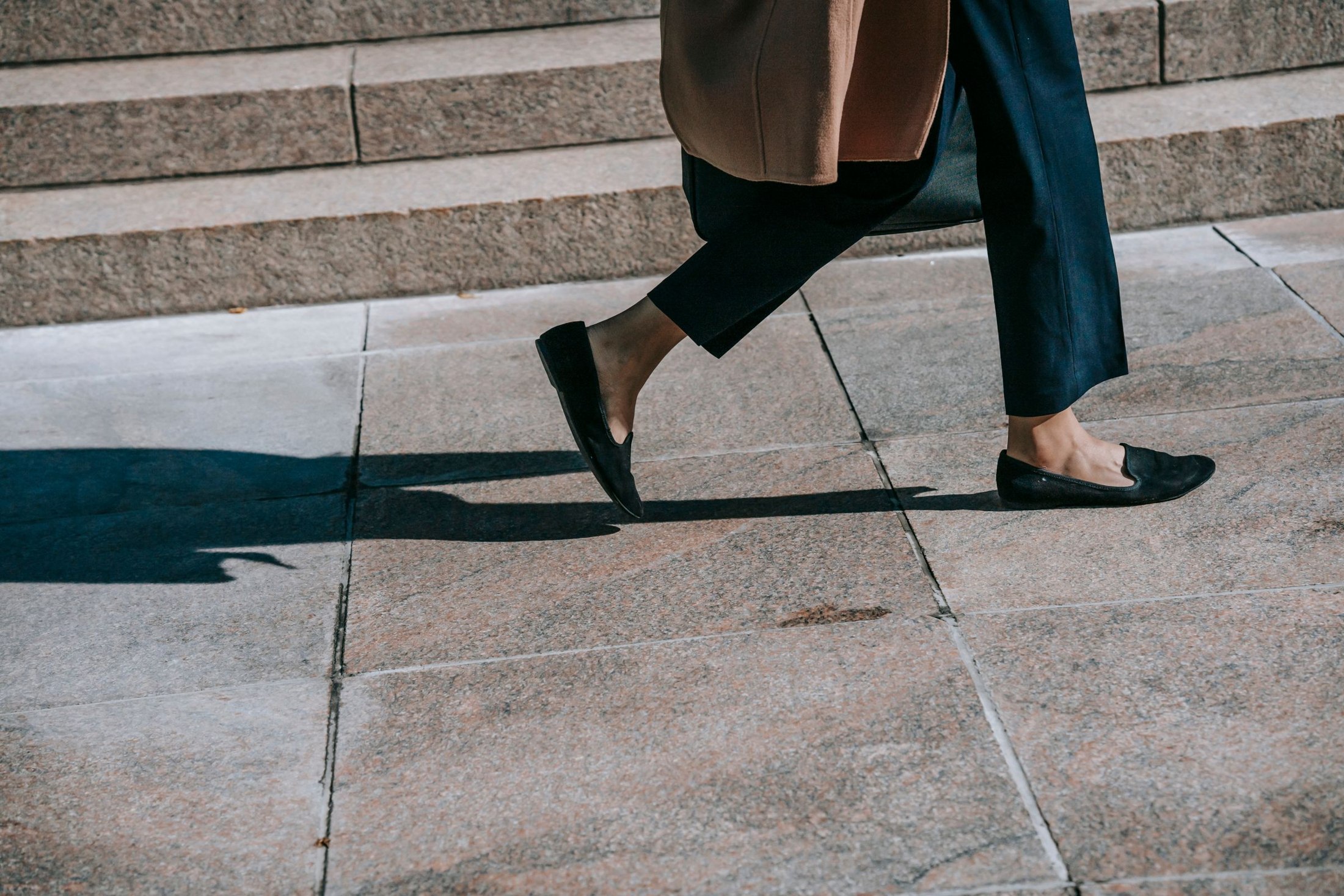
Petite trouser shopping is not simply a matter of removing several inches from a standard hem. The same trousers can pool over loafers, hang neatly above a low heel, and seem unexpectedly short with platforms. Leg shape and the front of the shoe matter alongside heel height. A useful hem plan begins with the shoes in your real weekly rotation and accepts that some trousers deserve a dedicated footwear partner.
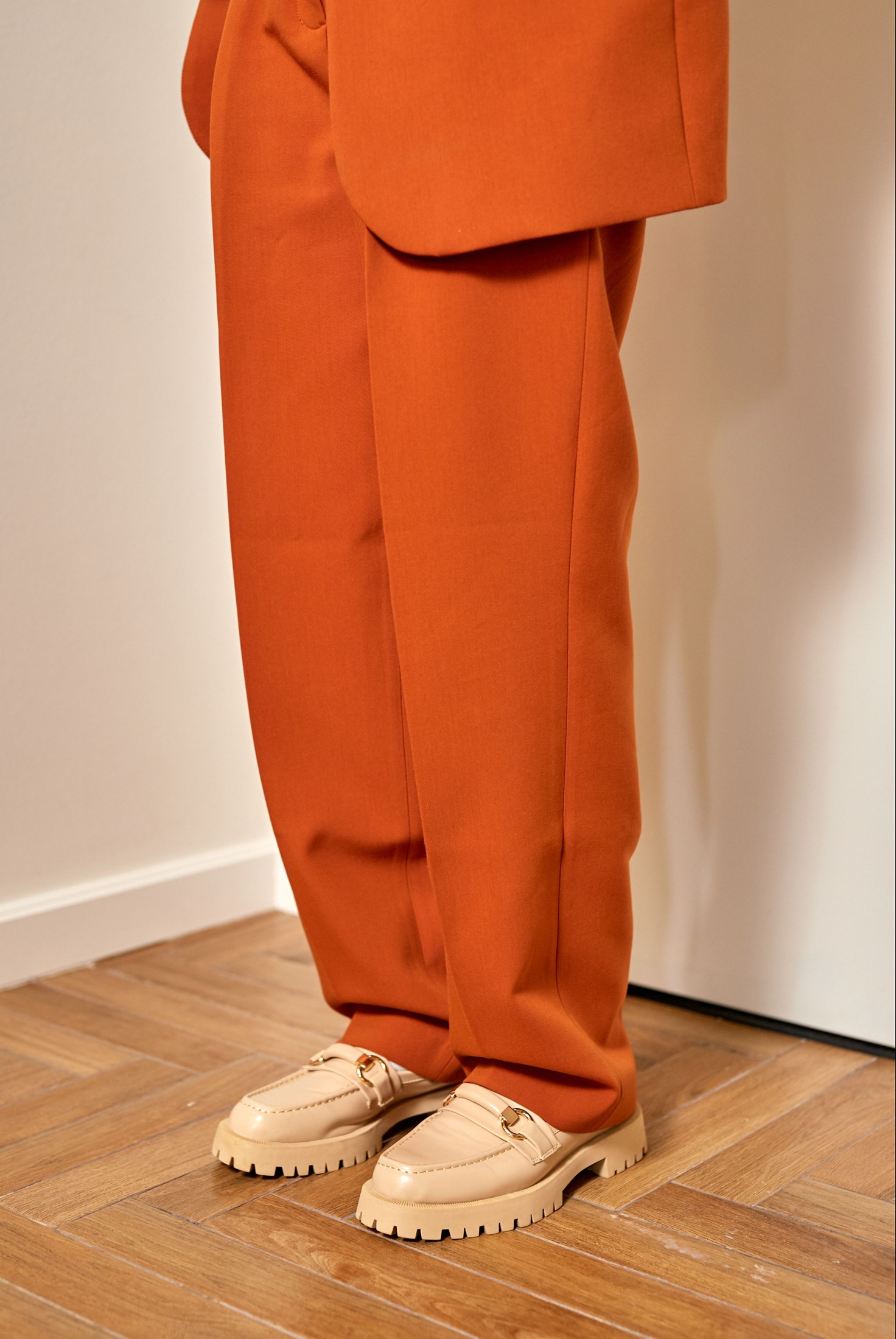
Make a small shoe-height map
Set out the three pairs you wear most: perhaps flat loafers, low block heels, and thicker-soled trainers. Compare the height beneath the whole foot, not just the heel. A platform raises the toe as well, while a traditional heel changes the angle of the foot. That difference affects where the trouser front rests and how much shoe appears below it.
Try the trousers with each pair and note what changes. Does the back touch the floor? Does the front catch on a high loafer vamp? Does a platform expose an unexpectedly large section of sock? These observations are more useful than assuming every flat shoe needs the same hem. Photograph the front and side at roughly waist height for a consistent comparison.
Give narrow and wide legs different targets
A tapered ankle trouser is designed to reveal some footwear. It can usually accommodate more shoe variation because the hem is not intended to hover close to the floor. Check that the narrower opening clears the ankle comfortably and does not cling to the calf. A hem that looks cropped while standing may ride much higher when seated, which matters if you prefer continuous sock coverage.
A wide or softly flared trouser relies more on length for its shape. Too much fabric can collapse over the toe and hide the intended line. Too little can make a floor-skimming design look accidentally cropped. For a petite wearer, the important issue is not whether wide legs are allowed; it is whether the volume hangs cleanly from waist to hem.
Fit flats around the vamp as well as the sole
With full-length trousers and flat shoes, keep the rear hem visibly clear of the ground during ordinary walking. At the front, look for a controlled fold rather than a stack of fabric. A high loafer vamp can hold up the trouser front even when the back length is correct. Try a smoother-fronted shoe before asking for the entire trouser to be shortened.
For an ankle-length style, a small gap above loafers can look deliberate. Pair charcoal tapered trousers with a fine black sock and black loafers if you want a quieter transition. With cream trousers and pale flats, the lower contrast creates another coherent option. Neither requires a universal amount of exposed ankle; choose the coverage that suits your preference and setting.
Pin low heels with the actual pair on
Bring the intended shoes to a fitting or put them on before pinning at home. Describing them as a small heel leaves too much uncertain. Toe shape, heel placement, and the thickness of the sole all change the result. Stand naturally while someone assesses the hem, and avoid stretching upward to inspect yourself in a mirror.
For example, navy straight trousers might sit neatly over burgundy block-heel pumps with just a soft break at the front. The same pair may wrinkle more over a low ankle boot because its upper is taller. Check the trousers from behind, then take several steps. Ask for enough clearance that the fabric does not slip under the heel as your foot moves.
Decide whether platforms need their own trousers
Platforms can make an ankle-length trouser feel more graphic because the visible shoe has greater visual weight. That can be an appealing combination: try cropped black trousers, a striped knit, and compact platform loafers. Keep the hem level and intentional rather than trying to disguise every bit of the shoe.
With broad full-length trousers, a platform may require more length than your flats. Trying to serve both pairs with one hem can leave the flats dragging or the platforms looking disconnected. If you wear the higher shoes frequently, designate one trouser pair for them. If you rarely wear them, keep the hem practical for your usual shoes and enjoy a visibly shorter look on occasional platform days.
Check alterations beyond the bottom edge
Shortening alone will not correct a knee shape that falls too low, a rise that pulls, or pockets positioned awkwardly for your proportions. Examine those areas before paying for hemming. A petite cut may place the knee and rise differently, but sizing labels are only starting points. Sit down and check whether the waistband remains comfortable and the pockets lie reasonably flat.
Look at the existing hem construction too. A deep turn-up adds weight, while a narrow finish behaves differently in fluid fabric. Discuss how the altered hem will be finished rather than assuming it will retain the original drape. Avoid permanent cutting until you have tested the pinned length with both walking and sitting, especially if the fabric has a strong crease.
Keep a practical two-length wardrobe
A reliable solution is often one adaptable ankle-length pair and one full-length pair assigned to a familiar shoe height. That gives you flexibility without making every morning a hemming negotiation. For a compact work rotation, charcoal ankle trousers can handle loafers and low pumps, while a navy wide pair stays with the shoes used at its fitting.
Before calling the hem finished, check the floor clearance, the front fold, the seated height, and the appearance from the side. Use these checks to judge the garment rather than chasing an imaginary leg-length rule. Well-chosen petite trousers do not need to imitate another person’s proportions. They need to fall cleanly and work with the shoes you actually wear.