
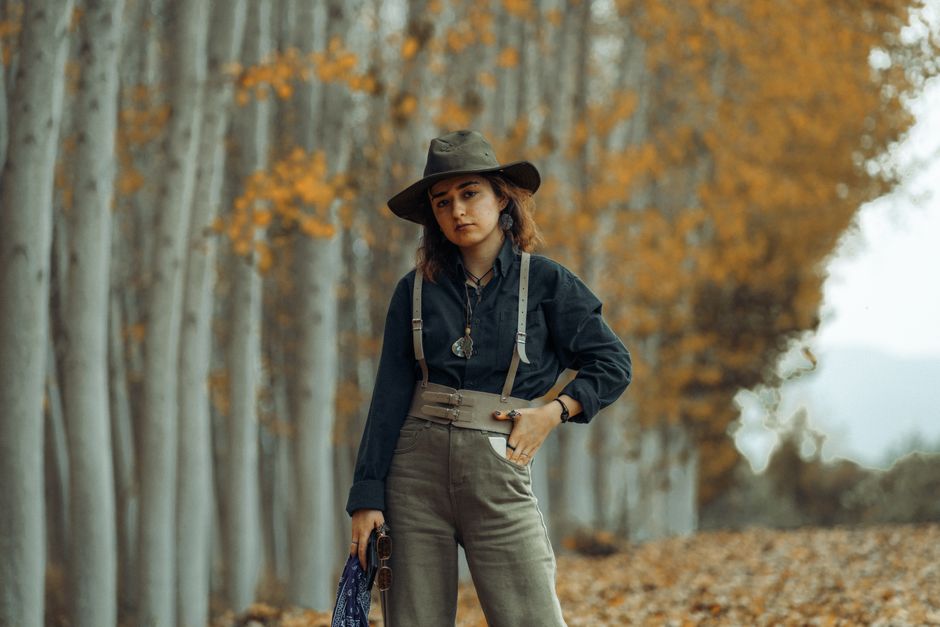
A pale blue shirt and olive trousers make an easy pairing when you want color without a bright outfit. The blue brings a fresh, airy note; the olive gives it a grounded feel. Together, they can look relaxed, tailored, or quietly dressy depending on the fabrics and finishing pieces. The useful starting point is to treat these two colors as the outfit itself. You can then choose shoes, a bag, and an extra layer that support the combination without distracting from it.
Find the right blue and olive together
Lay your shirt over the trousers before getting dressed, preferably near a window. Pale blue can lean icy, gray, or slightly green, while olive ranges from dusty sage to deep brownish green. You do not need a precise color match. Look for a combination in which both pieces remain distinct and neither seems unexpectedly dull beside the other.
A clear sky blue gives brownish olive a refreshing lift. A softer, grayish blue feels understated with muted olive. If your trousers have a strong yellow cast and the shirt looks very icy beside them, try a cream accessory to soften the transition. Sometimes changing the surrounding color is enough to make two existing pieces feel more comfortable together.
Let fabric establish the mood
The same colors can suggest different occasions. A crisp cotton shirt with smooth olive trousers feels purposeful and suits a day with appointments or a casual workplace. A washed linen shirt and softly draping olive trousers feel easier for lunch outdoors. Neither combination needs elaborate styling, because the fabric already tells you where the outfit belongs.
Contrast can also be useful. A fluid pale blue shirt softens sturdy olive twill, while a structured shirt gives lightweight trousers a clearer outline. When both pieces are very soft and loose, add one defined element, such as a firm leather bag. When both are stiff, an open neckline or a softer shoe can make the outfit feel less formal.
Choose a silhouette you enjoy wearing
Start with the trousers because their shape determines how much volume you may want above them. Wide legs work comfortably with a shirt that has some definition at the shoulders. Straight trousers leave room for a more relaxed shirt. Narrow trousers can support a longer shirt hem if that is the coverage and outline you prefer.
There is no requirement to make the smallest possible silhouette. What matters is whether the pieces look intentional together and allow you to move. Check the shirt across the bust and upper arms, then sit in the trousers. Pulling buttons, strained pockets, or a waistband you keep adjusting will distract from an otherwise lovely combination.
Decide where the shirt should end
If you prefer to wear your shirt loose, notice where its hem crosses the trousers. A hem ending around the upper hip often leaves more of the olive visible. A longer hem creates a more relaxed impression, especially with straight or narrow legs. Stand back from the mirror to assess the whole outline instead of concentrating only on your waist.
A full tuck can suit a shirt with manageable fabric and trousers with enough waistband room. If that feels restrictive, choose a shorter shirt or wear it loose. You do not need to force a particular finish simply because it looks tidy on a hanger. The best choice should still feel good after you have sat down.
Use shoes to give the pairing direction
Shoe color makes a noticeable difference because the shirt and trousers are already relatively quiet. Warm brown adds richness, cream lightens the outfit, and black creates a stronger finish. Begin with the shoes you can comfortably wear for your plans, then decide which mood they bring to the clothes.
- For a relaxed day: Try simple cream sneakers with a cotton shirt and olive twill trousers. Keep the other accessories similarly uncomplicated.
- For a polished daytime look: Pair smooth brown flats or low heels with a crisp shirt and tailored olive trousers.
- For a sharper finish: Choose black shoes with a clean shape, then repeat black in a bag or belt if the contrast feels isolated.
- For warm weather: Tan sandals work easily with a lightweight blue shirt and olive trousers in a breathable fabric.
Consider how the shoe looks beneath the actual trousers, rather than judging it separately. A substantial trouser leg may need a shoe with enough presence to be visible. A delicate shoe can work beautifully with a lighter, fluid leg. Walk a few steps to check that the fabric falls freely.
Add one supporting neutral
You already have two colors doing useful work, so a supporting neutral keeps decisions simple. Cream makes the combination feel soft and light. Chocolate brown brings depth without a stark edge. Navy gives it a more formal character, especially when used for a jacket or bag.
Choose one of those directions before adding several accessories. For example, cream shoes and a cream bag make an easy frame for the blue and olive. A brown bag with related brown shoes feels equally coherent without requiring an exact match. You can vary texture while keeping the overall color relationship calm.
Choose a layer that earns its place
A cream jacket offers a gentle contrast over pale blue and olive, while a navy jacket gives the outfit more definition. Check that the shirt collar sits comfortably and that the sleeves have room inside the jacket. Leave the jacket open initially so you can see how all three colors relate.
For cooler casual plans, a plain oatmeal sweater draped over the shoulders or worn over the shirt can work well. Keep enough blue visible at the neckline to preserve the original pairing. If an added layer makes the outfit feel crowded, simplify the accessories before deciding that the colors are wrong.
Give accessories a quiet purpose
A small amount of jewelry can finish this combination without becoming another styling project. Gold tones bring warmth to earthy olive; silver tones echo the cooler blue. Choose whichever you enjoy wearing. A watch, simple earrings, or a single pendant may be plenty, depending on the shirt collar and your plans.
If you want pattern, use it sparingly and look for a detail that repeats blue or olive. A patterned bag can provide interest while the clothes stay simple. Avoid adding a patterned accessory merely because the outfit seems too plain up close. From a little distance, the contrast between the pale shirt and deeper trousers may already provide all the interest you want.
Make a final check in motion
Before leaving, reach forward, sit down, and walk across the room. Check that the shirt settles easily, the pockets stay comfortable, and your chosen layer moves with you. Then look at the outfit as a whole: pale blue should bring freshness, olive should provide depth, and the finishing pieces should suit your day. Once those elements feel right, you have a combination worth returning to with small changes in texture and accessories.