
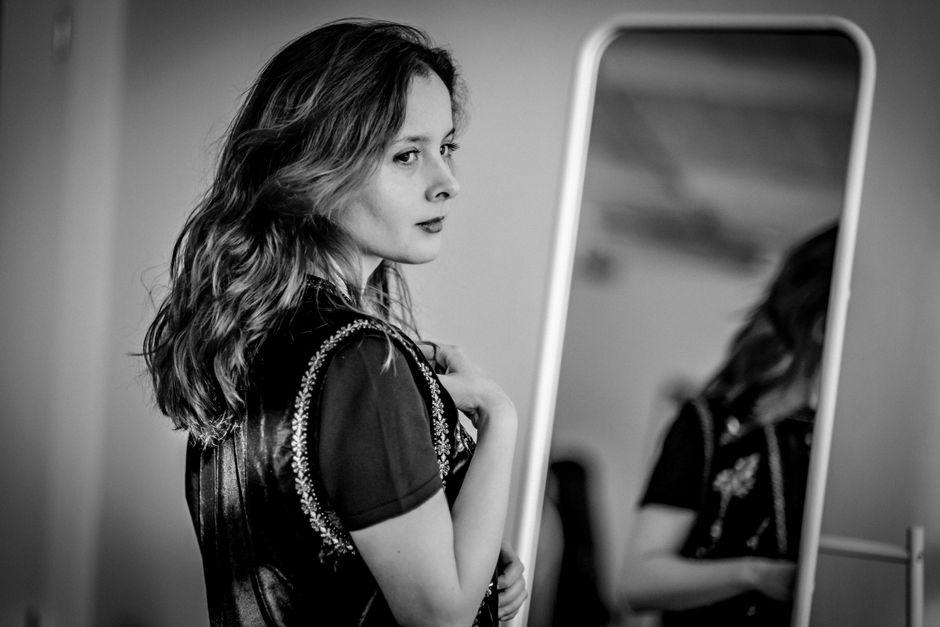
A longline waistcoat gives an outfit the presence of outerwear while leaving your arms free. Its length can bring shape to a simple top and trousers, and the open front lets the clothes underneath remain part of the picture. The most useful way to approach it is as a light outer layer: something you can slip on before leaving, sit in comfortably, and remove when the room warms up. Getting that role right starts with the way the whole garment hangs, from shoulder to hem.
Choose a waistcoat that can do an outer layer’s job
For this purpose, look for a longline waistcoat with enough substance to fall cleanly over clothing. A softly structured woven fabric usually gives a different result from a thin, clingy one: it holds its own outline instead of tracing every pocket and seam beneath it. You do not need a rigid garment, but you should be able to recognize its shape when it is hanging open.
Think about where you expect to wear it. A lined style may slide more easily over textured clothing, while an unlined version can feel lighter indoors. Neither is automatically better. Turn the garment inside out and check whether the seams feel smooth and the lining allows the outer fabric to hang freely.
A sleeveless outer layer offers limited weather coverage. It can be useful between a warm building and a mild afternoon, but exposed sleeves still meet the wind. Choose it for days when a full coat would feel unnecessary, and check the forecast before relying on it for a longer walk.
Let the shoulders support the length
Because there are no sleeves, the shoulder area carries much of the waistcoat’s structure. The top should rest comfortably without lifting toward your ears or dropping so far that it looks unstable. Look from the back as well as the front. A collar that floats away from your neck or fabric that bunches below it can interrupt an otherwise clean outline.
Try it over the kind of top you will actually wear underneath. Then reach forward, fold your arms, and sit down. The waistcoat should settle again without repeated tugging. If the upper back pulls or the front edges swing sharply apart, try another size or cut rather than assuming that wearing it open solves the problem.
Check the side view
A long garment can look quite different in profile. Check that the front and back fall without catching on your hips, and that the armholes do not push the underlayer into folds. Deep armholes can be perfectly useful here, provided the side opening looks deliberate over your chosen clothes and does not leave the garment twisting around you.
Find a hem that works when you move
There is no single correct length for a longline waistcoat. A hem around mid-thigh can feel easy for everyday wear, while one near the knee has more presence. Your height is only part of the decision. The garment’s width, the position of its pockets, and the amount of fabric below your hips all affect how it feels on you.
Walk across the room and turn a corner. The hem should move with you instead of repeatedly wrapping around your legs. Side or back vents can help, especially in a straighter cut. Check that they lie flat while standing and open naturally as you step.
Also try your normal seated position. A longer waistcoat may need a quick smoothing beneath you, but it should not make every chair feel like a negotiation. For frequent driving or public transport, an easy vent and a manageable hem can matter more than extra length.
Build a clear shape beneath the open front
An open waistcoat creates two long front edges that frame the outfit underneath. Give those edges something reasonably calm to sit against. A top that ends smoothly at the waistband, paired with trousers that fall freely, makes a straightforward starting point. This does not require tight clothing; it requires enough separation between layers for each to hang comfortably.
If your trousers are generously cut, choose a waistcoat whose lower half does not flare dramatically over them. If you prefer narrow trousers, a slightly roomier waistcoat can provide an easy balance. Look at the total volume from the side before deciding that any one piece needs changing.
Keep the visible center intentional
The area between the front panels draws attention simply because it is framed. Check for a twisted waistband, a top riding up, or several competing garment edges. A smooth central section helps the long outer layer look settled. You can use similar colors underneath for continuity, or a contrasting top if you want that framed area to stand out.
Decide whether the front needs fastening
Wearing the waistcoat open often suits its outerwear role, particularly when you are moving between indoors and outdoors. Let both front panels hang naturally rather than pulling them back to manufacture a narrower shape. If they repeatedly fold outward, inspect whether the pockets are overloaded or the fabric beneath is catching.
If you prefer it fastened, check the closure while seated as well as standing. Buttons should not pull into diagonal creases, and the lower fronts should have room to move. A waistcoat that closes comfortably can give a more contained outline, but fastening it should be a choice you enjoy throughout the day.
Make it practical for the way you carry things
Pockets are convenient, but heavy contents can drag down a long front panel. Put your usual small essentials inside during a fitting and see whether one side drops. If the pockets distort easily, use them for light items and carry heavier things in your bag.
Try the bag with the waistcoat, too. A shoulder strap should stay secure without pulling the armhole out of place. If a crossbody strap pins one front panel across your body, adjust its position and walk again. You want access to the bag without having to rearrange the entire layer each time.
Put together an easy first outfit
Start with familiar pieces so you can judge what the waistcoat adds. These combinations keep the focus on its long outer shape:
- For everyday errands: a plain cotton top, straight trousers, comfortable closed shoes, and an open waistcoat with accessible pockets.
- For a relaxed appointment: a smooth lightweight knit, fluid trousers, and a waistcoat with enough structure to hang neatly over both.
- For a casual supper: a simple long-sleeved top, dark trousers, and a longer waistcoat whose hem moves easily around the chair.
Before leaving, take a final walk, sit down, and pick up your bag. Notice whether the shoulders stay settled and the front falls back into place. When those details work, the longline waistcoat becomes an easy finishing layer: distinctive enough to shape the outfit, comfortable enough to get on with your day.