
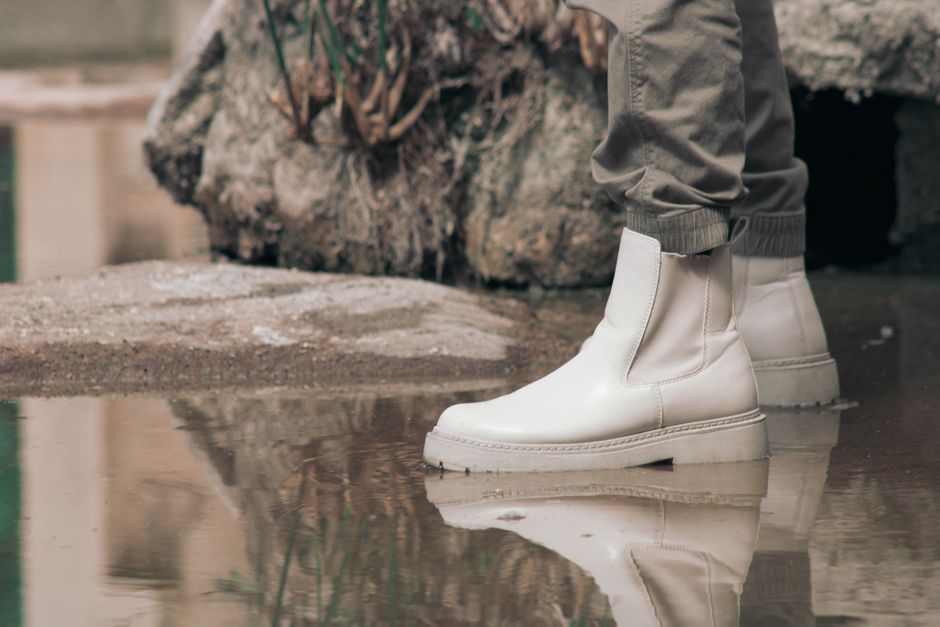
Cropped flares and Chelsea boots make a useful pairing when you want the ease of jeans with a little more shape and intention. The flare opens out below the knee, while the boot gives that movement a firm base. Getting them to work together is less about showing a prescribed amount of ankle and more about letting the flare fall freely over, or just above, the boot. Once that relationship feels right, the rest of your outfit can stay wonderfully simple.
Let the flare do its job
A cropped flare needs enough room at the hem to open away from the leg. Unlike a straight cut, it creates a small outward sweep that becomes part of the outfit’s silhouette. Your Chelsea boots should support that shape without pushing it outward or catching it from underneath. Start by putting on the trousers and boots together, then look at the lower leg from the front and side.
If the trousers taper closely through the knee before opening, the flare will look more pronounced. A gentler kick flare makes a quieter shape. Neither needs a particular body type or age to work. Choose the version that feels comfortable through your thighs and knees, then assess how the fabric moves around your boots.
Choose a boot shaft that allows movement
The shaft is the part of the boot that surrounds your ankle. With cropped flares, a reasonably close shaft often makes styling easier because it leaves space inside the flared opening. It should still feel comfortable when you bend your ankle. The elastic panels should allow you to move without pinching or digging in.
A wider shaft can work with a generous flare, especially in substantial denim. Trouble starts when the boot opening and trouser opening are nearly the same width: the fabric may perch on the boot instead of dropping around it. If that happens, try a narrower boot or a fuller flare before deciding that the whole combination is wrong for you.
Give the pull tab a quick check
Chelsea boots often have a pull tab at the back. A stiff or prominent tab can catch a lightweight trouser hem as you walk. Take a few steps, sit down, and stand again. If the hem repeatedly hooks onto the tab, a smoother boot top may solve the problem more effectively than adjusting your trousers throughout the day.
Decide how much of the boot to reveal
There are two easy ways to approach the crop. You can let the hem overlap the shaft so the boot continues beneath it, or leave a deliberate gap above the boot. An overlap creates a connected line and is particularly useful when you want covered ankles. A gap puts more emphasis on the cropped shape and the top of the boot.
Avoid treating ankle exposure as a requirement. You can wear cropped flares with complete coverage and still keep their distinctive outline. What matters is that the hem looks settled. A hem that barely touches the boot’s upper edge may catch and release with every step, making the length seem accidental.
Before having trousers shortened, try them with the boots you actually intend to wear. Fold the hem inward to preview the change, remembering that shortening a flare also changes the width of its opening. Ask a tailor to check how much of the flared shape will remain before cutting.
Match the sole to the weight of the fabric
A sleek Chelsea boot with a modest sole works easily with fluid cropped trousers or a subtle flare. Its quieter outline allows the trouser shape to lead. A heavier sole can look good beneath firm denim or substantial cotton, where the fabric has enough structure to hold its own beside the boot.
You do not need a heel to make this pairing work. Flat boots can give the flare a clean, grounded finish. If you enjoy a low block heel, look for one you can walk in comfortably and check that your foot stays secure. The useful question is whether the whole lower half feels balanced, rather than whether the boot makes you look taller.
- Soft, draping flares: Try a smooth boot with a restrained sole and minimal hardware.
- Firm denim flares: Try either a sleek boot for contrast or a sturdier sole for a more casual finish.
- A pronounced flare: Check that enough of the toe remains visible to give the opening a clear base.
Use color to control the emphasis
Boots close in color to your trousers make the transition feel quieter. Black flares with black Chelsea boots allow the shape to register without a sharp color break. Brown boots with similarly deep brown trousers offer the same sense of continuity, even when their textures differ.
Contrasting boots make the footwear more noticeable. Cream denim with dark boots has a graphic quality, while blue denim and brown boots feel softer together. If the contrast already draws your eye downward, keep the upper half uncomplicated: a plain knit or an unfussy shirt gives the combination room to breathe.
Make socks part of the decision
If socks will show between the hem and boot, choose them while you build the outfit. A sock close to the boot color can visually extend the shaft; a contrasting sock creates another distinct band. Neither is automatically better, but a small exposed strip of bright sock may attract more attention than you intended. Wear a thickness that fits comfortably inside the boot without crowding your toes.
Keep the top connected to the silhouette
Because cropped flares add movement at the lower leg, it helps to make a clear decision about where your top ends. A knit that finishes around the upper hip often leaves the trouser shape easy to see. A longer top can work too, especially if it hangs smoothly and does not bunch across the widest part of the flare’s fitted section.
You can also use texture to bring the outfit together. A soft sweater makes sturdy boots feel relaxed; a crisp shirt gives the same trousers a more defined finish. There is no need to make every piece fitted. Leave yourself room to sit, reach, and move, and check that the waistband remains comfortable once the outfit is fully assembled.
Build two outfits around the same pairing
For an ordinary day out
Start with blue cropped flares, brown Chelsea boots, and a plain cotton top. Add a relaxed crewneck sweater if you need warmth. The denim supplies the flare’s structure, and the smooth boots keep the lower half tidy. A simple everyday bag is enough to finish it. This combination works best when the jeans swing freely instead of resting on the boot opening.
For a smarter casual plan
Try dark cropped flares with smooth black Chelsea boots and a softly draped blouse. Choose trousers without heavy distressing if you want a quieter finish. A short, neat jacket can add definition while leaving the flare visible. Check the outfit seated as well as standing, particularly if the trousers have little stretch or the blouse needs adjusting at the waist.
Finish with a walking check
Before heading out, walk across the room and turn around. Notice whether both hems drop back into place, whether your socks stay comfortable, and whether the boots feel secure. If something catches, change one element at a time: boot shaft, trouser length, or fabric weight. The pairing should feel easy enough to wear through your day, with the little sweep of the flare providing all the interest it needs.