
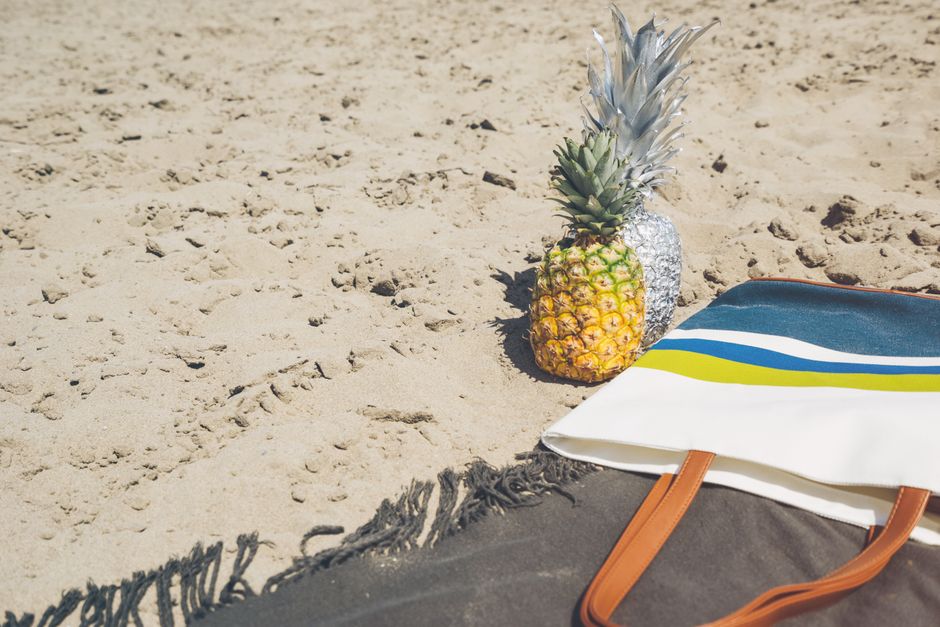
A beach tote can look lovely with your cover-up and still leave you searching for your keys beneath a damp towel. When small belongings matter, the useful details are inside: where a pocket sits, how it closes, and whether you can reach it while the bag is full. Choosing a Beach Tote That Keeps Small Items Accessible starts with picturing ordinary moments, from finding your sunglasses at the shoreline to getting your car key out before heading home.
Start with the things you actually reach for
Before comparing totes, gather the small items you usually take to the beach. Your list might include a phone, keys, a card holder, sunglasses, lip balm, tissues, and a hair tie. Look at their shapes as well as their size. A rigid glasses case needs a different space from a flat card holder, and a bulky key ring can make a shallow pocket awkward to close.
Separate frequent-use belongings from things you only need when you arrive or leave. Sunglasses may come in and out repeatedly, while your keys can stay secured throughout your visit. That distinction helps you choose useful storage instead of being impressed by a long list of pockets.
- Frequent access: an easy-to-reach space for items you use while sitting or walking.
- Secure storage: a closed interior pocket for keys and other small valuables.
- Occasional access: room for a pouch that can stay beneath lighter belongings.
Look at pocket position before pocket quantity
A pocket near the top of the lining is usually easier to find than one hanging close to the base. But placement alone is not enough. Check whether a folded towel would press against the opening or whether a water bottle would block your hand. A useful pocket remains reachable after the main compartment is packed.
Give each pocket a clear purpose
A narrow slip pocket can suit a small tube or a glasses case if it holds the item securely. A wider zipped pocket may work for a card holder and keys, provided they do not crowd each other. Avoid assuming your phone will fit because a compartment is described as a phone pocket. Compare the opening with your own phone in its case.
Be cautious with very deep, loose pockets. They can become miniature versions of the tote itself, collecting every small object at the bottom. You should be able to retrieve the intended item without emptying the pocket onto your towel.
Keep exterior pockets for suitable belongings
An outside pocket is convenient for tissues or another low-value item you want close at hand. An open exterior pocket offers less security for a phone, wallet, or keys, especially when the tote tips over. Think about what faces outward when you carry the bag and what could slip out as you set it down.
Choose an opening you can manage comfortably
A broad opening makes it easier to see the contents, but a completely open top can let belongings spill when the bag falls sideways. A full zip offers more containment, while a snap or tie may leave gaps. Neither choice makes a bag theft-proof, and a closure alone does not establish that it is waterproof.
Try the fastening with the tote resting beside you, rather than holding it directly in front of your face. Can you find the zip pull easily? Does the lining catch? Do you need to pull both sides tightly together before it closes? Those small frustrations become more noticeable with a towel tucked inside and sandy fingers.
If small fastenings are uncomfortable for your hands, look for a pull that is easy to grasp and pockets that open without fiddly movements. The best arrangement suits how you move, including when you are seated in a low beach chair.
Make the interior easy to read
A light or contrasting lining can help dark belongings stand out. A pale interior is not essential, though: clear divisions and pocket edges that you can identify also help. Open the tote somewhere with ordinary lighting and see whether you can distinguish its compartments without holding each one apart.
Consider how much the bag collapses. A very soft tote may fold over its own pockets when placed on the ground. Some structure around the base or opening can keep the interior more accessible, but heavy reinforcement adds weight. Look for enough shape to support your belongings without making the empty bag cumbersome.
Use a pouch where it solves a specific problem
A removable pouch can keep the smallest belongings together, particularly in a tote you already own. Choose one that fits through the opening easily and is recognizable by color or texture. If every pouch looks and feels the same, you may simply move the search from the tote to several smaller bags.
Keep your pouch system modest. One for dry personal items and a separate container for anything that might leak may be plenty. A tall organizer with many divisions can consume towel space, obscure built-in pockets, and add weight before you pack anything.
An interior key clip can be helpful if its tether reaches a comfortable distance. Check that it attaches securely and does not dangle across the main opening. Avoid putting heavy keys together with unprotected sunglasses or a phone screen, where they can rub against delicate surfaces.
Account for sand, splashes, and damp fabric
Mesh lets you see some contents, but tiny belongings need a separate closed compartment or pouch. Loosely woven materials can also let sand pass through. A lined tote may offer better separation, although sand can still enter through its opening and collect in seams.
Keep damp swimwear away from the pocket holding your phone and cards. A separate bag intended for wet items can help contain moisture, but check its condition and stated use. Do not rely on a fabric divider to stop water passing between compartments.
Read care instructions before choosing a material. Being able to empty the bag fully and reach its corners makes routine cleaning easier. Let it dry thoroughly before storage, with pockets open where practical. A beautiful lining is less useful if trapped sand and moisture are difficult to remove.
Do a realistic packing check
If you can examine the tote in person, bring the small items you want it to hold. Otherwise, compare measurements carefully and check the return terms before buying. Pocket dimensions, closure position, and interior photographs tell you more about access than an attractive beach setting does.
- Place your bulkiest planned contents in the main compartment.
- Put each small item in its intended pocket or pouch.
- Close the tote, lift it, and set it down again.
- Retrieve your phone, sunglasses, and keys without removing the towel.
- Check whether the pockets sag, turn inward, or become blocked.
Once the practical details work, choose a color and texture you enjoy carrying with your beach clothes. A simple canvas finish, a woven surface with a useful lining, or an understated synthetic fabric can all look pulled together. Let your final choice be the tote that makes familiar belongings easy to find, so getting settled at the beach feels as relaxed as your outfit.