
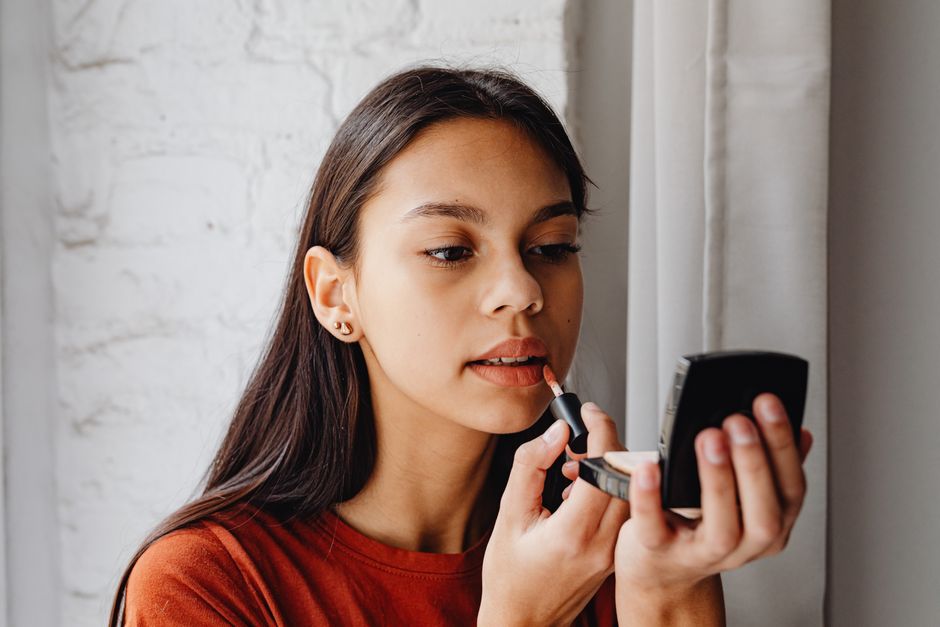
Tinted lip balm is a lovely shortcut when you want your face to feel finished without a full makeup routine. Applying it without a mirror, though, can turn an easy swipe into a guessing game. Did the color reach both sides, or has it wandered beyond your lip? The trick is to make the application smaller and more predictable. With a familiar balm, a relaxed mouth, and a light touch, you can add a soft wash of color and save any detailed adjustments for a moment when you can see them.
Choose a balm you understand by feel
A comfortable texture helps, but slipperiness alone does not make a tinted balm easy to apply. A formula that leaves a lot of color with one touch gives you less room for error. For touch-ups without a mirror, a sheer tint that builds gradually is usually easier to manage than a dense, lipstick-like balm.
Try your balm in front of a mirror before making it your handbag regular. Notice how much pigment one light pass leaves, how wide the tip feels against your lip, and whether the color moves as you talk. Familiarity matters more here than a promise of effortless application.
- Choose gentle color payoff: a small missed area is less obvious in a sheer wash.
- Check the applicator size: a broad, rounded top can be harder to place on a narrow upper lip.
- Notice the finish: a very glossy coating can make excess product difficult to judge by touch.
If a shade looks dramatically different from your natural lips, save its application for a mirror. Strong color deserves a clear view of where it lands.
Learn your movement while you can see it
Your lips have their own shape, and the same sweep will not suit everyone. During an ordinary application at home, watch where the balm first makes contact. Learn how far you can move it before reaching the edge. Then look away briefly, make one small pass, and check the result.
This is especially helpful if your upper lip is slimmer than your lower lip, your cupid’s bow is pronounced, or your lip border has become softer over time. There is no need to redraw anything. You are finding a movement that stays comfortably within your existing lip surface.
Extend a balm stick only enough to use comfortably. A long exposed stick is harder to control and easier to damage. With a squeeze tube, learn how little pressure releases a small amount. Squeezing directly onto your lips without knowing the flow can leave an unexpected blob.
Begin with a comfortable surface
After eating or drinking, gently dab away food residue and excess moisture with a clean tissue before adding tint. Balm layered over a slippery film may spread unpredictably. Avoid rubbing back and forth, particularly if your lips feel tender.
If you can feel loose flakes, resist scrubbing them away during a quick touch-up. Color can collect around rough patches, and repeated swipes will not smooth the underlying surface. Use less tint and leave careful cleanup until you have a mirror.
Patch test an unfamiliar lip product according to its directions before regular use. Stop using it if irritation develops. Persistent cracking, soreness, or changes around the lips deserve advice from a dermatologist rather than more cosmetic coverage.
Apply with short, deliberate passes
Pause somewhere steady before you begin. Walking, riding over bumps, or searching your bag at the same time makes a small movement harder to control. Hold the tube comfortably without gripping so tightly that your hand becomes stiff.
- Relax your mouth. Let your lips part slightly instead of stretching them into a wide smile or pushing them forward.
- Start near the center of the lower lip. Use light pressure and a short pass across the middle portion, staying away from the corners.
- Lift the balm away. Reposition it deliberately instead of dragging it around your entire mouth in one continuous movement.
- Add a small pass to the upper lip. Keep the applicator on the fuller central surface, within the border you learned while practicing.
- Press your lips together gently once. Release them without grinding or sliding them against each other.
That gentle press can help distribute a sheer layer between the lips, but it will not guarantee complete coverage. If your lip shapes do not meet evenly, apply a little balm to each lip rather than relying on transfer alone.
The outer corners do not need an extra sweep simply because they are there. They are easy places to deposit too much product, especially with a wide applicator. A light wash within the lip surface can look polished without a fully traced outline.
Stop before a touch-up becomes a buildup
Once the balm feels comfortable, pause. It is tempting to keep sweeping until you feel certain the color is even, but sensation tells you more about texture than pigment. A smooth coating can still contain a darker patch, and another coat may make that patch stronger.
If you feel a thick spot, lightly blot between a folded clean tissue. Close your lips onto it and lift away. Avoid pulling the tissue sideways across your mouth, which can carry color beyond the edge.
A clean fingertip can gently pat an obvious lump inward, but it cannot tell you whether the outline is tidy. If your hands are not clean, skip finger blending. If you suspect a smear outside the lip, wait for a mirror instead of wiping broadly around your mouth and spreading the tint further.
Match the refresh to what is already there
After a meal
Dab away residue first. If you cannot see how much color remains, apply a very small amount through the center and stop. You can check the edges when a mirror becomes available.
When your lips feel dry but still have color
More tint may be unnecessary. A familiar untinted balm can provide a comfortable feel without deepening uneven pigment. Keep that layer light too, since a generous coating can move existing color.
When you want a stronger finish
Wait until you can check the placement. Applying balm without a mirror works best as a modest refresh. Building a richer shade is easier when you can compare both sides and see the upper lip clearly.
Make the routine easy to repeat
Keep your balm capped and its applicator clean according to the packaging directions. Repeat the same simple sequence: dab away residue, relax your mouth, apply short central passes, and press lightly. When you next pass a mirror, take a quick look. Notice whether one side needs a shorter stroke or your upper lip needs less pressure. Those small adjustments help make the next application feel more familiar, with less fuss and a comfortable touch of color.