
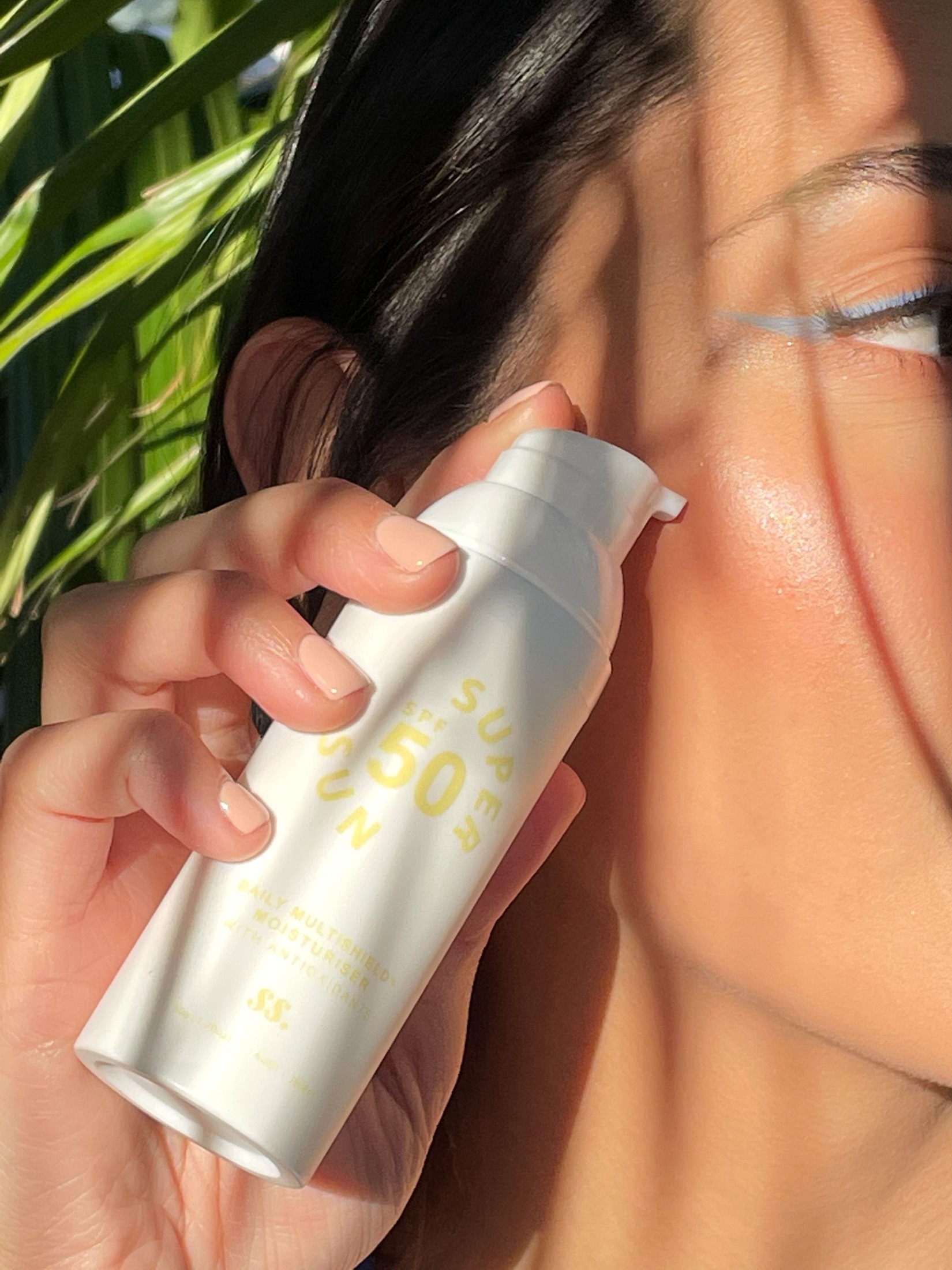
Foundation and sunscreen have different jobs, even when both come in similar-looking bottles. Foundation adjusts visible color and coverage; sunscreen must be used according to its own directions. A good makeup combination respects that separation. Instead of stirring the two together for a lighter base, apply sunscreen properly and then use only as much foundation as your desired cosmetic finish requires. If the combination pills or looks heavy, troubleshoot the decorative layers rather than reducing protection.
Start with the sunscreen label, not the foundation finish
The AAD recommends a broad-spectrum, water-resistant sunscreen with SPF 30 or higher. Apply it generously to exposed skin as directed, including commonly missed areas such as the ears and neck. The AAD advises application to dry skin fifteen minutes before going outdoors. Your bottle’s directions also matter, including its water-resistance information and any warnings.
Choose a sunscreen you can apply in the directed amount rather than one you only like when used sparingly. A foundation-friendly finish is useful, but it does not justify turning a full application into a few cosmetic dots. Read the label while shopping so you are comparing suitable sunscreens first, then judging which of their textures works best with your makeup.
Keep sunscreen out of homemade foundation mixtures
Do not mix or dilute sunscreen with foundation, moisturizer, facial oil, or pigment drops. Apply the products as separate layers. Paula’s Choice’s official application guidance specifically advises layering rather than mixing to avoid diluting or destabilizing the SPF formula. A homemade blend does not give you a dependable way to infer the protection of the finished mixture.
This also means keeping cosmetic shade experiments away from the sunscreen in your palm. If foundation needs a color adjustment, address that separately and follow the foundation’s instructions. Do not assume that mixing two SPF-labeled products preserves either label’s protection. The simplest practical boundary is clear: sunscreen goes on as sunscreen, and complexion color is applied afterward.
Let the sunscreen settle before applying color
The AAD’s product-order guide places moisturizer and sunscreen before makeup. Follow your sunscreen’s directions, then allow its surface to settle before foundation. A surface that is still visibly wet may be harder to work over neatly. This cosmetic pause is separate from the sunscreen’s required timing before going outside.
Use the pause to decide how much foundation you actually want. Look at the bare-sunscreen finish in a mirror. You may only need a light layer through the center of the face or a small amount on areas where you want more even-looking color. Reducing optional coverage can make the finished makeup feel less crowded without interfering with the sunscreen application underneath.
Apply foundation with a light, controlled touch
Put a modest amount of foundation on a clean palette or your usual clean application surface. Begin with a small section of the face, using gentle presses or smooth controlled strokes rather than repeated vigorous buffing. Paula’s Choice’s guidance advises avoiding excess pressure and over-blending when applying makeup over sunscreen. You should not need to polish the same cheek repeatedly to get a wearable finish.
For example, tap a thin layer around the nose and inner cheek, then use the remaining product toward the jaw. If the outer face already looks even enough, leave it with less coverage. A narrow, well-blended transition can look more natural than a thick, uniform mask. Keep the foundation away from areas where you are still waiting for the sunscreen surface to settle.
Troubleshoot pilling without cutting the sunscreen amount
If small rolls appear, stop rubbing. Continuing to work them around rarely improves the visible finish. At the next application, simplify optional products underneath, let each required layer settle, and try a lighter hand with foundation. Change one cosmetic variable at a time so you can identify whether the issue is a product combination, application pressure, or too many decorative layers.
Do not solve pilling by using less sunscreen. If the sunscreen layer has been visibly removed or disrupted, remove the affected makeup and reapply sunscreen according to its directions before rebuilding the cosmetic finish. When a pairing consistently behaves badly, try a different foundation or sunscreen that you can still use properly. A compatible combination is more practical than forcing two favorite bottles to cooperate.
Plan sun protection around the day, not the makeup
When outdoors, the AAD advises reapplying sunscreen approximately every two hours and after swimming or sweating, following the label. It also recommends shade and sun-protective clothing, including a wide-brimmed hat and sunglasses. Water resistance is not a reason to ignore reapplication. Build the beauty routine around these basics rather than expecting morning foundation to hold the whole plan together.
For an outdoor afternoon, a lighter foundation application may be easier to remove and refresh when sunscreen needs reapplying. Keep the necessary products accessible. If maintaining an untouched makeup finish conflicts with applying sunscreen properly, prioritize the sunscreen and adjust the makeup. A visible cosmetic touch-up is a reasonable trade, and you do not need to preserve every layer exactly as it looked at breakfast.
Use a final check that separates the two jobs
Before leaving, ask two different questions. First, was sunscreen applied in accordance with the label, with the appropriate timing and coverage? Second, does the foundation look even enough for your preferences? A pleasing answer to the second question does not prove the first. A mirror can show cosmetic blending, but it cannot verify the protection of an improvised mixture or a skimpy application.
For your next attempt, keep a simple note about the foundation amount, settling time, and application method that looked best. Do not turn that note into a claim that your makeup tool guarantees an undisturbed protective film. The reliable habit is following sunscreen directions consistently while keeping decorative makeup restrained and adaptable. Separate layers make the routine easier to understand and easier to repeat.