
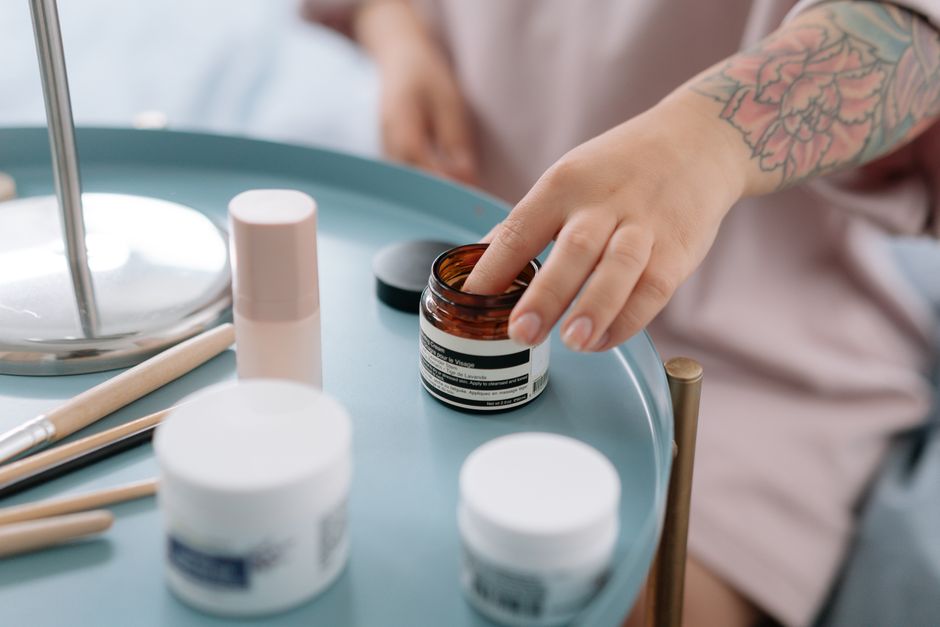
A richer night cream can make your evening routine feel more comfortable without turning it into a long sequence of bottles. The useful change is often a replacement: one cream that does enough for your skin, instead of a lighter moisturizer followed by several extras. Choosing a Richer Night Cream Without Layering Too Much starts with noticing what your current routine leaves unfinished, then finding a formula and an amount that address that need.
Decide what you want the cream to improve
Before you shop, pay attention to how your skin feels after your usual evening moisturizer and again when you wake. Does your face feel comfortable at first, then tight later? Do your cheeks need more softness while your forehead already feels coated? Or are you adding products simply because they are on the bathroom shelf?
Those are different situations. A cream that leaves a more protective finish may suit skin that feels dry again before morning. Uneven dryness may call for more careful placement. If your skin already feels comfortable, there is no need to make the routine richer just because the weather changes or the packaging promises an overnight transformation.
Your preferences can change in midlife, but age alone does not decide the right cream. Choose for the skin you have now, including the areas that become shiny, sensitive, or easily congested.
Look for a complete moisturizer
For this job, a useful night cream brings moisture and a comfortable finish together. You do not need to become an ingredient expert, but a few familiar terms can help you understand what a formula is trying to do.
- Humectants, such as glycerin, help attract water to the skin’s outer layer.
- Emollients, such as squalane and various fatty ingredients, help soften the surface and improve its feel.
- Occlusive ingredients, such as petrolatum or dimethicone, help reduce moisture loss.
These roles can overlap, and the whole formula matters more than any single ingredient. An ingredient list cannot tell you exactly how a cream will spread or feel by morning. Use it to identify familiar ingredients you tolerate and anything you already know causes trouble for you.
If simplicity is the goal, consider a straightforward moisturizing cream without added exfoliating acids or retinoids. Combining several treatment ingredients in the same evening can make it harder to work out what your skin tolerates. A rich moisturizer does not need to deliver every possible skincare benefit.
Choose richness you can comfortably wear
Pay attention to the finish
A cream can feel dense in the container yet spread easily into a light film. Another may feel silky at first but leave a substantial coating. Neither texture is automatically better. The useful question is whether the finish keeps your skin comfortable without making you want to wash it off.
You may enjoy a cushioned finish on dry cheeks but dislike a waxy feeling around your nose. If a sample or small size is available, it can help you assess that balance before committing to a larger container. Avoid judging a face cream only by how luxurious it feels on your hand.
Keep scent separate from comfort
A fragrance-free option is a sensible starting point if your skin is sensitive or you prefer fewer potential irritants. Botanical extracts and essential oils are not automatically gentle because they sound natural. Check the label against your own history of reactions, and remember that an expensive-looking jar says little about suitability.
Make room by replacing an existing step
Before opening the new cream, identify what it will replace. If your evening ends with a light moisturizer, facial oil, and balm, the richer cream may be able to take over the moisturizing role by itself. Keeping everything and adding another layer makes it difficult to tell whether the new purchase helps.
For an evening without prescribed treatment, your basic sequence may be as simple as gentle cleansing followed by the cream. An optional serum should have a clear purpose you value. You do not need a hydrating serum underneath every moisturizer, and oil is not a required finishing step.
If you use prescription skincare, keep to the directions your clinician gave you. Ask your prescriber or pharmacist if you are unsure where a new moisturizer belongs. Do not change a prescribed treatment schedule simply to accommodate a richer texture.
Introduce it with a small, controlled change
Patch test a new cream on a small area according to the product’s directions before applying it widely. A patch test cannot guarantee that a product will suit your whole face, but it gives you a cautious first check. Avoid introducing other new skincare at the same time so that any change is easier to trace.
Once you begin using it on your face, follow the label and start with a modest amount. Spread gently rather than repeatedly massaging until the surface feels dry. A richer cream may leave a noticeable film; that alone does not mean it has failed to absorb.
Apply after cleansing while your skin is slightly damp if that feels comfortable and fits the rest of your routine. If you use a treatment that requires dry skin, follow its instructions instead. Keep ordinary facial cream away from the lash line unless it is labeled for that area.
Adjust placement before adding more products
Your entire face does not have to receive the same amount. Start with a thin application, then assess the areas that usually feel dry. A little more of the same cream on your cheeks may be enough, while your forehead needs only what you initially applied.
This approach is especially helpful when your face has mixed needs. You can use less around a shiny nose or skip an area that already feels well moisturized. There is no prize for using the same thickness everywhere, and you do not need a separate jar for every zone.
If the cream feels heavy, reduce the amount before deciding you need another product to balance it. If it rolls into little flakes over your usual serum, simplify the combination and try applying with less rubbing. Adding extra layers rarely makes that texture easier to judge.
Use the morning as your final check
The best result is fairly ordinary: skin that feels comfortable when you wake, without an unpleasant coating or irritation. Look for a pattern across several uses rather than expecting a dramatic change overnight. Keep a brief mental note of tightness, residue, and whether you still feel tempted to pile on extra moisturizer.
Stop using the cream if it causes burning, itching, or a rash. Persistent dryness, redness, or recurring irritation deserves advice from a dermatologist rather than repeated experiments with heavier products. If the formula simply feels too rich, returning to a lighter moisturizer is a reasonable choice.
A successful richer night cream earns its place by making your evening easier. When one comfortable application meets your needs, you can close the jar, leave the other bottles alone, and get on with winding down.