
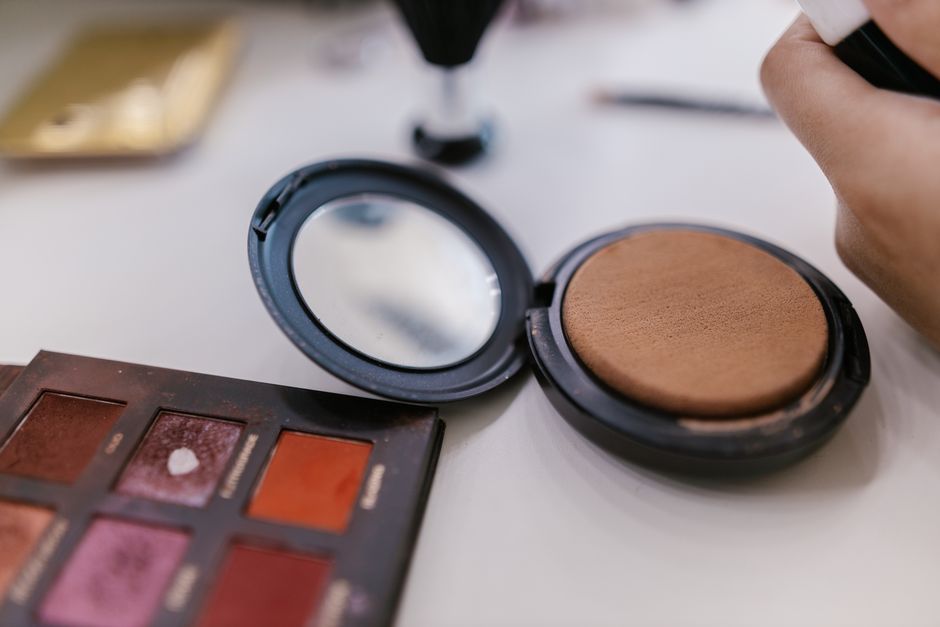
Powder foundation can give your complexion a softly even finish without a complicated routine. The trick is controlling how much reaches your face and where you place it. A brush that looks barely loaded may be carrying enough for a cheek, while repeated sweeping can leave more coverage than you intended. Applying Powder Foundation With a Light Hand starts with a simple shift: treat each small application as a decision, then pause before adding another. You can soften uneven color while allowing freckles, natural texture, and the shape of your face to remain visible.
Decide what you want the powder to do
Before opening the compact, look at your face from a comfortable conversational distance. Identify the areas where you would appreciate a little evening out. Perhaps your cheeks need less coverage than your chin, or the middle of your face looks more uneven than the edges. You do not need to give every area the same amount simply because it is part of your foundation routine.
Powder foundation supplies pigment as well as a powder finish. Think of it as your base makeup, rather than an invisible finishing step. Layering it generously over another foundation can create more coverage and surface buildup than you expected. For this approach, start with powder foundation as the main base and build only where you want a visible change.
Begin with skin that feels comfortable
A light application is easier when your skin feels comfortable and your usual skincare has settled. Apply your regular moisturizer as needed, then give it time to absorb before reaching for makeup. If the surface still feels slippery or tacky, wait a little longer. Powder may grab unevenly on a wet patch, making a small amount look surprisingly dense.
Avoid trying to rub away flakes immediately before applying foundation. Tender or irritated skin rarely benefits from extra friction. If an area is dry, you can leave it mostly bare instead of insisting that powder cover it. Patch test unfamiliar skincare and makeup according to the product directions, and stop using anything that irritates your skin. See a dermatologist for persistent dryness, redness, itching, or other ongoing concerns.
Choose a tool that helps you use less
A soft brush with some flexibility is a useful starting point for sheer coverage. When the bristles can bend gently, you have less reason to press hard. A very dense brush or the sponge supplied with a compact may deposit fuller coverage, although the result also depends on the formula and how you load the tool.
You do not need to replace everything you own. Start with a clean, dry brush that feels comfortable against your skin. If you use a sponge, pick up a small amount and press lightly onto a limited area. Use water with a powder foundation only if its directions specifically allow wet application; dampening an unsuitable formula can change its performance or the surface of the pan.
Load the brush once, then assess
For a pressed formula, pass the tips lightly across the surface instead of grinding the brush into the compact. For loose powder, dispense a little into the lid and touch the brush into that small amount. Gently tap off the excess over the container. Keep powder away from your eyes and avoid creating a cloud you might inhale.
Look at the bristles before they touch your face. They should not appear buried in powder. If you have picked up too much, work a little off against a clean tissue. It is easier to reload a nearly empty brush than to remove an opaque patch once it has caught on your skin.
Apply in small areas with almost no pressure
Begin on an area where you want coverage, such as part of the cheek or chin. Use short, gentle strokes, allowing the brush tips to make contact without flattening the bristles. Work outward from that area with the powder already on the brush. The edges of your face may need only what remains after the first few strokes.
Pause before dipping back into the compact. Check whether the color looks more even, rather than whether every mark has disappeared. If one area needs more, reload sparingly and return just to that spot. Repeated full-face passes can build a uniform layer that is heavier than any individual area requires.
- Cheeks: Keep the brush movement gentle and stop when the overall color looks balanced.
- Around the nose: Use the edge of the brush with very little powder, avoiding forceful buffing into folds.
- Chin: Apply a small amount, then check the crease below the lower lip before adding more.
- Jaw and hairline: Feather the remaining product toward the edge so coverage ends softly.
Let fine lines and facial hair guide your touch
If powder seems to emphasize fine lines, the answer may be less product in that particular place. Leave the area around the eyes until you have very little left on the brush, or skip it if you do not need coverage there. There is no requirement to powder every crease into a completely matte finish.
Fine facial hair can also become more noticeable when you brush repeatedly in different directions. Try finishing with a gentle stroke in the direction the hair lies. Avoid vigorous circular buffing if it makes the surface look fuzzy or unsettled. On mature skin, a little variation in finish often looks more comfortable than trying to make every part of the face equally smooth and powdery.
Correct a heavy patch without adding another layer
When an area looks too dense, put the loaded brush down. Take a clean, dry, soft brush and lightly pass it over the edge of the patch to diffuse the boundary. Use minimal contact; repeated polishing can move the foundation into nearby folds or make the surrounding skin look more heavily covered.
If the powder has clung to a tacky patch and will not blend, gently remove makeup from that small area using your usual suitable remover. Let the skin settle before trying again with less product. Avoid stacking moisturizer and more powder over the problem, which can make the texture harder to manage.
Make the final check from a normal distance
Step back from the mirror and look at the whole face in clear, even light. A close mirror can tempt you to keep working on details that are barely noticeable in everyday conversation. Turn your head slightly to check the sides of the nose, the jaw, and any place where powder might have gathered.
Then let the application be finished. Skin does not need to look blank for foundation to look polished. When your complexion appears a little more even and the edges blend quietly into bare skin, your light hand has done its job. The most useful habit is the pause between layers: it gives you a chance to see that you may already have enough.