
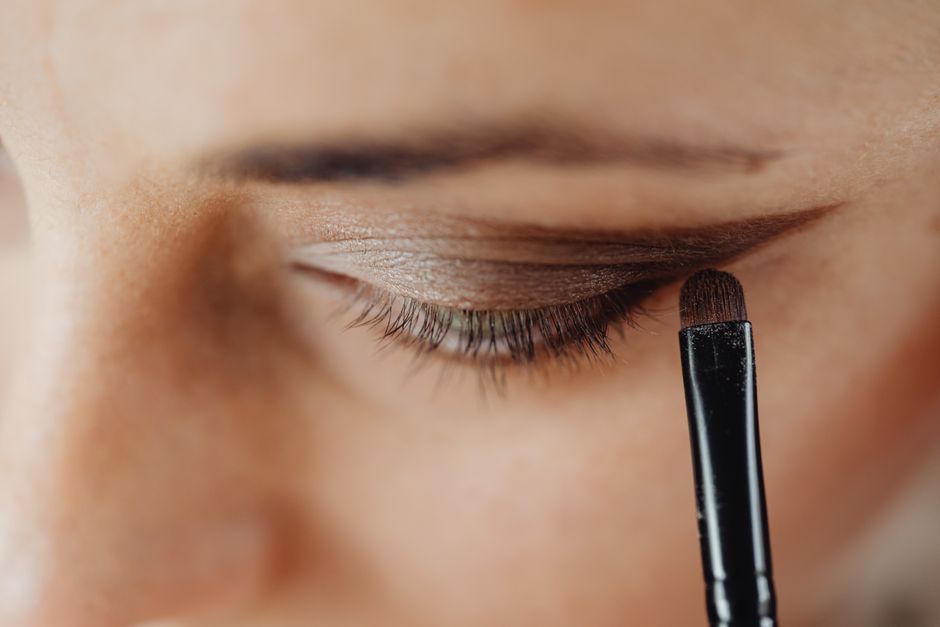
Olive eyeshadow offers a gentle way to bring color into your makeup without making the whole face feel dressed up. Its mix of green, brown, and sometimes gold sits comfortably beside familiar neutrals. Pairing it with a neutral lip gives that color room to show, but the balance depends on more than choosing a lipstick labeled nude. Consider the depth of the olive, the natural color of your lips, and how much definition you enjoy around your eyes. A few small decisions can make this combination feel like an easy extension of your usual makeup.
Start with an olive that feels familiar
Olive covers quite a range. Some shades resemble khaki with a green undertone; others look like moss, antique gold, or deep brown with a green reflection. If you usually wear taupe or brown shadow, begin with an olive that shares that familiar depth. You can introduce color without also changing how dark or dramatic your eye makeup feels.
Look at the shadow on your skin as well as in its container. A golden olive may appear warmer once applied, while a gray olive can look softer or smokier. Neither needs to match your eye color. Choose the version you like beside your complexion, then build the lip pairing around what the shadow actually looks like on you.
Let the finish set the mood
A matte olive gives a quiet wash of color. A satin finish catches a little light and can make the green easier to notice without a glittery effect. A strongly metallic olive creates a more obvious focal point, even when the shade itself is muted. If you are unsure where to begin, try a softly reflective finish in a small area of the lid.
There is no age limit on shimmer. If your lids have folds or texture, assess the finish with your eyes relaxed and open. You might enjoy sheen across the lid, or prefer it just near the center. Let the result guide placement instead of assuming that every part of the eye needs the same finish.
Choose a neutral lip that still has presence
Neutral does not have to mean pale beige. A neutral lip can be rosy brown, muted peach, soft cocoa, or a subdued pink that relates to your natural lip color. Its role in this pairing is to support the olive without becoming a second strong color statement. A shade that makes your mouth seem to disappear may leave the overall look feeling unfinished.
Start with a lip color you already find easy to wear. Apply the olive, add your usual neutral, and look at the combination before making changes. This is more useful than trying to select two unfamiliar colors at once. If the lipstick suddenly looks very orange, pink, or pale beside the shadow, adjust that one element.
- With golden olive: try muted peach-brown or warm rose to echo its warmth gently.
- With gray or khaki olive: consider soft rose-brown or balanced pink-brown for a little warmth around the mouth.
- With deep moss olive: try medium rosy brown or cocoa with enough depth to remain visible.
These are starting points, not matching rules. Your lip pigmentation changes how sheer lipstick looks, and the same shade reads differently on different faces. On deeper complexions, a rich brown may act as an understated neutral; on lighter complexions, a softer rose-brown may create a similar balance. Judge the relationship across your whole face, rather than choosing a color from its name alone.
Keep the olive placement simple
For an approachable first version, place a thin layer of olive over the mobile lid, keeping the strongest color close to the upper lashes. Soften the upper edge with a clean brush. You want the green to fade gently rather than end in a firm stripe. Pause after that first layer: a translucent olive can be enough.
If your lid space is partly hidden when your eyes are open, check the placement while looking straight ahead. Add a little color only where you want it to remain visible. You do not need to carry shadow high toward the brow to prove you are wearing green. A glimpse when you blink can be part of the appeal.
Add definition where it helps
Olive can blend into the surrounding skin if everything has similar depth. A narrow touch of brown or charcoal shadow near the outer upper lash line can give it a clearer boundary. Keep that darker shade close to the lashes so the olive remains the main color. Finish with your usual mascara if you wear it.
You can leave the lower lash line bare, especially if shadow there makes the look feel heavier than intended. For more definition, use a small amount at the outer lower lashes and soften it carefully. Assess what the upper lid already provides before adding darkness beneath the eye.
Look at the whole face before adding more
Once the eyes and lips are in place, step back from the mirror. Close inspection helps with blending, but it can make every feature seem to need more product. At a conversational distance, check whether you notice the olive and whether your lips still have a natural presence. That is the central relationship you are trying to create.
If you wear blush, keep it in a familiar, subdued shade. You do not need to repeat the green elsewhere or introduce a new cheek color for this look. A little of your usual cheek color may make an unfamiliar eyeshadow feel much more like you. Check the combination in daylight if possible, since indoor lighting can change how warm the colors appear.
Adjust one element at a time
If the combination looks dull
Check the lip color first. A beige much lighter than your natural lips can flatten the overall effect. Try a slightly rosier or deeper neutral before adding brighter eyeshadow. If the mouth looks balanced already, a small touch of satin olive at the center of the lid may give the eye color more dimension.
If the green feels too strong
Soften the shadow edges with a clean brush and gently lift away excess. Next time, use less olive or confine it nearer the lashes. Keep the lip neutral but visible; making the lips paler can leave the eye color feeling even more prominent. You can also choose a browner olive for a quieter result.
If the result feels too dressy
Reduce the area of reflective shadow or choose a softer finish. Keep any liner narrow and let your neutral lipstick stay close to your natural lip depth. Follow cosmetic label directions and patch test unfamiliar products as appropriate. Use only products intended for the eye area around your eyes, and stop if irritation occurs. See a dermatologist for persistent skin problems.
Once you find a combination you enjoy, remember the relationship: a little olive where you want color, enough lash definition to frame it, and a neutral lip that belongs on your face. You can vary the intensity while keeping that comfortable balance, whether your olive is barely visible or the feature you want people to notice.