
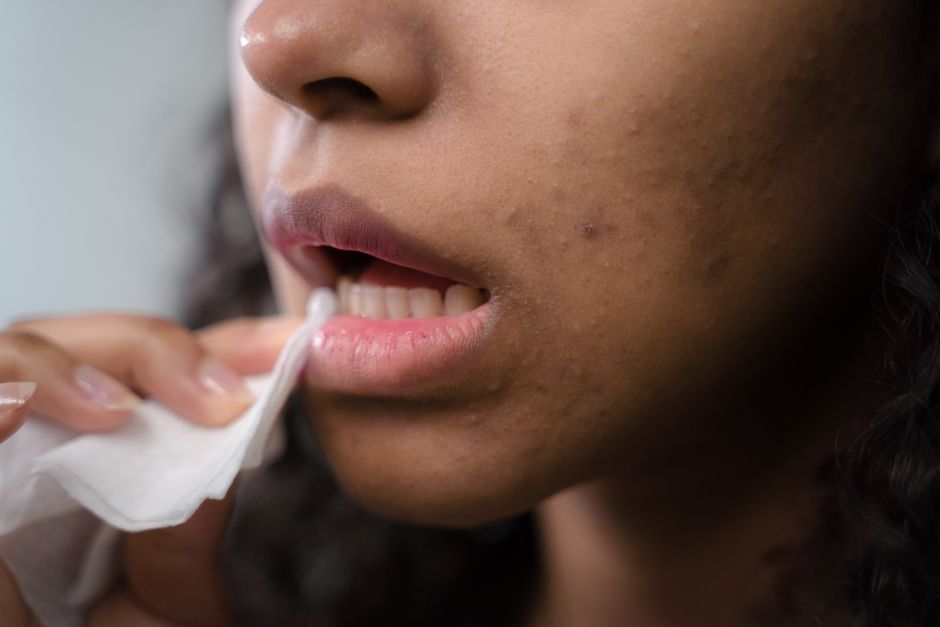
Long-wear lip color can feel wonderfully dependable through a busy day, then surprisingly reluctant to leave at bedtime. When an outline or a dark patch remains, it is tempting to reach for a towel and rub harder. Give a suitable remover time to loosen the color instead, then lift it away with very little pressure. The goal is comfortable lips with the makeup removed, without turning the last step of your evening into an exfoliating session.
Look at what is actually left
Before adding remover, check your lips in good light. A liquid lipstick may leave a visible coating, while a stain can leave color behind after the surface feels bare. You might see a mixture: product along the border, a little in the natural lip lines, and a faint tint elsewhere. These leftovers do not all need the same attention.
A remaining tint is not an instruction to keep wiping. If there is no obvious film and gentle removal is no longer lifting pigment, repeated passes may only make your lips sore. Natural lip color can also look uneven, especially after you have been touching the area. Pause before deciding that every darker spot is makeup.
Choose a remover suitable for lips
Start with the removal directions on your lip color, if available. Choose a makeup remover labeled as suitable for lips and long-wearing or waterproof makeup. Depending on its instructions, that might be an oil-based liquid, a balm, or a two-phase formula that needs shaking. A familiar product your skin already tolerates is a useful starting point.
Read how the remover should be applied and whether it needs rinsing. A general facial cleanser or eye makeup remover is not automatically appropriate for lips. Keep the product out of your mouth, and avoid applying it to broken skin. Patch test a new formula according to its label before using it across the area.
Fragrance, flavor, and a cooling or warming sensation are unnecessary for this task. If your lips are easily irritated, look for a simple formula without those extras. Avoid household solvents, essential oils, or improvised kitchen mixtures. Use something designed for cosmetic removal in this delicate area.
Keep your tools soft and clean
Have clean hands, a mirror, and soft cotton pads or a smooth, freshly washed reusable pad nearby. Skip rough washcloths, textured exfoliating pads, and tissues that break apart when wet. Your chosen surface should glide rather than catch. Keep a clean section available so you can collect loosened pigment without spreading it around your mouth.
Loosen the color before lifting it
Work with your lips relaxed and gently closed. A wide smile stretches the surface, while pressing your lips tightly together hides product in the folds. Follow the directions for quantity and contact time. More pressure cannot replace giving the formula a chance to work.
- Apply as directed. With a liquid remover, moisten a soft pad sufficiently that it does not drag. With a balm, use clean fingertips to spread a small amount over the colored surface, staying outside your mouth.
- Allow contact time. Hold the pad against your lips, or let the balm sit, for the time recommended on the label. Keep your hand still rather than rubbing back and forth.
- Lift gently. Collect the loosened makeup with a short, light pass. You should not need to pull your lip sideways or scrub across it.
- Use a clean section. Turn the pad or replace it before working on another patch. If a visible coating remains, repeat the softening step locally, provided your lips still feel comfortable.
- Remove residue as instructed. Rinse if the label requires it, using lukewarm water. Pat gently afterward instead of polishing the surface dry.
Think of each pass as collecting something already loosened. If your lip moves with the pad, stop and reassess. The pad may be too dry, or the remover may not suit that lip formula. Adding friction is unlikely to make the process more comfortable. Check the instructions before continuing with another gentle application.
Treat the outline and corners separately
The border often holds the last visible trace, particularly with deeper shades. Instead of wiping across your whole mouth again, fold a clean, soft pad to make a smaller edge. Apply a little lip-safe remover, hold it against the remaining line, and lift toward the colored area. This helps keep loosened pigment from traveling farther onto surrounding skin.
At the corners, open your mouth just enough to see the crease without pulling it taut. Use the same gentle hold-and-lift approach, keeping remover outside your mouth. If a corner is cracked or tender, stop working over it. A stubborn speck is less important than avoiding further discomfort.
Color caught in lip lines also deserves patience. Let the remover contact the surface while your mouth is relaxed. Do not dig into the lines with a fingernail or tool. Toothbrushes and lip scrubs add abrasion when your lips have already had plenty of contact, and they are unnecessary for removing the remaining makeup.
Recognize when a faint stain can wait
There is a practical difference between a coating you can still feel and a faint stain left after gentle cleansing. If your lips feel free of product but retain some color, leave it alone for the evening. Trying to erase every trace immediately can lead to rubbing, tenderness, and more attention to an increasingly red area.
If the same formula regularly resists a remover intended for long-wear lip makeup, revisit its removal instructions before your next wear. A different compatible remover may help. You can also choose an easier-to-remove finish when your lips feel delicate or when a quick bedtime routine matters. Removal comfort is a useful consideration when deciding which colors earn a place in your makeup bag.
Finish with simple comfort
After any required rinsing, pat away excess water and apply a thin layer of a plain, fragrance-free lip balm you already tolerate. Skip scrubs, peels, and plumping treatments afterward. If your lips feel drier than they used to, reducing repeated wiping can make this small routine much more pleasant.
Stop using any product that causes burning, itching, or swelling. See a dermatologist for persistent dryness, cracking, irritation, or recurring reactions. Give long-wear color a break while your lips are sore. Your removal routine can end when the coating is gone and your lips feel comfortable; a faint leftover tint does not need another round of scrubbing.