
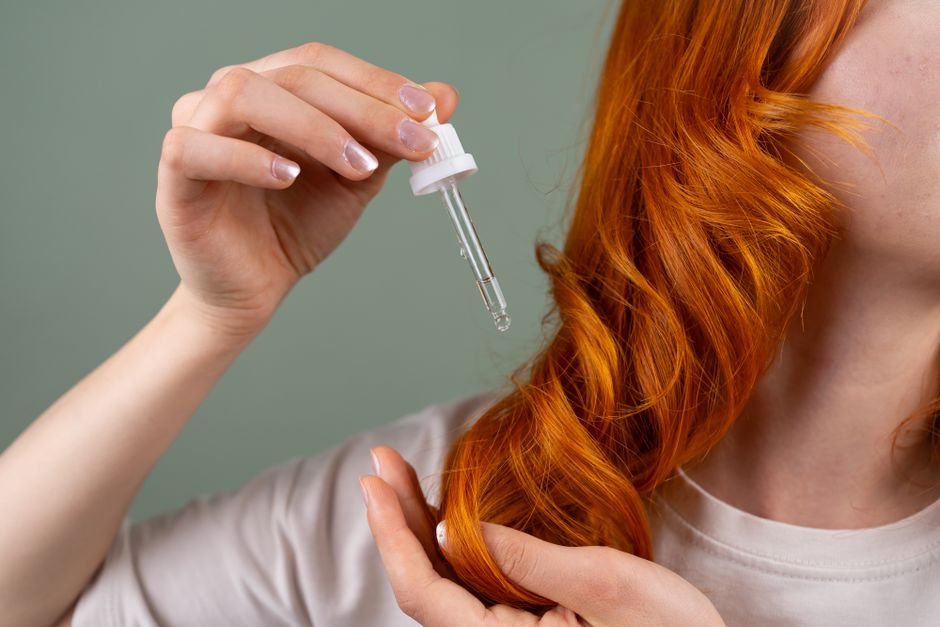
Dry ends can make otherwise manageable hair feel unfinished: the roots sit nicely, but the last few inches look rough or catch against your fingers. A lightweight hair oil may help those ends feel smoother without making the rest of your hair collapse. The useful question is which formula, in which amount, gives your ends a little slip while leaving them separate and movable. Choosing well starts with how your hair behaves, then checking whether the product delivers the finish you actually want.
Decide what you want the oil to do
A finishing oil can lubricate the hair surface, reduce friction, and soften the appearance of rough ends. It does not permanently mend split ends, and it is not a substitute for washing and conditioning. Think of it as a small finishing step that can make the oldest part of your hair easier to handle.
Before shopping, notice the problem you are trying to solve. Ends that feel slightly rough but still bend easily may need only a very light coating. Ends that remain stiff, tangled, or brittle after conditioning may need changes to your broader routine, or a trim. Adding more oil to badly weathered ends can leave them greasy without making them feel much better.
Choose for strand thickness, not just curl pattern
Fine hair often shows excess product quickly. The ends may gather into narrow, shiny strands even while the roots look freshly washed. If this sounds familiar, look for a fluid finishing formula that spreads easily in a tiny amount. Controlled dispensing matters as much as the description on the bottle.
Thicker strands may tolerate a more substantial coating, but a rich texture is not automatically the best choice. You may still prefer something light if your hair is short, you wear it loose around your face, or you dislike a coated feeling. Straight, wavy, curly, and coily hair can each have fine or coarse strands, so curl pattern alone cannot tell you how much weight your ends will accept.
If your hair has changed in texture over time, assess what it needs now. You do not have to replace a familiar routine simply because your hair is gray or you have reached a particular age. Let the response of your ends guide the decision.
Read beyond the word lightweight
Look at the whole formula
Some hair oils are mostly plant oils; others combine oils with silicones or other ingredients that help the product spread and improve slip. Either approach can work. A short ingredient list does not guarantee a lighter finish, and a silicone-containing formula is not automatically heavy. The finished blend and the amount you use matter more than a single appealing ingredient.
Descriptions such as weightless, nourishing, and silky can help you identify a product’s intended use, but they cannot tell you exactly how it will behave on your ends. Read the application directions as well. A product intended for a generous treatment before shampooing may be less convenient for your goal than one designed for a tiny finishing application.
Consider fragrance and dispensing
Fragrance is optional; it does not help dry ends feel smoother. If scented products bother your skin or you prefer less scent around your face, consider a fragrance-free option. Essential oils can also cause irritation, even when a formula is described as natural.
A dropper or a pump that releases a small, controllable amount makes gradual application easier. A generous pump can be awkward when you need only a trace. Choose packaging you can handle comfortably, and check that the directions clearly explain how and where to apply the product.
Use a small trial to judge the finish
When a sample or smaller size is available, it can help you assess the formula before committing to a larger bottle. Follow the label and patch test before broader use, especially if your skin is sensitive. Stop using it if you develop irritation. A skin patch test checks tolerability; you will still need a separate, small application to see how your hair responds.
- Begin with clean hair and your usual rinse-out conditioner, so the comparison reflects your normal routine.
- Dispense less than you think you need. Spread it thinly across your palms and fingertips.
- Touch the very ends first, keeping the product away from your roots and scalp.
- Give the formula time to settle before deciding whether to add another trace.
- Check the result in ordinary light and move your hair with your fingers.
The goal is ends that feel a little more supple and slide past each other easily. They should still look like individual strands, rather than a few dark or glossy ribbons. Avoid judging by shine alone: a visible coating can look shiny while feeling too heavy.
Match the application to damp or dry ends
If the label allows damp-hair use, a small amount can spread through the ends after washing. Gently blot excess water first. Soaking-wet hair makes it harder to judge placement and can encourage you to apply more than you need. Once your hair dries, assess the finish before adding anything else.
On dry hair, an oil is easier to place exactly where roughness is visible. Start at the tips, then use whatever remains on your hands slightly higher up if needed. For short hair, use fingertips to reach the ends without coating the nearby roots.
Do not assume a hair oil provides heat protection. If you use heated tools, follow their instructions and use a product specifically labeled for the relevant heat protection. An oil’s smooth feel is not evidence that it protects against hot styling tools.
Know when to adjust the amount or the formula
- The ends separate into greasy-looking pieces: try less on your next wash day. If even a trace feels heavy, consider a lighter formula.
- The tips improve but the lengths become flat: narrow your application to the lowest section instead of smoothing your hands over everything.
- Your hair feels increasingly coated between washes: stop automatic daily top-ups and reassess after your normal wash.
- The ends remain rough despite a shiny coating: review conditioning, gentle handling, and trimming instead of continuing to add oil.
You do not need to reapply simply because a new day has started. Touch the ends first. If they still feel comfortable, leave them alone. This is especially useful when you already use other leave-in products, since several light layers can add up to more weight than expected.
Keep the choice easy to live with
A suitable lightweight oil should earn its place through a small, repeatable benefit: softer-feeling tips, easier movement, and a finish you enjoy wearing. Keep using your regular conditioner, handle wet hair gently, and trim split ends when needed. If you notice persistent scalp irritation, unusual breakage, or a sudden change in your hair, see a dermatologist. For everyday dry ends, choose the smallest amount that helps, then let your hair’s feel tell you whether anything more is necessary.