
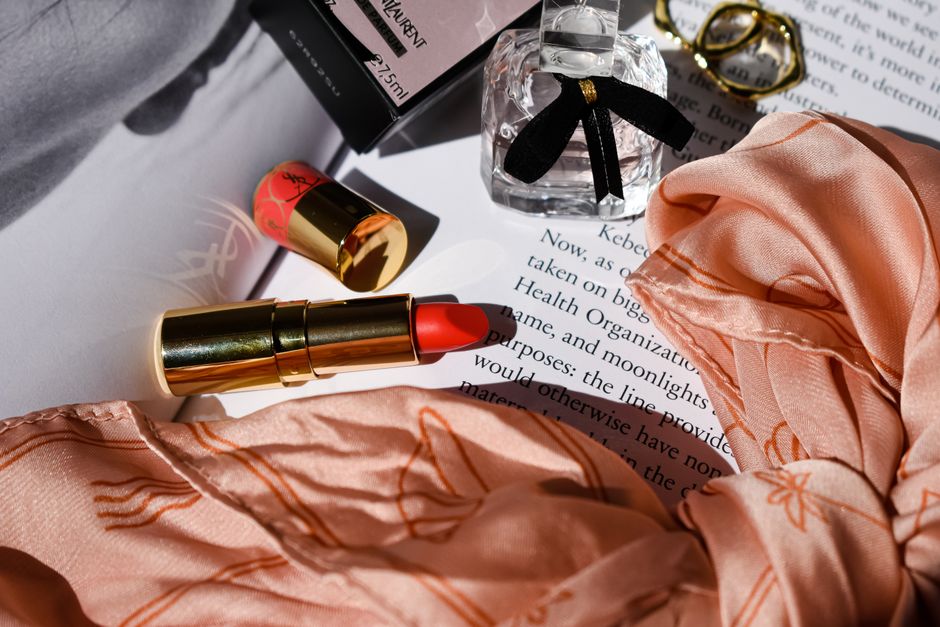
If gloss has been your usual finishing touch, satin lipstick can feel surprisingly different at first. The reflection is quieter, the color may look more present, and your mouth can appear more defined even in a familiar shade. Switching From Gloss to Satin Lipstick for a Softer Finish is about adjusting the balance between shine, pigment, and application. A few thoughtful changes help you keep the easy feeling you enjoy while giving your lips a gentler sheen.
Understand what changes when the shine comes down
Gloss often catches the light in bright, visible reflections. Satin lipstick generally has a softer luster: light still moves across the lips, but the surface does not look as wet. That difference can make your makeup feel calmer, particularly if you also wear luminous foundation, sparkling earrings, or glasses with reflective frames.
However, satin describes a finish, not a fixed level of coverage. One formula may leave a translucent veil, while another gives fairly complete color in a single pass. Texture varies too. A satin label does not guarantee a weightless feel, lasting comfort, or resistance to transfer. Judge the actual result on your lips rather than expecting every satin lipstick to behave alike.
Keep your familiar color family for the first switch
Changing finish and color together can make it difficult to work out what you like. Start with the family you already reach for in gloss, whether that is rose, peach, mauve, brown, or berry. You are giving yourself a familiar reference while learning how the new surface looks.
Do not expect an identical shade name to produce an identical effect. A rosy gloss may let much of your natural lip color show through, while a rosy satin can cover it more fully. The lipstick may therefore appear brighter, deeper, or simply more noticeable. Look at the color on your face before deciding that the finish itself is too strong.
Compare at a similar depth
If your favorite gloss is almost clear, a richly pigmented satin will be a substantial change even in a neutral shade. Begin with a lighter application or a more translucent formula. If you usually wear a deep tinted gloss, keep some of that depth; going very pale at the same time may leave the result feeling unfamiliar.
Let a thin first layer set the direction
A gloss wand encourages a generous sweep. Carrying that habit straight over to lipstick can deposit more color than you intended. With satin, think of the first layer as a way to assess the finish before building coverage.
- Apply a small amount to the middle of the lower lip with light pressure.
- Continue outward in short strokes, following your natural lip shape.
- Add a light layer to the upper lip, keeping the corners free of excess product.
- Relax your mouth and check the result before adding more.
If direct application feels too bold, use a clean lip brush to pick up a little color and spread it thinly. This gives you control over the amount without requiring a different shade. Avoid repeatedly sweeping the bullet across the same area while you decide; that can turn a delicate layer into a much fuller one.
Preserve the satin sheen when you blot
Blotting can reduce an unexpectedly heavy application, but it also changes the finish. Pressing firmly into tissue several times may remove much of the luster you wanted. Start with one gentle press using a clean tissue, then look again. You may only need to take away a little excess.
If the result becomes too flat, add a small amount of the same lipstick where the color needs refreshing. There is no need to rebuild a thick coat over the entire mouth. Skip powder on the lips when your goal is a satin surface; it can mute the sheen and make the texture feel different.
Give your eyes time to adjust
When you are accustomed to gloss, the missing bright reflection can initially read as a lack of fullness or freshness. Before reaching for another layer, step away from the close-up mirror. Look at your whole face from an ordinary conversational distance. Satin’s quieter light can be easier to appreciate in that wider view.
This is especially useful if your lip shape or natural pigmentation has changed over time. You do not need to recreate an earlier version of your mouth or follow an age-based makeup rule. Notice whether the color looks balanced when your face is relaxed, when you smile, and when you speak. Those are more useful checks than a perfectly still close-up.
Balance the rest of your makeup with small adjustments
You may find that your usual makeup works beautifully with satin straight away. If something feels unfinished, identify the missing element before changing several things. Perhaps your cheeks need a little more color, or perhaps your lip shade needs a slightly lighter application.
- If your face looks washed out: reassess the lipstick’s depth and undertone before adding shine.
- If the lips dominate: try less pigment while keeping the same satin finish.
- If the look feels too formal: keep the lipstick light and let your everyday eye makeup remain simple.
- If you miss luminosity: check the overall balance in natural light before adding more products.
The aim is a combination that feels like you. A quieter lip surface does not require stronger eyes, more blush, or a completely new routine.
Plan for a different kind of touch-up
A satin lipstick may leave a more visible color trace as it wears than a sheer gloss does. After eating or drinking, check the center of the lips and the corners. If color remains around the outside, refresh only the faded area first. Recoating everything automatically can create a buildup that feels heavier as the day goes on.
If the remaining color is uneven, gently lift away the excess before applying a fresh thin layer. Expect some transfer unless the particular formula indicates otherwise. A satin finish alone tells you little about wear time, so use your ordinary day to decide whether its touch-up needs suit you.
Make comfort part of your decision
Choose a formula that feels comfortable through normal talking and movement. Follow the label directions and patch test an unfamiliar product before regular use. Stop using it if irritation develops. Persistent soreness, cracking, or other lip problems deserve advice from a dermatologist rather than repeated attempts to cover them with makeup.
You can also keep gloss in your rotation. Satin might become your favorite with a soft knit and earrings, while gloss still suits another mood. A successful switch simply gives you a finish you understand: familiar color, a considered amount of pigment, and enough gentle sheen to feel polished without a wet-looking surface.