
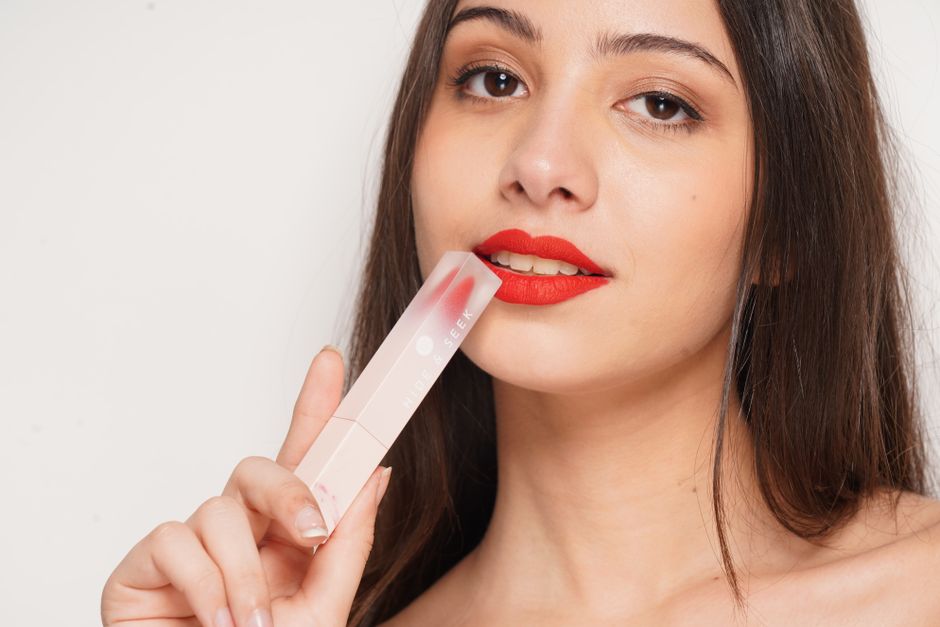
A lip stain can give your mouth lasting color while keeping your makeup feeling light. Finding a comfortable application for mature lips often comes down to how much you use, where you place it, and when you stop working it. If pigment catches in certain areas or feels tight as it settles, another coat may make the application more frustrating. A deliberate first pass gives you room to judge both the appearance and the feel.
Let your lips guide the application
Mature lips vary as much as any other feature. You may have a clearly defined outline, a softer border, fine vertical lines, or areas that feel drier than others. Those details can also change from day to day. Begin by looking at your lips relaxed, then gently parted, so you can see the surface you will actually be coloring.
Notice whether there is an area where pigment usually grabs first. It might be the middle of your lower lip or a patch near one corner. You can approach that area with less product instead of repeatedly covering the whole mouth to make everything match.
If your lips are cracked, sore, or irritated, leave the stain for another day. Patch test a new product according to its directions before using it on your lips. Stop using it if irritation develops. Persistent dryness, soreness, or changes to the lip surface deserve advice from a dermatologist.
Understand the stain before opening the applicator
The word stain covers different textures and application methods. Some products are fluid and spread quickly. Others have a gel texture, a marker tip, or a creamier feel. A product may also need a particular setting period or a separate finishing step. Read its directions before you begin, especially if you are used to applying conventional lipstick.
For an easier first attempt, look for an applicator you can place accurately and a color you feel comfortable wearing sheer. Consider whether you can control a small amount. A large tip can still work, but you may need to use its narrow edge or a clean lip brush for precision.
Choose your trial moment when you have time to assess the finish. Applying an unfamiliar stain just before leaving can tempt you to keep correcting it before you know how the color will settle.
Start with a small amount and a relaxed mouth
Find even light and a mirror close enough to see comfortably. Rest your elbow on a stable surface if that makes your hand steadier. Keep your mouth softly parted. Stretching your lips into a broad smile changes their shape and can make it harder to judge where you are placing the color.
Check how much product is on the applicator. If the directions allow it, wipe excess against the inside neck of the tube. You want enough for a controlled sweep without a hanging bead of liquid. Avoid pumping the wand in and out while deciding how much to use.
Work on one lip at a time
Begin with a small touch on the broad central area of your lower lip, away from the wet inner rim. Spread that amount outward in short movements, keeping the layer thin. If your stain sets quickly, finish this small section promptly instead of placing dots all over your mouth and returning to blend them later.
Move to the upper lip with enough product for a similarly light layer. Work around the natural shape of the cupid’s bow without trying to perfect every tiny variation. Aim for an even wash that still lets the character of your lips show through.
Use a light touch near corners and borders
As you approach the outer lip, reduce pressure and use the narrow part of the tip. Keep the color within the visible lip surface. A fluid stain can be difficult to retrieve once it reaches surrounding skin, so leave yourself a little working room while you learn its movement.
Finish the corners with a nearly empty applicator or a clean small brush carrying very little product. Avoid placing a fresh load there. Close your mouth gently to check the overall shape, then relax it again before making any adjustment.
Give the color time to settle
Follow the setting instructions and resist repeatedly pressing or rubbing your lips together while the product is drying. Some formulas allow blending for a short period, while others become uneven if you keep moving them. Let the directions determine when to stop.
Once the stain has settled, look from a normal conversational distance. A close mirror can make a tiny difference in texture seem much more noticeable than it is. Check whether the color looks balanced across your mouth and whether the finish feels comfortable when you speak.
Judge comfort before adding intensity. If the first layer feels tight, another coat is unlikely to improve that sensation. If it feels comfortable and the directions permit layering, add a small amount only where you want more color. Let that addition settle before considering anything further.
Adjust the area that needs attention
First identify what you see, then choose the smallest adjustment that suits the product’s instructions. Working on one area helps you avoid steadily increasing the amount across your whole mouth.
- A pale gap. Touch a little stain onto the gap and soften its junction with the surrounding color while the formula remains workable.
- A darker patch. Pause before layering around it. Chasing one dark area can gradually turn a sheer application into a much heavier one.
- Color outside the lip. Address a fresh mark with a clean cotton swab and a suitable makeup remover, keeping the motion small and gentle.
- A strong line at the inner rim. Check whether product has collected where your lips meet. Use less in that area on the next application.
If an adjustment starts disturbing the surrounding stain, stop working that spot. Repeated swiping can leave the finish increasingly irregular. You can accept a softer, imperfect wash or gently remove the application and try again when your lips feel comfortable.
Keep the comfortable finish through your day
If the label permits a balm over the set stain, apply a small amount when you need it, using gentle pressure. Check how the combination feels and wears on your lips. The stain’s original finish may change once another texture goes over it.
After eating or drinking, check the faded area before refreshing your color. A light touch where pigment has worn away may be enough. Recoating the entire mouth every time can create a darker outer area while the center continues to fade.
Your most repeatable application may be a single sheer layer with a modest touch-up later. Let that be enough if it suits your face and feels good. When you know how little product you need, which areas need care, and when to put the applicator down, lip stain becomes easier to fit into an ordinary morning.