
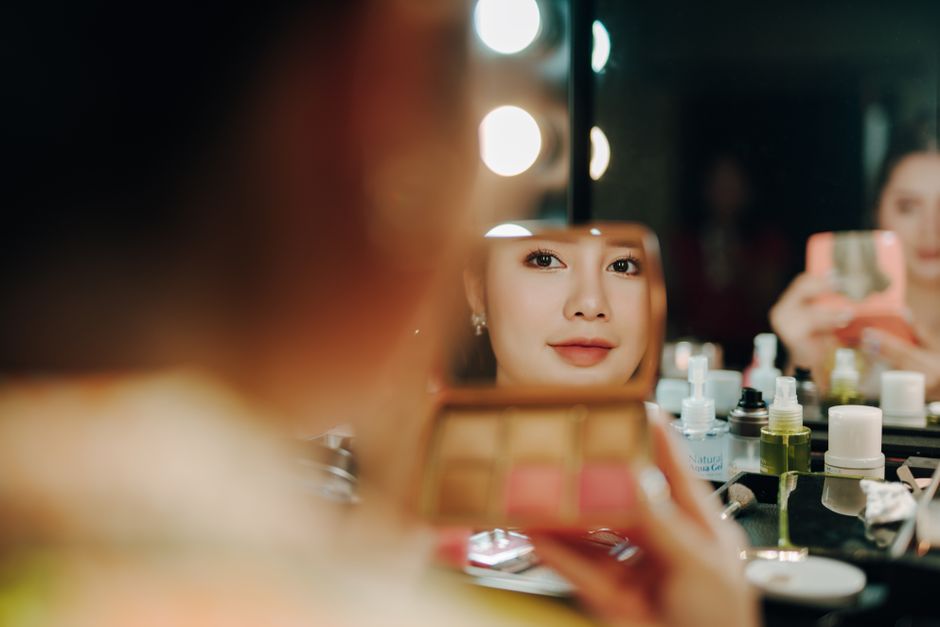
You finish your makeup with cheeks that look softly rosy, then arrive at dinner and wonder where the blush went. Warm indoor lighting can change how cheek color reads, especially when a room is dim or filled with amber lamps. Keeping blush visible under warm indoor lighting starts with checking the color in a comparable setting. From there, you can adjust its depth, tone, or placement without automatically adding a heavy layer. The aim is a gentle flush that remains recognizable as you talk and move around the room.
Check the lighting before adding color
A bright bathroom mirror and a softly lit dining room can give you different impressions of the same makeup. Before deciding your blush is too pale, move away from the bright mirror and look at your face near a warm lamp. Stand at a normal conversational distance instead of leaning close to inspect the surface of your skin.
Look straight ahead, then turn your head in each direction. If one cheek appears brighter, change your position before correcting your makeup. A lamp placed beside you can create an uneven impression. Adding blush to compensate for that shadow may leave the cheeks looking unbalanced once you move.
Look for a gentle distinction between the blush and the surrounding skin. You do not need an obvious outline or dramatic color. You simply want the rosy area to remain visible when you step back from the mirror.
Identify what seems to be missing
Blush that disappears might need a clearer color, a little extra depth, or more deliberate placement. Those are different adjustments. Changing everything at once can leave you with more makeup than you wanted and little sense of which change helped.
- If the blush merges into your complexion, consider a shade with a more noticeable rosy or reddish note.
- If you can recognize the color close up but lose it farther away, a slightly deeper shade may help.
- If your whole cheek looks warm, check whether bronzer is covering the same area as the blush.
- If you see reflection but little color, assess the finish before adding another layer.
Make one small adjustment, then return to the same lamp. Using the same position and mirror makes the comparison more useful. You are looking for a balanced result in that setting, rather than chasing a different effect every time you change rooms.
Choose a shade that stays distinct
A blush can look appealing in its container yet become difficult to distinguish from your base makeup. Muted beige, soft brown, or pale peach tones may blend into the overall warmth on some complexions under warm light. These shades can still be lovely, but they may not provide the visible cheek color you want for that room.
Try a clearer version of a familiar color
You do not have to abandon your usual preferences. If a pale peach disappears, a rosier peach might give it more presence. If a muted rose becomes barely noticeable, a clearer rose may be easier to see. Your natural skin color contributes to the finished effect, so judge the shade on your cheek rather than by its appearance in the packaging.
Depth deserves attention too. On deeper skin, a very pale blush may look chalky before it delivers satisfying color. A richer rose, berry, or red tone could be a more useful starting point. On fairer skin, a clearer shade used sparingly may provide enough distinction. Let the mirror guide you rather than treating any color family as a requirement.
Compare what you already own
If you have two suitable shades, wear them on separate occasions with similar base makeup and check them under the same lamp. Notice which one stays recognizable with less adjustment. A hand swatch can show differences between colors, but your cheek gives you a better sense of how each fits your face.
Give blush a recognizable place
When bronzer, blush, and highlighter spread over the same broad area, the cheek can read as one sweep of warmth. Leave blush some space of its own. Check where your bronzer ends before carrying it across the place where you want rosy color to show.
Start where you enjoy seeing color with your face relaxed, then soften the edges outward. There is no single placement every woman over forty needs to follow. Your cheek shape, glasses, hairstyle, and personal taste all influence where blush feels balanced. Check from the front as well as with your head turned.
If a broad wash seems to disappear, keep the color within a slightly smaller area and blend its boundary carefully. The center can retain some presence while the edge becomes soft. Avoid spreading it farther simply because the brush still has product on it.
Separate shine from cheek color
A luminous finish can look attractive beneath a lamp, but reflection and color do different things. Turn your head and see whether the blush remains visible when the brightest reflection moves away. If only the sheen registers, more shimmer may not give you the definition you wanted.
A satin or softly matte finish can make the color easier to judge. Mature skin does not require one particular formula or finish. Choose what feels comfortable and sits well on your skin. If you enjoy radiance, keep it selective enough that you can still recognize the blush itself.
Patch test an unfamiliar cosmetic according to its directions before using it more widely. Avoid applying makeup over irritated skin, and see a dermatologist for persistent irritation or other ongoing skin concerns.
Check the finished face before leaving
Once your lipstick and clothing are in place, look at the whole effect under warm light. A strong lip can make your cheeks seem quieter by comparison. Decide whether you actually want more blush, or whether that softer balance already suits the look.
- Face the lamp without standing directly underneath it.
- Look from conversational distance with your face relaxed.
- Add a small amount only where the color needs more presence.
- Soften the boundary with a clean tool and check in a brighter room.
The brighter check helps you avoid compensating so much for dim lighting that the result feels excessive elsewhere. Aim for something you enjoy in both settings, accepting that it will look softer in one and more noticeable in the other.
Once you arrive, resist adding blush repeatedly in a shadowy mirror. Find more even light before deciding that anything needs changing. A clearer shade, a little extra depth, or a more defined area may be all it takes. When you can see that gentle flush as you turn your head, put the brush down and enjoy your evening.