
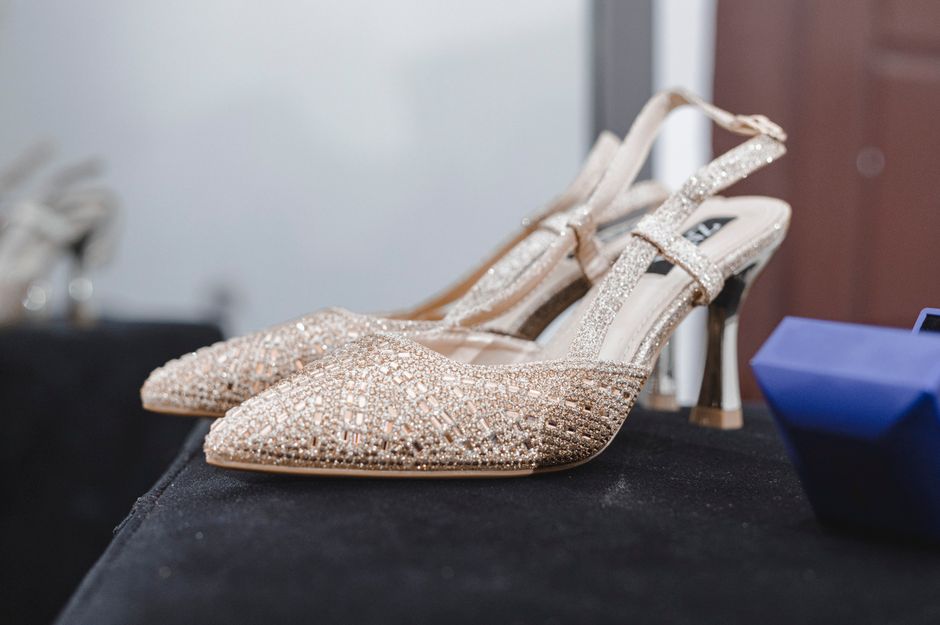
The evening shoes that feel lovely on bare feet can behave differently once you add tights. Your heels may slip, a toe seam may feel bulky, or a delicate strap may catch the fabric before you leave home. Choosing Evening Shoes That Accommodate Tights starts with treating the shoe and hosiery as a pair. Whether you prefer a low heel, a dressy flat, or a little extra height, aim for a secure fit with room for your toes and a smooth interior that treats your tights gently.
Bring the actual tights to the fitting
Try evening shoes with the tights you intend to wear. A thin, smooth pair and a thicker textured pair can change how the same shoe sits on your foot. Even tights that look similar may have different toe reinforcement or surface finishes. Testing with a nearby substitute can leave you guessing about the detail that matters most.
Put the tights on carefully before trying the shoes, smoothing the fabric over your toes and around your heels. A twisted foot section or bunched seam can make a suitable shoe feel wrong. If you wear shoes with an orthotic or another prescribed insert, bring that too, so you are assessing the complete arrangement.
Check each foot separately
Fasten both shoes and stand with your weight distributed naturally. Your toes should have room to rest without curling or pressing against the front. Check the wider foot as well as the longer one. Shoes that accommodate only one foot comfortably are unlikely to become a happy choice for an evening of standing and moving.
Look for toe room without a loose fit
A sleek shape does not have to mean a tightly squeezed forefoot. Look at where the shoe begins to narrow: the taper should leave your toes space rather than pushing them together. A softly rounded, almond, or generous square toe can be useful, but the shape printed on the description tells you less than the fit on your foot.
Pointed shoes can also work when the pointed section extends beyond your toes and the usable forefoot space feels comfortable. Avoid choosing a larger size simply to escape a narrow toe box. That may create spare length at the heel while leaving the underlying shape unsuitable.
Tights should lie smoothly inside the shoe, without being stretched painfully across compressed toes. If you can feel a reinforced toe edge or seam pressing into your skin, reposition it and try again. Persistent pressure is a reason to change the shoe or hosiery combination, rather than hoping you will stop noticing it.
Pay attention to how the shoe holds your foot
Smooth hosiery can allow more movement inside a shoe than bare skin. During the fitting, notice whether your foot slides forward or your heel lifts as you walk. A shoe can feel comfortably roomy while you stand still and become insecure the moment you take a longer step.
Closed pumps
With a closed pump, check that the heel cup follows your heel without digging into the back of your ankle. Walk at your normal pace. Repeated heel lift, toe gripping, or a need to shorten your stride suggests that the fit needs reconsidering. A higher front edge may offer more coverage, provided it does not press across your foot.
Straps and adjustable fastenings
An instep strap can help hold the shoe in place when hosiery makes the interior feel slippery. Look for adjustment that lets the strap sit securely without leaving a deep indentation. Check the underside of buckles and strap ends for rough edges. Slingbacks deserve a walking test too: the back strap should stay positioned without constant adjustment.
Dressy flats and lower heels
A flat or low heel can look entirely appropriate for an evening event when the shape and finish suit your outfit. Apply the same fit checks you would use for a higher heel. A shallow flat that repeatedly slips off is not a comfortable solution simply because it has little height.
Inspect every surface that touches your tights
Before buying, gently run a fingertip around the inside opening, heel lining, toe area, and any straps. Feel for exposed stitching, stiff joins, peeling lining, or sharp edges. Be especially attentive to decorative details near the opening, where the fabric may brush against them every time you move.
- Check that the lining feels smooth at the heel and beneath the toes.
- Examine buckle backs and the undersides of embellished straps.
- Look for rough edges around cutouts and open sides.
- Make sure any interior label or seam lies flat.
Embellishment on the outside is not automatically a problem. The question is whether it can contact the hosiery during ordinary movement, including crossing your ankles or bringing your feet together beneath a chair. Give your existing evening shoes the same inspection; worn interiors can develop snagging points.
Make open toes a deliberate choice
You can wear tights with open-toe evening shoes if you like the combination. Check the visible toe area in good light. A prominent reinforced panel or seam may draw attention away from the shoe, while a smoother toe finish may give the effect you prefer. There is no need to treat a visible seam as a fashion emergency; decide whether it fits your intended look.
Practical fit matters here as well. Your foot should stay comfortably within the footbed, with no forward sliding that pushes the hosiery against the front edge. Very narrow straps may concentrate pressure or rub the fabric. Try sitting and standing to see whether the toes and straps stay comfortably positioned.
Choose height for the evening you have planned
Think through the actual event: the walk from the entrance, standing for conversation, stairs, and time on a dance floor. Choose a heel height and base that feel steady during those movements. A broader heel may feel more secure for you, but its shape alone cannot guarantee comfort or balance.
Check the outsole too. You need confidence in your footing as well as security inside the shoe. If the sole feels unusually slick on the fitting surface, do not assume the problem will disappear at the venue. Ask about suitable sole care or professional alterations before making the shoes part of your evening plans.
Do a complete outfit rehearsal
At home, try the shoes with your chosen tights and outfit on a clean surface, following any return conditions. Walk, turn, sit, and stand again. Notice pressure, slipping, and snagging rather than judging only the reflection in the mirror. Avoid adding several pads to rescue an unsuitable fit; each extra layer changes the available room.
Once the pairing feels right, keep a spare pair of tights ready for an accidental snag. Your best evening shoes are the ones that let you walk into the room, settle into conversation, and enjoy yourself without repeatedly adjusting your heels or worrying about your toes.