

A three-day clothing capsule is a small set of garments with an actual wearing plan. It is not a miniature version of your whole wardrobe, and it does not need to handle every possible invitation. This guide covers clothes only, including the outfit worn at the start. Shoes, accessories, toiletries, and destination advice are deliberately outside its scope. The aim is to reduce uncertainty by choosing pieces that work together and allowing honestly for laundry, spills, and personal comfort.
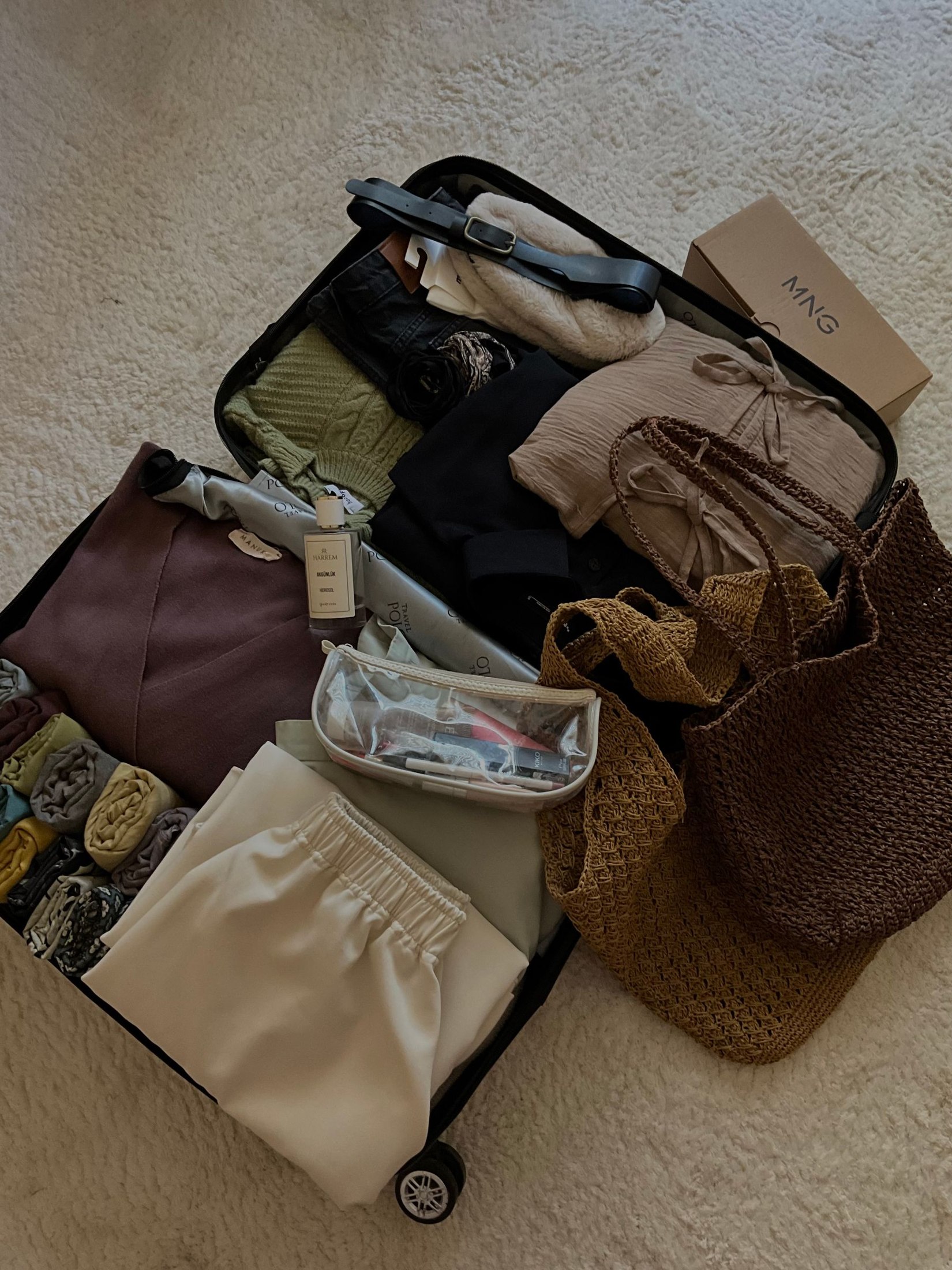
1. Write three days of clothing needs first
Describe each day in clothing terms: mostly casual, somewhat polished, or including a change into something different. Add whether you need sleepwear, a separate activity outfit, or an extra top after a warm afternoon. Avoid vague entries such as something nice. Specify what that means for you, such as a collared shirt with straight trousers rather than a formal dress.
Then identify requirements that cannot share the same solution. A garment reserved for a dressier evening may not be available as the next morning’s clean top. This is not a destination itinerary; it is a wear schedule. Knowing when clothes will be used prevents the same item from being assigned twice in an unrealistic way.
2. Choose two bottoms with different jobs
For a flexible example, start with dark straight trousers and relaxed cotton trousers. One can support the more polished outfit, while the other handles casual wear. If you prefer skirts, substitute one that works with the same tops. The useful distinction is function and silhouette, not owning a prescribed pair of wardrobe essentials.
Try each bottom with the tops you are considering. Check waistbands, tuck volume, and whether a shirt hangs comfortably when untucked. A top that technically shares a color with both bottoms is not truly versatile if it bunches awkwardly with one of them. Count usable complete outfits, not theoretical combinations based only on color matching.
3. Select tops by wear needs, not a magic number
Three daytime tops can be a sensible starting example for three days, but add another if your plans or preferences call for it. A simple knit top, a plain T-shirt, and a collared shirt provide different levels of structure. Keep the colors compatible with both bottoms so a change of plan does not require rebuilding the whole outfit.
Be realistic about rewearing. A base layer worn against the skin may not be something you want to repeat, even if a packing chart assumes you will. A loosely worn outer shirt may be more reusable. Decide based on the garment, conditions, and your own standards, without treating a smaller item count as a competition.
4. Add one middle layer and one outer option if needed
A cardigan or light pullover can work over all three tops if its neckline, sleeves, and body width allow it. Try the collared shirt underneath rather than assuming it will fit smoothly. If the sleeves bind or the collar bunches, choose another middle layer or reserve the shirt for a different combination.
Choose an outer garment only for a need you have identified. It should fit over the thickest combination, not just the T-shirt. This example capsule might use a simple cardigan and an unlined jacket, but your clothing requirements may call for something different. The principle is that each layer adds a useful wearing state rather than duplicating another piece’s job.
5. Build a specific three-day schedule
Day one could be the T-shirt, dark trousers, and cardigan, with the jacket added as required. Day two could use the knit top and cotton trousers, with the same cardigan available. Day three could use the collared shirt and dark trousers, provided those trousers remain suitable for rewearing. This is a sample arrangement, not a promise that every garment will stay clean.
Now test a disruption: if the dark trousers become unwearable on day one, do the cotton trousers work with the remaining tops? If not, reconsider the pairing or add a justified backup. A capsule becomes genuinely flexible when the alternatives are wearable, not merely when every item fits into a small space.
6. Account for the less visible clothes
Add underwear, socks or tights, and sleepwear according to the number of changes you need. Include any garment-specific underlayer you actually use with a shirt, skirt, or dress. Forgetting those items can make a carefully planned outfit unusable. Do not count on washing and drying during the three days unless that is a realistic part of your plan and the labels permit the method.
If you include an activity outfit, keep it separate in the count rather than assuming it can always double as daywear. Likewise, a camisole needed beneath a sheer blouse is not necessarily a spare daytime top. Naming these roles prevents a small capsule from appearing more adaptable on paper than it is in practice.
7. Pack in wearing order and review the exceptions
Set aside the starting outfit before packing the rest, so you do not accidentally count it as an additional option. Group the remaining garments by role or day, whichever makes them easiest to find. Follow garment-label guidance when folding or handling delicate pieces, and avoid forcing structured clothing into a space too small to accommodate it sensibly.
Finish by listing each garment and its planned use. Remove an extra only if it has no clear role; keep a backup when it answers a specific risk or comfort need. A successful three-day capsule is not the smallest imaginable pile. It is a compact clothing plan in which every outfit is ready, every necessary layer fits, and the remaining uncertainty is manageable.