
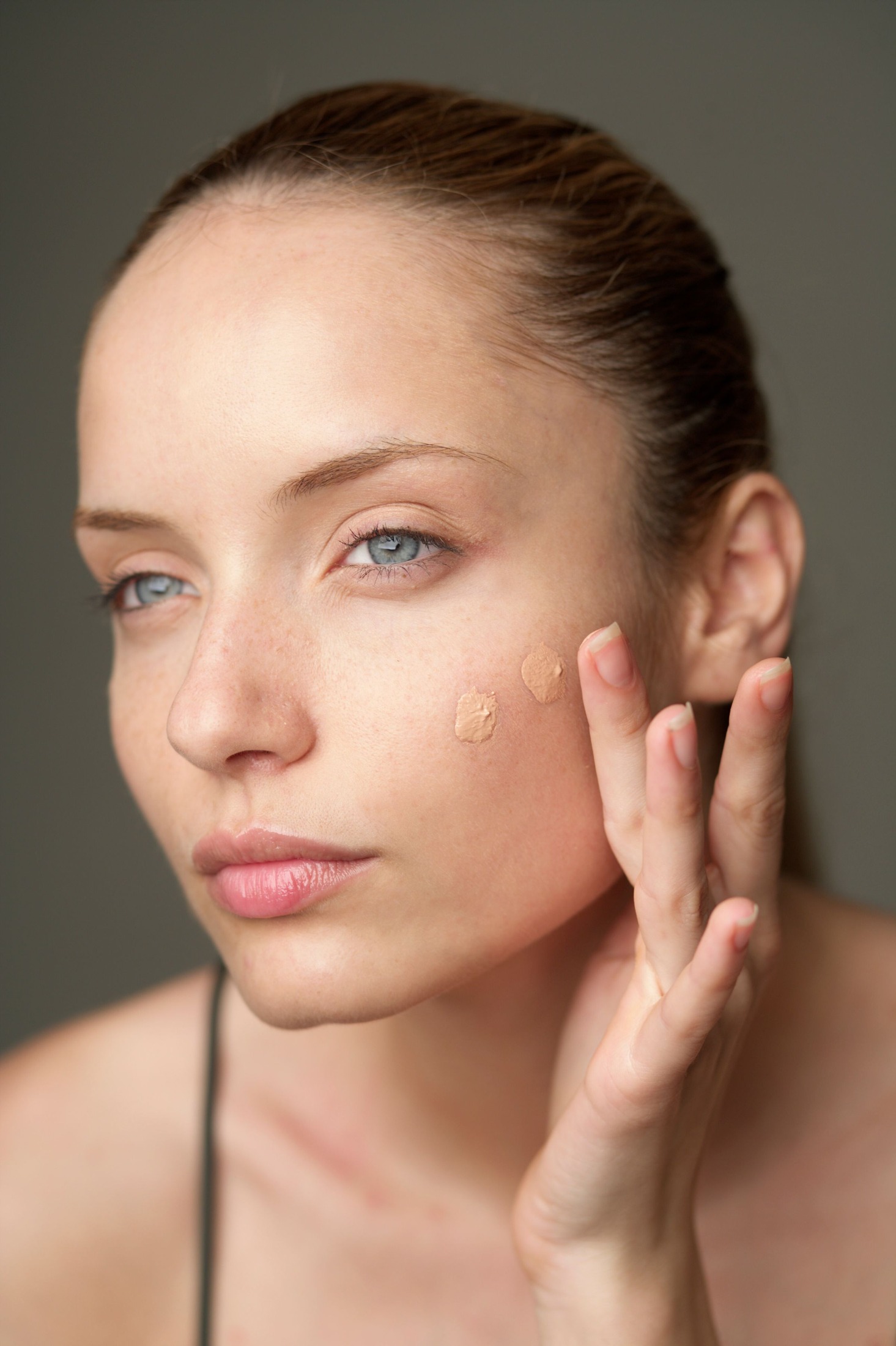
The shade that disappears on your hand may draw a clear line along your jaw. Hands, face, neck, and chest do not always share exactly the same color, so foundation matching needs a deliberate comparison area. A jawline test is useful because it shows the transition your makeup will actually make. The goal is not to find a bottle with the most flattering name. It is to find a shade and finish that connect your face with the visible skin around it.
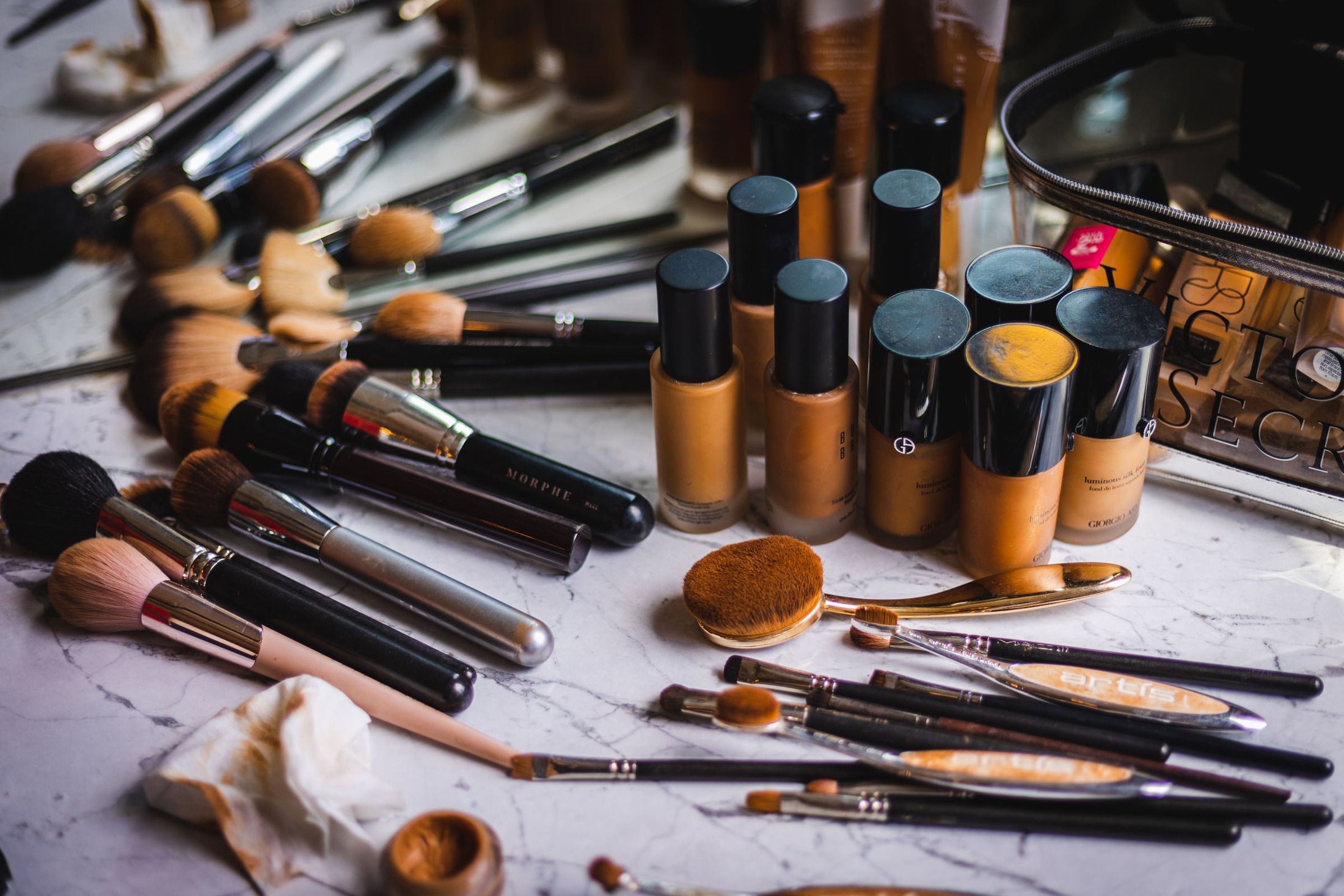
Choose the skin you want the foundation to connect
Look at your bare face, neck, and upper chest in indirect daylight. If your face is naturally redder than your neck, matching the reddest cheek may exaggerate the difference rather than balance it. If your neck is shaded while your chest is visible, a perfect neck-only match may look unexpectedly pale beside a lower neckline. There is room for judgment.
Decide whether the main visual transition is face to neck or face to neck and chest. You are not trying to repaint every area until it is identical. Instead, seek a believable connection with the amount of coverage you like. A sheer foundation can tolerate a slightly different match than an opaque formula, because more of your own skin color remains visible through it.
Narrow the comparison before adding swatches
Choose two or three nearby shades rather than covering the entire jaw with a long sequence. Start with depth: is the candidate obviously lighter or darker than the transition area? Then consider undertone: does it look unusually pink, yellow, orange, or gray against your skin? Brand categories such as warm and neutral are starting descriptions, not universal color standards.
If possible, compare shades within the same formula first. A matte full-coverage product and a sheer luminous one may look different even at similar depths. Changing shade and finish simultaneously makes it harder to understand what you are seeing. Once you have a plausible match, you can decide separately whether the formula’s texture suits the result you want.
Make narrow swatches that cross the jawline
Apply a small vertical stripe from the lower cheek across the jaw toward the upper neck. Leave bare skin between candidates so their edges remain easy to compare. Use a fresh disposable applicator where appropriate and avoid applying directly from shared testers. Ask for a sample if a hygienic personal trial is available rather than feeling obliged to choose under store lighting.
Blend one edge of each stripe while leaving enough pigment to identify the candidate. An entirely opaque stripe can show color differences, but a partially blended edge better represents how the foundation will look in use. Keep track of which shade is which. A simple note on your phone is enough; memory is unreliable when several nearly identical swatches are involved.
Move to daylight and let the formula settle
Stand near a window or in open shade rather than direct sunlight that washes out subtle differences. Look straight ahead, turn slightly, and examine the transition from more than one angle. Artificial lighting can make a shade appear warmer or cooler than it does elsewhere. Daylight is a useful comparison, not a guarantee that every room will render the color identically.
Allow the product time to reach its normal finish according to its behavior and directions. Some foundations look different once the freshly applied wet surface has settled. Check again rather than assuming the first second is the final result. If one candidate becomes noticeably darker or more orange on your skin, record that observation instead of automatically choosing a lighter shade to compensate.
Judge the edge and the whole face
The best candidate often has the least obvious blended border, not the most attractive standalone stripe. Look for a shade that neither lights up the jaw nor leaves a muddy band. Then step back far enough to see your face, neck, and neckline together. A magnified mirror can help with texture, but it is less useful for judging overall color balance.
For example, two candidates may both look close at the jaw. One may turn pink beside the chest, while the other blends more quietly across the full transition. Choose based on that actual view rather than on which undertone label you expected to wear. Your existing concealer, blush, or bronzer should not have to disguise a clear foundation mismatch.
Confirm with a small wearable application
If you can obtain a sample, apply a thin layer over part of the lower cheek and jaw on another occasion. Use your usual preparation and application tool. This reveals whether a shade that looked good in a stripe still looks convincing when spread across a larger area. Keep the coverage close to what you intend to wear regularly.
Observe whether the foundation collects around texture or changes the apparent color by becoming thicker in certain places. A correct shade applied too heavily may still look masklike. Before rejecting the color, compare a thinner application. Conversely, do not excuse a persistent orange or pale boundary as merely a blending issue if it remains visible after careful, realistic application.
Keep the match useful as your complexion changes
Check the shade against your current complexion rather than assuming the bottle will remain right forever. A change in visible skin color, hair color, or preferred coverage may alter how you perceive the match. You do not need a large collection of seasonal bottles. Reassess the current shade in daylight before buying a replacement or adding another product.
If none of the nearby candidates works, wait rather than accepting a clearly wrong undertone. Another formula may offer a better option. Do not alter sunscreen to make foundation color work, and keep any cosmetic shade adjustment separate from your sun protection. A successful match should simplify the rest of your makeup: a thin application, a quiet jawline edge, and no need to carry a heavy layer down the neck.