
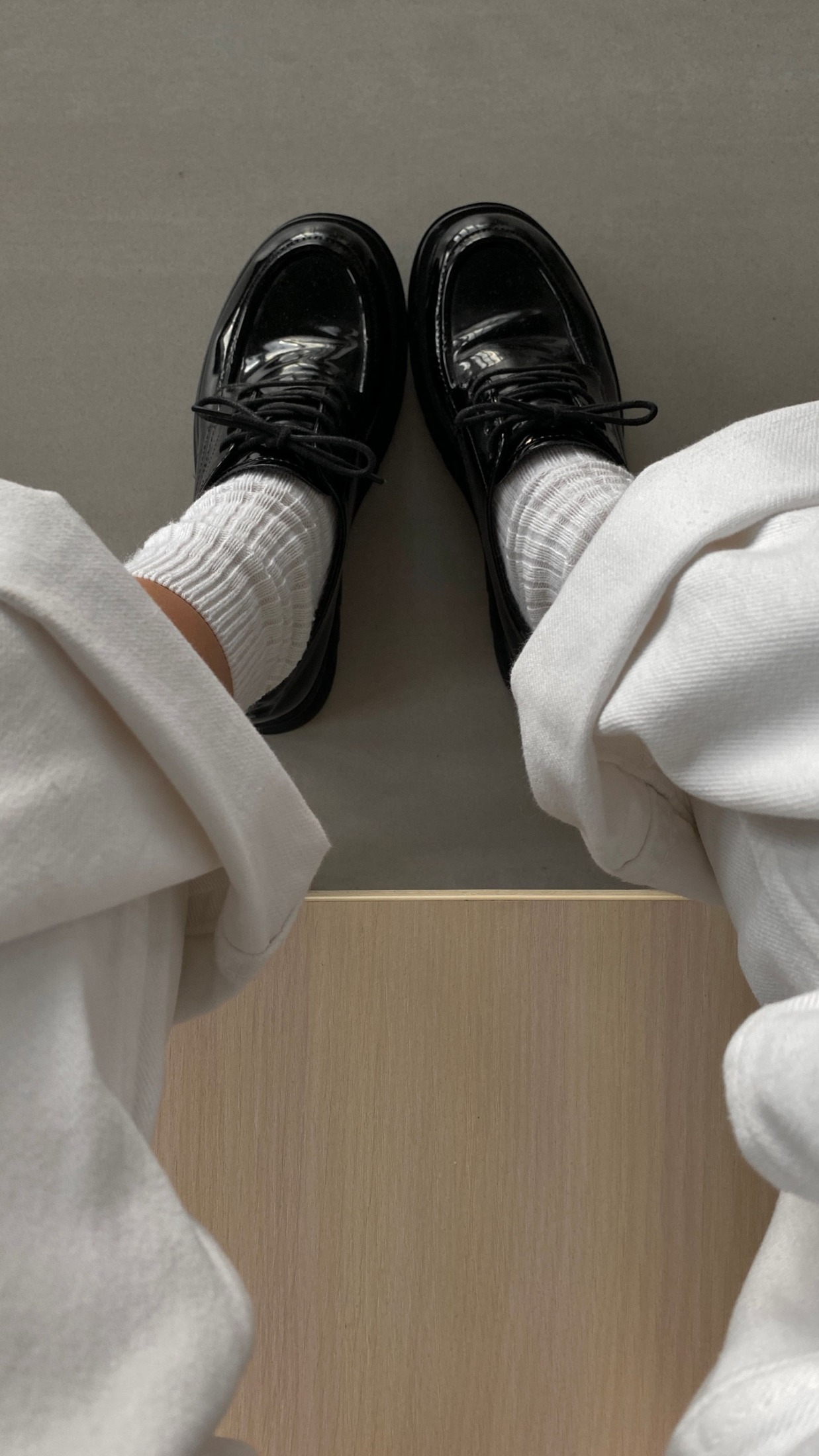
The small area where trousers meet socks and loafers can determine whether an outfit feels crisp, relaxed, or simply unresolved. You do not need a new pair of shoes to improve it. Often the useful change is a less bulky sock, a different trouser length, or a deliberate decision about contrast. This guide focuses on that junction rather than on a particular loafer sole or brand. Start with the shoes properly fitted, then build the surrounding lines.
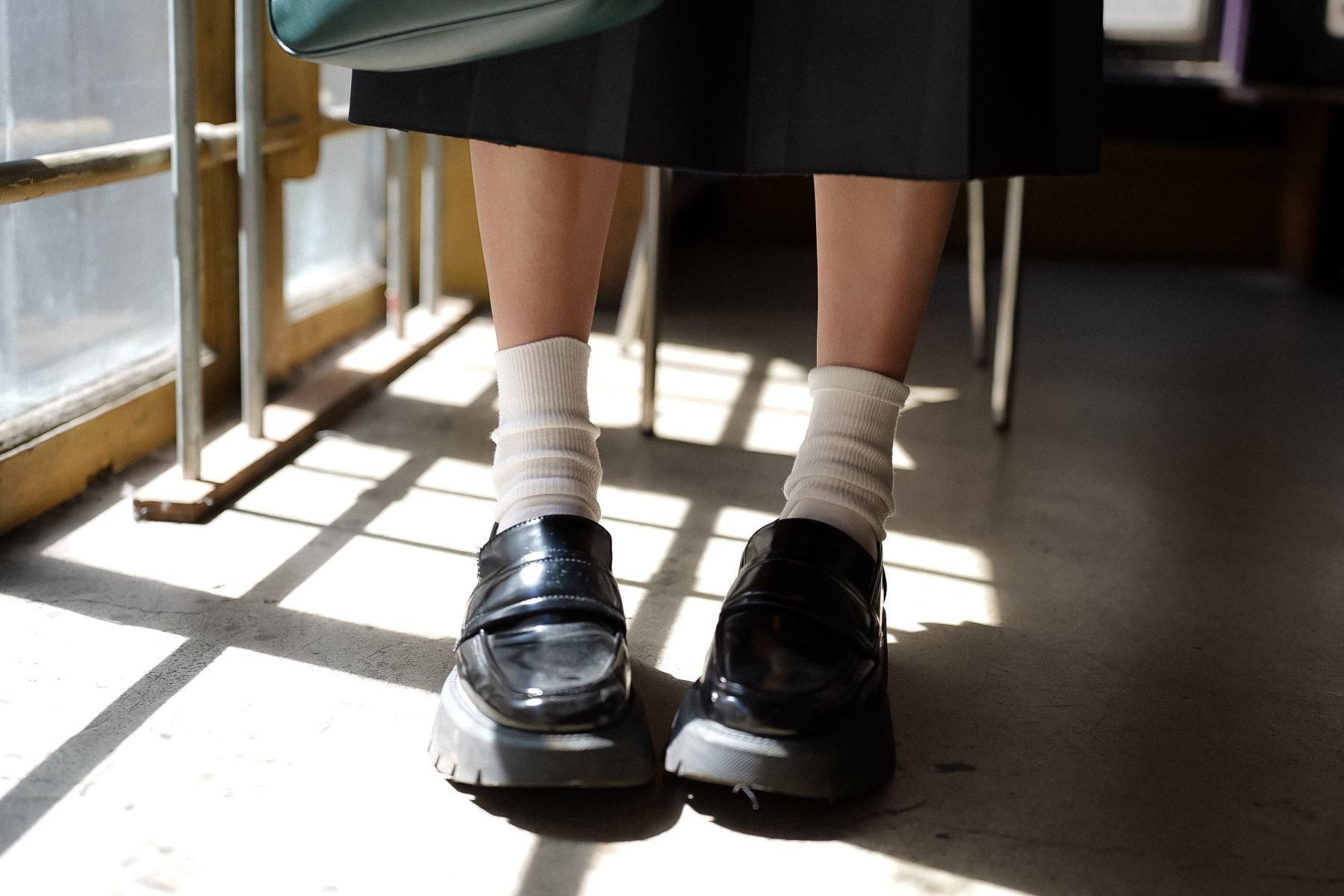
1. Fit the loafer with the intended sock
A loafer that works with a fine dress sock may feel crowded with a thick ribbed pair. Try the combination you plan to wear before deciding on the hem. Stand, walk, and notice whether the sock wrinkles beneath the foot or gathers at the shoe opening. A sock should not be used to force an otherwise loose loafer into behaving.
If you want a substantial visible sock, choose a shoe that accommodates it comfortably. Conversely, do not buy a tightly fitted shoe on the assumption that its upper will stretch enough for winter socks. Getting this foundation right prevents the styling decisions from becoming workarounds. The trouser break cannot rescue footwear that makes you alter your stride.
2. Decide whether the sock should connect or interrupt
A sock close to the trouser color extends the visual line downward. Charcoal socks beneath charcoal trousers leave the loafer as the clear finishing shape. A sock close to the shoe color instead makes the sock and loafer read together. Brown socks above brown loafers can provide a gentle transition under lighter trousers without looking identical in every shade.
A contrasting sock creates a deliberate interruption. Cream ribbing beneath dark cropped trousers is one option; a muted red sock can echo a small detail in a shirt. Keep the contrast visible enough to look intentional. A tiny accidental strip may be less convincing than a clearly shown band, especially when the trousers rise further as you sit.
3. Assess straight trousers standing and seated
With straight trousers, look at how the front hem meets the top of the loafer. You might prefer a clean clearance or a modest break, where the fabric bends slightly over the shoe. Both can work. The warning sign is uncontrolled stacking that hides the shoe and makes the trouser leg collapse at the ankle.
Sit down before settling on a length. More sock will usually become visible, so check that its color and condition still make sense. If skin appears between the sock and trouser when you would prefer continuous coverage, try a longer sock rather than automatically lengthening the trousers. You are solving a coverage issue, not necessarily a tailoring issue.
4. Give wide hems enough clearance
A wide trouser leg can frame a loafer beautifully, but the hem needs to clear the ground and avoid getting trapped beneath the heel. Check the back edge as well as the front. A mirror view from above can hide dragging fabric, so use a side view or a photograph taken at a normal standing distance.
Move through a few ordinary steps and turn. If the fabric catches on the vamp or folds beneath the shoe, try a shorter length or another loafer profile. Do not rely on standing perfectly still to keep the hem arranged. With very fluid trousers, a cleaner clearance may look more controlled than a deep break that repeatedly changes shape.
5. Make cropped lengths look chosen
Cropped trousers expose more of the sock and shoe, making those details more important. Compare a fine smooth sock with a ribbed one. Smooth fabric can maintain the tailored feeling of a pressed trouser, while visible ribbing introduces a more casual texture. A decorative sock can work, but its pattern becomes another feature to coordinate.
For example, navy cropped trousers, dark brown loafers, and a burgundy sock create a contained accent beneath a pale blue shirt. If the same outfit includes a strongly patterned jacket, a quieter sock may serve it better. Check the crop with your actual shoe opening; a length that works with an ankle boot may create a very different gap above a low loafer.
6. Use temporary comparisons before permanent alterations
Fold a trouser hem inward to compare lengths in front of a mirror, keeping pins or clips away from your feet and removing them before walking. This is a visual experiment, not a finished wearing solution. Take photographs of two or three lengths with the same shoes and socks. The comparison is easier when you do not change the rest of the outfit.
A tailor can advise how the fabric, existing hem allowance, and leg shape affect an alteration. Mention the shoes you expect to wear most often and bring them if possible. Avoid choosing a length based only on one unusually high or low shoe unless that is genuinely the trouser’s intended partner.
7. Put the complete outfit through a final check
Try gray straight trousers with black loafers and gray socks for a continuous line, then switch to cream socks to see how much attention moves downward. Try brown loafers with olive trousers and dark brown socks for a quieter casual combination. These are comparison exercises, not compulsory color formulas. Your preferred amount of contrast should be visible in the whole outfit.
Finally, check four practical points: the socks sit smoothly, the loafers stay secure, the trouser backs clear the floor, and the seated view looks intentional. If one fails, adjust that part first. A considered trouser-and-loafer outfit depends less on following a fixed hem rule than on making the connection work from every ordinary angle.