
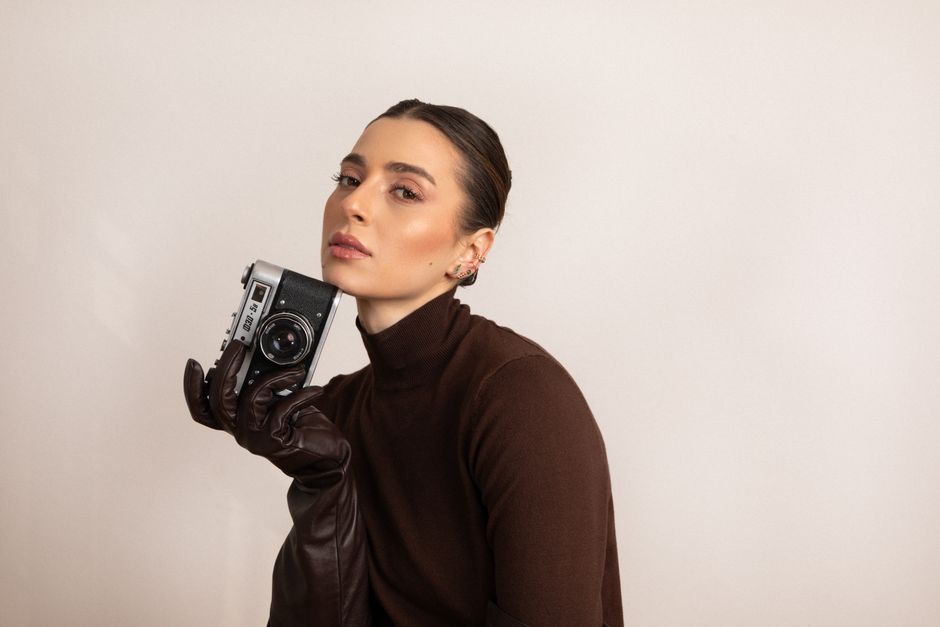
A fitted coat cuff gives your sleeve a clean finish, until a bulky glove pushes it out of shape or a short one leaves your wrist exposed. Choosing gloves that work with fitted coat cuffs means looking beyond the fingers. The glove opening, lining, seams, and length all affect how the two pieces meet. With a few checks, you can find a pairing that feels comfortable when you carry a bag, reach for a door, or bend your arms.
Start with the coat you actually wear
Try gloves with your coat whenever possible. A pair that feels lovely on its own may bunch beneath a narrow sleeve. Wear a typical layer underneath, too: a sweater cuff already takes up space that a bare wrist leaves available. Fasten the coat as you normally would, then let your arms rest naturally before judging the fit.
Look inside the sleeve opening. A thick lining, turned hem, or decorative strap can make the usable space smaller than it appears from outside. Buttons and zips may allow some adjustment, but only use them as intended. If opening a cuff fastening makes the sleeve flare awkwardly, choose a less bulky glove instead of relying on that adjustment.
Decide where the glove opening should sit
Under the sleeve for a smooth finish
For many fitted cuffs, the easiest arrangement is a glove with a slim wrist section that slips beneath the sleeve. The coat should fall over it without catching or forming a ridge. Look for enough glove length to maintain overlap when you bend your elbow. A tidy join while standing still is only half the job.
A narrow glove opening does not have to grip tightly. You should be able to move your wrist comfortably without a hard elastic edge digging in. If the opening folds over as you pull the coat sleeve down, it may be too soft, too bulky, or simply the wrong shape for that cuff.
Over the sleeve when there is room
A longer glove can sit over a fitted sleeve, but its opening must accommodate the coat fabric without pulling. This works best when the sleeve itself is smooth and the glove has a sufficiently generous upper section. Do not stretch a close-fitting glove over thick coating just to make the arrangement work; it can restrict movement and distort both pieces.
Choose the hand fit before judging the cuff
A glove that is too small can pull down whenever you close your hand, making the wrist overlap disappear. One that is too large may leave loose fabric gathering beneath the coat. Begin with the palm and fingers, then assess the sleeve connection. Sizing up purely to gain wrist room rarely solves an otherwise poor fit.
- Fingertips: Your fingers should reach comfortably into their sections without pressing hard against the ends.
- Thumb: Spread it gently away from your hand and check for pulling across the palm.
- Knuckles: Make a relaxed fist. The material should allow the movement without feeling strained.
- Wrist: Bend your hand forward and back. Seams and fastenings should remain comfortable.
If your hands differ slightly in size, fit the larger hand first and check that the other glove still feels secure. Choose comfort over an unusually tight silhouette. A glove can look neat with a little ease, particularly when its fingers and palm are well proportioned.
Look for warmth without a thick wrist ridge
The area beneath the coat cuff deserves special attention. A turned-back knit band, substantial binding, or plush lining can create a lump even when the rest of the glove is slim. Run your fingers around the opening and feel for changes in thickness. Then try that section under the sleeve rather than guessing from its appearance.
Smooth materials and restrained seams
Supple leather, suede, and finely knitted fabrics can all work, depending on their construction. None guarantees a slim fit. A leather glove with a heavy wrist seam may be bulkier than a fine knit, while a textured knit may catch against the sleeve lining. Judge the finished glove, including its interior, rather than choosing by material alone.
Lining that stays in place
A lining should lie smoothly when you put the glove on and take it off. If it gathers at the wrist during a try-on, the coat cuff may press that gathering into an uncomfortable band. Check the care label as well. Your gloves need to suit the weather and upkeep you can manage, as well as the shape of your coat.
Test the overlap while you move
Stand in front of a mirror with both gloves on. Reach forward as though holding a shopping basket, then bend your elbows as though checking something in your hands. Coat sleeves naturally shift with movement. Watch whether the glove still covers your wrist and whether the cuff returns to its usual position when you lower your arms.
Next, put a hand into the coat pocket and take it out again. A raised glove fastening can snag on the pocket opening or push the sleeve upward. If you regularly carry a shoulder bag, lift its strap onto your shoulder. These ordinary actions reveal awkward bunching more clearly than a straight-armed mirror pose.
A useful pairing needs little rearranging. If you keep tugging the glove upward or pulling the sleeve down, try a different wrist length or construction. A slightly longer, slimmer glove often solves the problem more comfortably than a short glove with a thick elastic band.
Keep details clear of the sleeve edge
Bows, buckles, decorative buttons, and zips can look appealing, but their placement matters. A detail directly beneath the cuff can press against your wrist or prevent the sleeve from lying flat. Choose decoration that remains outside the overlap, or look for a flatter finish where the glove and coat meet.
Think about your watch, too. A watch already tucked beneath a narrow sleeve leaves less room for a glove opening. Try the complete combination before deciding. If it feels crowded, moving the glove edge slightly or choosing a smoother wrist section may help. Avoid forcing several firm edges into the same small space.
Use color to make the join look intentional
Once the fit works, consider how much attention you want at the wrist. Gloves close in color to your coat create a quiet continuation of the sleeve. A contrasting pair draws the eye toward your hands, which can be attractive when the cuff and glove meet cleanly. Neither approach requires matching every accessory.
For a camel coat, dark brown gloves offer a gentle contrast; with charcoal, burgundy can add richness. Keep any visible glove trim in mind alongside the coat buttons. The final check is practical: put everything on, move naturally, and notice whether your hands feel comfortable. When the overlap holds and the sleeve falls smoothly, you have a pairing ready for everyday wear.