
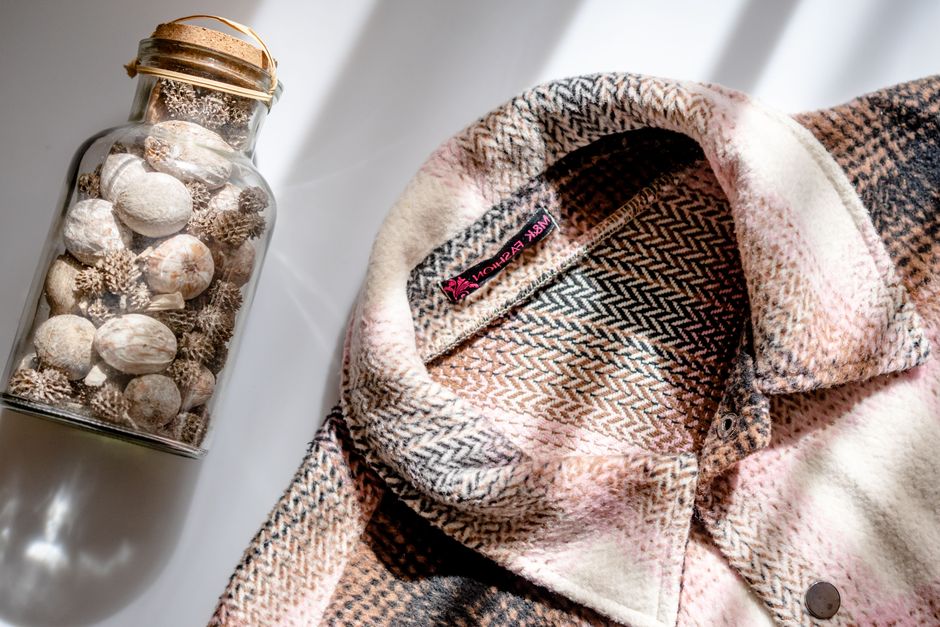
A brushed-wool overshirt can be just the layer you want when a room feels cool but a coat would be cumbersome. Its soft surface brings warmth and texture to everyday clothes, while the shirt collar and button front give it more definition than a blanket-like wrap. The trick is choosing and wearing it for the hours you spend inside: sitting at a desk, preparing lunch, reading, or having friends over. A few thoughtful adjustments can make it feel like part of your outfit throughout the day.
Choose an overshirt that belongs indoors
Start with how the garment feels in your hands. An overshirt with a supple body and sleeves that bend easily is usually more comfortable around the house than one with the stiffness of outerwear. Brushed wool has a fuzzy surface, but that alone does not tell you how heavy or flexible the fabric will be. Feel the whole garment, including the cuffs, collar, and seams.
Consider the details you will notice while wearing it for several hours. Large rigid chest pockets can feel awkward against a tabletop, and thick buttons may press against you when you lean forward. A substantial lining can make an overshirt warmer than you need. Try the piece over the kind of top you actually wear indoors before deciding whether it works.
Check the fit while sitting and reaching
A comfortable standing fit is only the beginning. Button the overshirt, sit down, and reach forward as though you were typing or picking up a cup. The fabric should allow that movement without pulling firmly across your upper back. Check that the front does not strain across your bust or hips when you settle into a chair.
Extra room is useful, but it should serve a purpose. If the sleeves engulf your hands or the sides bunch against the chair arms, try a different cut before automatically choosing a smaller size. A straighter body with manageable sleeves may give you the ease you need without excessive fabric. Your shoulders do not need to match a particular fashion silhouette for the garment to feel right.
Pay attention to the back hem
A long, curved shirt tail can look lovely when you are standing, yet fold underneath you when you sit. Notice whether you keep tugging it free. A shorter hem may be easier at a desk, while a longer one might suit a roomy reading chair. Choose according to your ordinary movements, and check the side view as well as the front.
Give the brushed surface a comfortable base
Wear a smooth, lightweight top underneath so you can enjoy the wool texture without having it against every part of your skin. A cotton jersey tee or a soft, fine long-sleeved top is a practical starting point. Make sure the underlayer feels comfortable on its own, because you may want to take the overshirt off as the room warms.
If the collar bothers your neck, experiment with an underlayer whose neckline sits slightly higher. For wrists, a close-fitting sleeve extending just beyond the wool cuff may help. There is no need to tolerate persistent prickling for the sake of an outfit. If a piece remains uncomfortable despite a suitable base layer, another fabric or construction will serve you better.
Keep the base layer fairly smooth through the sleeves. Thick gathers, bulky seams, and wide cuffs can catch inside the overshirt whenever you bend your elbows. Pull the underlayer into place before putting the overshirt on, then move your arms naturally to check that nothing twists.
Use the button front to adjust warmth
An open overshirt gives you an easy way to moderate warmth without changing clothes. It also lets the underlayer become part of the outfit, so consider the color showing between the fronts. A plain top creates a calm center beneath the brushed texture, especially if the overshirt has a visible check.
For a little more enclosure, fasten a few middle buttons and leave the neckline relaxed. Check the result while seated: the fastened section should lie comfortably rather than pulling into diagonal lines. If the hem catches across your lap, release a lower button. Let comfort guide the arrangement instead of trying to preserve an exact shape all day.
Make the sleeves work for indoor tasks
Sleeves matter when you are washing your hands, writing, or setting the table. First try the cuff as designed. It should stay clear of your palm without gripping your wrist. If it is too loose, check whether an existing second cuff button offers a better fit.
A single turn-back can shorten a sleeve neatly when the fabric allows it, but repeated thick rolls can become heavy and restrictive. If the cuff resists folding, avoid forcing it. Sleeves that need constant pushing up are a sign that the cut may not suit your routine. Remove a loose-sleeved overshirt before working near a hob or open flame.
Balance the texture with familiar separates
The brushed finish already gives an outfit visual interest. Pairing it with smoother pieces helps that texture feel considered without requiring much styling. You can use clothes already in your wardrobe and repeat the combination whenever you want an easy indoor layer.
- For a desk day: wear a plain jersey top and straight trousers with a flexible waistband. Keep the overshirt open so the front can move freely as you sit.
- For a relaxed afternoon: combine a soft crewneck tee with comfortable jeans. Choose denim that feels easy at the waist when you curl up or bend down.
- For company at home: try a simple knit top and fluid trousers. The smoother trouser fabric gives the fuzzy overshirt a gentle contrast without making the outfit formal.
With a checked overshirt, pick up one quiet color from the pattern in your top or trousers. With a solid one, nearby shades can look softly coordinated. You do not need matching accessories; the relationship between the main pieces is enough.
Finish with details that stay comfortable
Keep jewelry clear of the brushed surface where possible. A smooth ring or small earrings may be easier than a long necklace that catches against the front. If you wear a watch, check that it slides comfortably beneath the cuff. These small points become noticeable when you keep the same layer on for much of the day.
Before settling in, do one final everyday check: sit, reach, bend your elbows, and carry something across the room. Adjust the buttons or cuffs once, then notice whether the overshirt lets you forget about it. The most useful indoor layer has enough softness to feel inviting and enough ease to follow you through an ordinary day.