
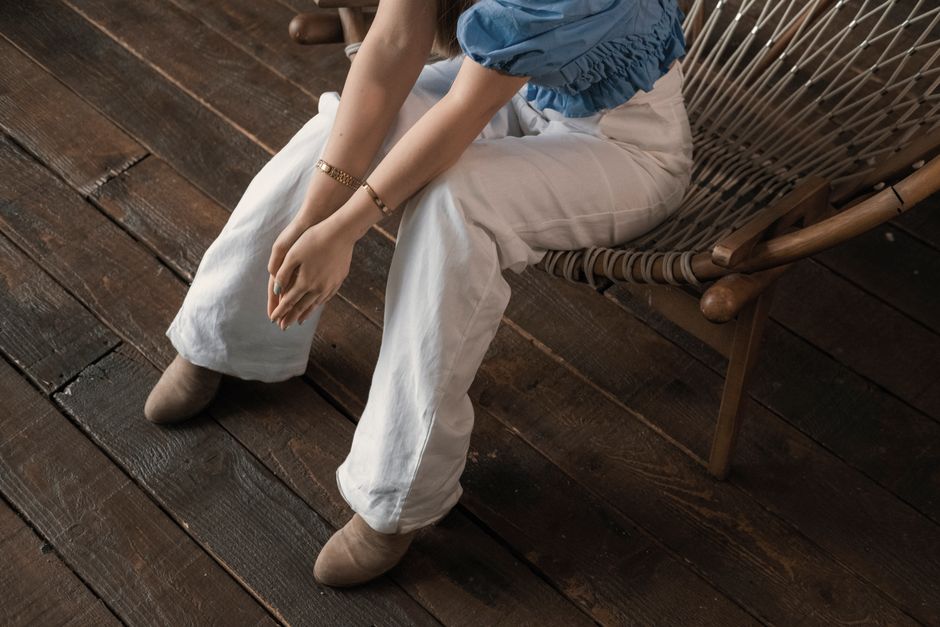
Pleated trousers can look beautifully relaxed while you are standing, then feel surprisingly restrictive when you sit down. The waistband presses, the front pulls, or the back slips lower than you expected. Choosing a comfortable rise means looking beyond the label and noticing how the whole upper part of the trousers behaves in a chair. Whether you spend your day at a desk, drive between errands, or enjoy a leisurely lunch, a thoughtful seated fitting can help you find a pair you actually want to keep wearing.
Understand what the rise is doing
The rise is the distance along the seam from the crotch to the top of the waistband. Front and back rise work together to position the waist and provide space through your middle and seat. Two pairs described as mid rise can sit quite differently because their waistbands, seam shapes, and proportions differ.
Pleats add another element: folds of fabric below the waistband that can open as you move. They provide room through the front, but they cannot compensate for every fitting problem. A short back rise, narrow hip area, or tight waistband can still make generously pleated trousers uncomfortable.
Use the rise label as a starting point, then let sitting decide. The most useful question is where the waistband settles comfortably on your own body, with enough fabric beneath it for movement.
Find a waistband position you can live with
Try a higher rise without assuming it will dig in
A higher waistband may feel secure when it rests near your natural waist, particularly if lower waistbands tend to slide. It can also keep the back covered when you lean forward. But if its top edge meets the area where your torso folds when seated, a firm band may feel intrusive.
Notice the entire depth of the waistband. A broad, rigid band can press even when the top edge looks well positioned. A narrower or more softly constructed band at a similar height may feel completely different.
Give a middle or lower position the same scrutiny
A waistband sitting below your natural waist may avoid pressure higher on your abdomen. However, it still needs enough room where it rests. If you pull it upward to make the crotch feel comfortable, you may be fighting the cut rather than finding a better position.
Lower placement also makes back coverage worth checking. Sit, lean forward gently, and notice whether the waistband stays secure without needing a tug. There is no universally best rise for a particular age or body shape; your torso length, proportions, and preferences all matter.
Make the fitting room work like a real day
Try trousers with the underwear and kind of top you would normally wear beneath the waistband. A tucked shirt adds fabric, so include it if that is your usual approach. Fasten the trousers fully and let them settle naturally before adjusting anything.
Use a stable chair or fitting-room bench if one is available. Sitting on a very high perch can miss the pressure you feel in an ordinary chair. Keep your feet supported and allow your abdomen to relax. Holding yourself unusually upright or drawing in your stomach will not tell you much about everyday comfort.
- Stand comfortably and note where the waistband rests without a belt.
- Sit as you would at a desk or dining table, breathing normally.
- Lean forward slightly, as though reaching for something on the table.
- Stand again and see whether the trousers settle back into place.
- Walk a little, then sit once more to check whether the same pressure returns.
You should be able to focus on the conversation or task in front of you. If you are already planning to undo the fastening after lunch, keep looking.
Separate rise problems from tightness elsewhere
A waistband that digs in does not automatically mean the rise is wrong. Try the next size when the band feels tight all around or the fastening strains. If that solves the pressure while the seat and hips still fit comfortably, the issue may simply have been sizing.
Pay attention to where tension starts. Pulling through the crotch, especially when you sit, can suggest that you need more room or a different rise shape. A back waistband that gets dragged down may point to insufficient room through the seat or back rise. These are clues to compare another cut, rather than firm diagnoses from a mirror.
At the other extreme, excess fabric hanging low between your legs can feel cumbersome. Pulling the waistband higher may tidy it briefly but create pressure elsewhere. Look for a cut whose waist position and crotch depth feel comfortable together.
Watch the pleats as you move
When you stand, pleats should generally fall with some ease rather than look pulled apart from the waistband. Sitting will naturally open them to some degree. That movement is part of their purpose, so a changing fold is not a fault.
What matters is whether the fabric has room to move without becoming taut across your lap. If the pleats spread sharply while you are standing and the pockets flare outward, compare a roomier size or a different hip cut. Do not assume a higher rise alone will fix it.
Also check any stitching that holds the upper pleats closed. A longer stitched section can limit where the fabric begins to release. If pressure sits just beneath that point, try trousers with a different pleat construction and compare how they feel seated.
Consider fabric and waistband construction
A fluid fabric can fold comfortably across your lap, while a crisp cloth may hold a more structured shape. Neither guarantees a comfortable fit. Feel the waistband itself: stiff interfacing, bulky seam intersections, or a firm closure can create a pressure point even when the surrounding fabric is soft.
A little stretch may make movement easier, but trousers should feel comfortable before you rely on the material giving way. Similarly, a partially elasticated waistband can provide flexibility, yet still feel tight if the elastic is under constant tension.
- Check the closure: hooks, buttons, and the zip area should lie comfortably without pressing inward.
- Feel the inside edge: seams and waistband joins should not rub as you bend.
- Notice pocket contents: a phone or keys can change how the front sits, so account for what you usually carry.
- Retest with a belt: if you intend to wear one, make sure it does not create the restriction you just avoided.
Know when an alteration makes sense
If the trousers feel good through the rise, hips, and seat but the waist gaps slightly, a tailor may be able to refine the waistband. Ask whether the adjustment will affect the pleats, pockets, or balance of the trousers before committing.
Changing the rise itself is more involved and depends on the construction and available fabric. For a new purchase, choosing another cut is often the more straightforward route. Buy for comfortable movement first, then consider small refinements.
The right pair will let you sit naturally, lean forward, and stand again without a sequence of waistband adjustments. Keep that feeling as your reference when comparing rises. Pleated trousers earn their place in your wardrobe when their ease is something you can feel throughout your day.