
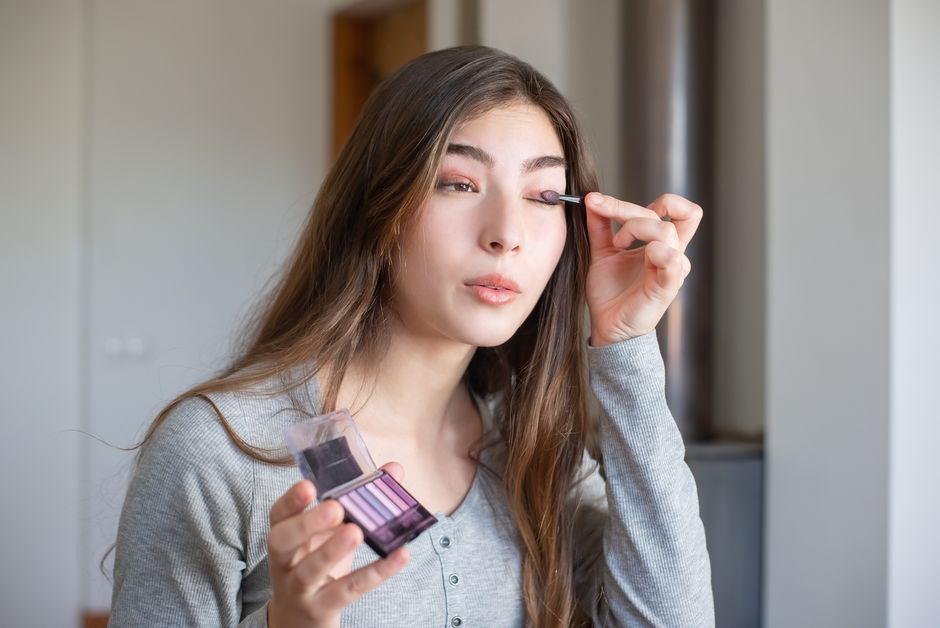
Mauve eyeshadow can give your daytime makeup a little color without making your eyes feel heavily dressed. Sitting somewhere between pink, purple, and muted brown, it offers a softer effect when you apply it in thin layers and keep the edges diffused. The trick is to choose a mauve that shows up comfortably against your skin, then blend with a clear stopping point. You want a gentle wash of color that still looks intentional when your eyes are open.
Choose a mauve with the right depth
Mauve covers quite a range of shades. Some versions look like dusty rose; others lean toward grayish lavender or brownish plum. For this look, start with a muted shade that is a little deeper than your bare eyelid. A color that is much lighter than your skin may look chalky, while a very dark mauve takes more care to keep airy.
On lighter skin, a dusty pink mauve may give enough definition on its own. On medium or olive skin, a mauve with some brown in it can be easier to blend into the surrounding complexion. On deeper skin, a richer rosy mauve can keep its color visible without relying on a pale base. Treat these as starting points: the way a shade looks on your own lids matters most.
Choose a matte or softly satin finish according to the effect you enjoy. Matte gives a quiet wash; satin adds a little reflected light. If you prefer less emphasis on lid texture, try a fine, subtle sheen and check it in daylight. There is no need to rule out shine simply because your eyelids have lines.
Prepare a comfortable, even surface
Begin with clean hands and clean brushes. Let your usual eye-area skincare settle before applying makeup, keeping products out of your eyes. If your lids feel slippery, gently blot away excess with a clean tissue. Avoid rubbing or stretching the skin to make it look smoother.
You can use a thin layer of an eye primer if that is already helpful in your routine. Keep the amount modest and follow its directions. A thick, opaque base can make a delicate mauve appear stronger than intended and may require extra blending around the edges.
Patch test unfamiliar products according to their instructions before using them near your eyes. Use only makeup intended for the eye area, and stop if it causes irritation. Persistent skin irritation around the lids deserves advice from a dermatologist; eye pain or changes in vision need prompt medical attention.
Keep your tools simple
Two brushes make this technique easier: a small, soft brush for placing color and a clean, fluffy brush for softening its boundary. They do not need to be large. A brush that fits your lid lets you control where the mauve goes instead of spreading it across the whole eye area.
- For placement: choose a small brush that deposits a light, controlled layer.
- For blending: use a soft brush with enough flexibility to skim the skin without scratching.
- For checking: keep a mirror where you can look straight ahead with your face relaxed.
Pick up a little shadow and tap off the excess before touching your lid. It is easier to repeat a light application than to soften a dense patch. Hold the brush farther back on the handle if you tend to press firmly.
Build the wash before blending the edge
Place color on the mobile lid
With your eye gently lowered, press a small amount of mauve onto the middle of the mobile lid, the part that moves when you blink. Pat the remaining color toward the outer third, then toward the inner third. Leave a little space around the inner corner so loose powder does not gather close to the eye.
Keep this first layer sheer. Before adding more, open both eyes and look straight ahead. You may already have enough color for the daytime effect you want. If one lid needs more, add shadow only there instead of automatically building up both sides.
Soften the boundary with a clean brush
Take your clean blending brush and lightly sweep along the upper edge of the shadow. Use short movements, working on the boundary rather than repeatedly brushing across the whole lid. Tiny circles can soften a stubborn section, but keep the pressure light enough that your skin barely moves.
The aim is a gradual fade into bare skin. You do not need to carry mauve up to the brow or turn the entire area into an even veil of color. Pause after a few strokes. Overblending can spread the pigment so far that you lose both its shape and its soft mauve character.
Add a little definition only where needed
If the wash looks too flat, press another small amount of the same mauve onto the outer part of the lid. Blend its inner boundary into the first layer, leaving the center slightly lighter. Using the same shade keeps the effect gentle and avoids turning this into a smoky eye.
Check the placement with your eyes open
Eyelid folds can hide some shadow when you look straight ahead. If that happens, relax your brow and place a trace of mauve just above the fold where you want the color to remain visible. Blend that trace into the lid color with your small brush. Follow the space you actually see rather than trying to copy a fixed crease shape.
If your lids have uneven texture, work in small sections and use pressing motions to establish the color before softening the edges. Do not keep brushing a fold in an effort to erase it. The makeup can look lovely while the natural surface of your skin remains visible.
Your eyes may also have slightly different shapes. Match the overall softness and visible amount of color instead of insisting on identical placement. Step back from the mirror occasionally; that view is more useful than judging every detail close up.
Correct the color without adding heavy layers
If the mauve looks too purple, soften its edge with a tiny amount of a muted neutral shadow close to your skin tone. Keep that neutral at the boundary so you do not cover the mauve entirely. If the color looks muddy, switch to a clean brush and stop adding pigment. Mixing more shades into the same spot can make the result harder to control.
If one area becomes too dark, gently lift a little pigment with a clean, dry brush. A substantial patch may be easier to remove carefully and reapply than to bury under pale powder. Follow your makeup remover’s directions and let the area dry before starting again.
Finish with enough definition to feel complete
For a soft daytime finish, you can leave the lower lash line bare and add a light coat of mascara to the upper lashes. This keeps the mauve wash easy to see without surrounding the eyes with color. If you prefer extra definition, a fine touch of a familiar neutral shadow close to the upper lashes can be enough.
Check the finished look near a window in indirect daylight. Look for a visible mauve tone, a softly fading upper edge, and comfortable balance between both eyes. Pair it with whatever cheek and lip colors make you feel at ease. Once those few checks feel right, put the brush down: a little space and restraint are what give this look its softness.