
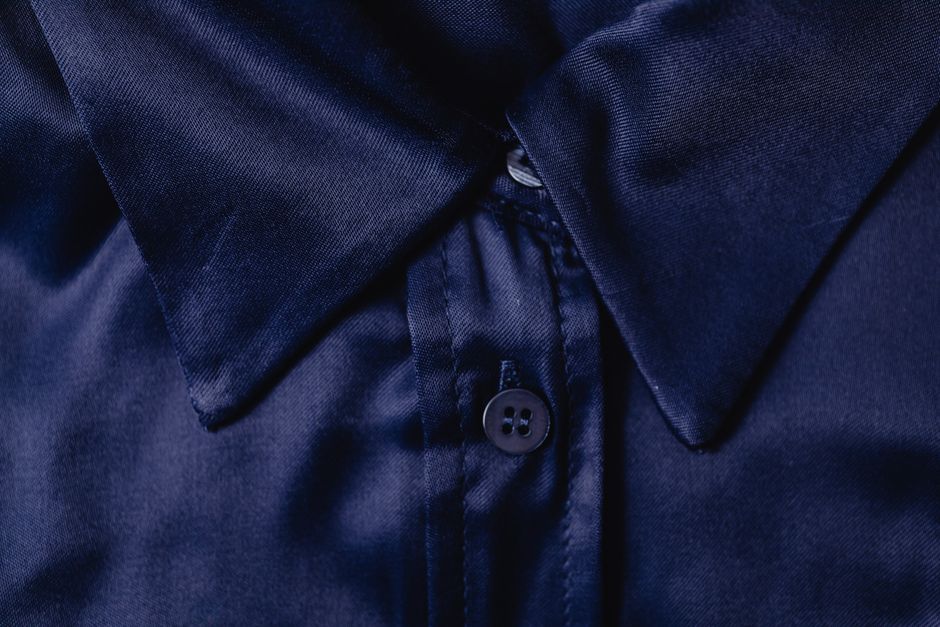
A silk shirt under a crewneck sweater brings a little lightness to an outfit you may already wear on repeat. The collar gives the neckline definition, a glimpse of cuff adds movement, and the fabric feels different from a crisp cotton button-down. The trick is making the two layers sit comfortably together. You want enough room to move without loose fabric gathering under the knit. Start with the shirt and sweater you own, then pay attention to where they meet: at the neck, wrists, shoulders, and hem.
Choose a shirt that can settle under the knit
A softly shaped silk shirt is usually easier to layer than one with dramatic sleeves, chest ruffles, or large pockets. Those details can look lovely on their own, but a sweater may press them into ridges. Look for sleeves that follow your arms with some ease and a body that falls smoothly when you sit. The shirt should feel comfortable across your upper back before you add anything over it.
Check the button placket, too. A substantial placket or prominent buttons can show through a thin sweater. That does not make the combination unusable; it simply means you may prefer a slightly more substantial knit. If the shirt pulls between buttons when you reach forward, choose another fit. Covering it with a sweater will not improve the tension underneath.
Remember that silk does not always mean shiny
Silk describes the fiber, while the weave helps determine the surface. Some silk shirts have a noticeable sheen; others look softly matte. Either can work here. A lustrous shirt creates a clearer contrast with a quiet knit, while a matte one gives a more understated result. Choose the effect you enjoy close to your face, where the collar will be most visible.
Give the sweater enough room
A crewneck that fits beautifully over bare arms may feel restrictive over a shirt. Try the layers together and notice the upper sleeves and underarms. You should be able to bend your elbows, reach toward a shelf, and fold your arms without the shirt catching. A little space through the sweater body helps, but an oversized fit is not essential.
A smooth, medium-weight knit is a useful starting point because it can soften the outline of shirt seams without overwhelming the silk. Very fine knits may reveal every fold, while dense, heavy sweaters can leave little room for the collar to sit naturally. Use the actual pairing as your guide. Two individually lovely pieces do not always make comfortable partners.
Let the collar follow the crewneck
The neckline is the main point of this combination, so arrange it after the sweater is on. Gently bring the collar out and let the points rest where they naturally fall. A small, soft collar often sits neatly over a crewneck rib. A larger collar may need a more open crewneck so it can spread without buckling.
Leave the top shirt button open if that feels more comfortable, then check that the opening stays covered as you move. If you prefer a fully buttoned shirt, make sure the collar does not press against your throat beneath the sweater. Neither version needs to look perfectly symmetrical. A slight softness suits the fabric better than repeatedly pulling each collar point into a fixed position.
When the collar keeps disappearing
If the collar slides inside whenever you turn your head, the sweater neckline may sit too high for that shirt. Try another crewneck with a little more space around the neck. Avoid stretching the ribbing or pinning delicate silk into place as a first solution. You can also let just the upper collar edge show, accepting a subtler line instead of insisting on visible points.
Settle the sleeves before arranging the cuffs
Put on the shirt, smooth its sleeves, and then ease the sweater over it. Hold each shirt cuff lightly as your hand passes through the sweater sleeve so the silk does not travel toward your elbow. Once dressed, gently straighten any folds at the upper arms. The aim is comfort, not pulling the shirt tightly against your skin.
For a simple finish, let a narrow band of shirt cuff extend beyond the sweater. If the cuff is long, allow it to lie flat rather than folding it repeatedly into a thick roll. You can turn it back once over the knit when both pieces allow it comfortably, but check that the sweater sleeve is not stretched or squeezed. Your wrists should still bend easily.
Decide how much shirt hem to show
You do not need the collar, cuffs, and hem to be equally visible. Showing the collar and a little cuff often provides enough contrast. If the shirt is much longer than the sweater, look at the side and back views before deciding to leave it loose. A broad band of silk can become a strong horizontal feature, especially beneath a short knit.
A gently curved shirt hem can look relaxed under a straight sweater hem when the difference in length feels intentional. For a cleaner line, wear the shirt inside your waistband and leave the sweater outside. Keep the silk loose enough to sit comfortably and check for bunching after sitting down. Choose the finish around the whole outfit, rather than treating a visible shirttail as compulsory.
Use color to control the contrast
An ivory silk shirt beneath a navy crewneck makes the collar easy to see. A pale gray shirt under a charcoal sweater feels quieter, with texture doing more of the work. If you like color, try a muted rose shirt beneath a brown knit or pale blue beneath deep green. Hold the pieces together near your face before getting dressed; small visible areas can still change the mood.
A printed silk shirt works best when you enjoy the fragments that remain visible. A large motif may disappear beneath the sweater, leaving an unexpected patch at one collar point. Smaller patterns are easier to read in narrow glimpses. Let the sweater stay simple if you want those details to lead, and assess the collar and cuffs together.
Build an outfit around the softer neckline
- For an ordinary workday: Pair a navy crewneck and ivory silk shirt with straight gray trousers and loafers. Keep the cuffs tidy so they stay clear of your desk.
- For a relaxed lunch: Wear a soft brown sweater over a pale blue silk shirt with dark straight jeans. Let a little curved hem show if it falls comfortably.
- For dinner: Try a charcoal crewneck over a softly lustrous shirt with fluid black trousers. Small earrings leave the collar visible without adding another focal point.
Make the last check about comfort
Before leaving, sit down, reach forward, and turn your head. Check whether the collar presses, the sleeves twist, or the shirt gathers at your waist. Adjust once, then see whether the layers stay comfortable. If they need constant rearranging, change one piece. A successful pairing should feel easy enough that you can stop thinking about it.
After wearing, separate the pieces and follow each care label; silk and knitwear may need different treatment. Let any moisture dry before storage, and check the shirt for wrinkles before its next outing. Once you find a combination that settles well, remember the features that helped: a manageable collar, room through the sleeves, and a hem arrangement you can happily wear all day.