
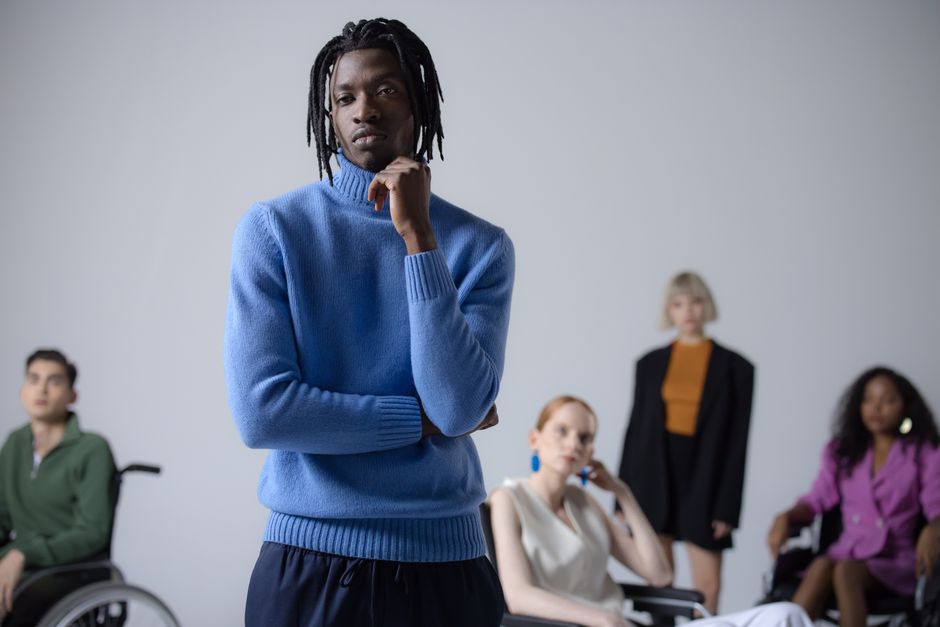
A zip-neck sweater and tailored trousers make a useful partnership when you want the ease of knitwear with a little definition. The sweater brings softness; the trousers give that softness a clear outline. What makes this combination interesting is the zip itself. Open it and the collar frames your face; close it slightly and the outfit feels more contained. Getting those details to work together is less about dressing formally and more about choosing where the outfit feels relaxed.
Start with a sweater that lets the trousers do their job
Look at the sweater’s overall shape before thinking about accessories. A fine or medium knit with a hem that rests around the upper hip is an easy starting point. It leaves enough of the trouser leg visible to show the tailoring, without requiring a tuck. You should be able to reach forward comfortably without the knit pulling tightly across your chest or riding up and staying there.
A zip-neck can have a strong sporting character, especially with a large zipper pull, contrast panels, or a very deep collar. Those details can work, but they become a bigger part of the outfit. For a quieter combination, choose a plain knit with a modest zip and a collar that holds its shape without standing rigidly against your jaw.
Check the hem band, too. If it grips firmly, it may push the sweater upward and create a rounded pouch above the trousers. Gently settling the band at a comfortable point can help. If you keep having to pull it down, try a looser hem or a different length instead of relying on constant adjustments.
Give the knit a clear trouser shape
Tailored trousers do not need to feel stiff. A defined waistband, a clean front, and a leg that falls smoothly are enough to give a zip-neck sweater some structure. Start with trousers you already enjoy wearing, then assess how their shape works with the sweater’s volume.
Straight legs for an easy starting point
A straight leg works particularly well with a sweater that skims the body. The shapes feel balanced without much styling. If the sweater has a substantial collar, the uninterrupted trouser line gives your eye somewhere calmer to travel. A visible crease can add definition, though the outfit does not depend on one.
Wider legs with a more contained sweater
With wide-leg trousers, try a sweater that ends closer to the waistband or upper hip. This helps the trousers read as a deliberate shape. A longer sweater can also work, especially in a supple knit, but check the side view: if fabric gathers heavily above the seat, a shorter length may feel easier.
Tapered legs with a little room through the top
Tapered trousers can carry a slightly roomier zip-neck, provided the sweater does not overwhelm the hip area. Leave enough space through the thigh for the fabric to fall freely. Tight trousers paired with a bulky sweater can make the whole outfit feel less relaxed than you intended.
Use the zipper to set the mood
Treat the zip as an adjustable neckline. Begin with it open enough for the collar to separate naturally. You do not need a deep opening; even a small gap can soften the sweater’s upright shape. Look straight ahead in the mirror and check whether the collar sits comfortably away from your face.
If the two sides flop unevenly, smooth them once and see where they settle. Some collars fold outward neatly, while others look better standing loosely. Follow the construction rather than trying to force a crisp shirt collar from soft knitwear. The result should hold through ordinary movement.
Zipping higher creates a compact, warmer neckline that can look especially good with full-length trousers. Keep comfort in charge: the zip should not press against your throat or catch hair. If you prefer coverage without fastening it high, a simple underlayer can fill the opening while leaving the collar relaxed.
Keep the layer underneath intentional
A smooth, lightweight T-shirt is often enough underneath. Choose a neckline that either stays hidden or appears as a clear, tidy shape inside the opening. An accidental sliver that shifts in and out can be distracting, particularly when the sweater and trousers are otherwise simple.
A shirt adds another collar, so give both collars space. Let the shirt points sit within the sweater opening if they rest there naturally, and avoid crowding the neckline with extra fabric. If the shirt bunches across the shoulders or sleeves, a thinner underlayer will usually feel better. You do not need a shirt to make this pairing polished.
Decide what happens at the waistband
Try the sweater untucked first. Tailored trousers already provide definition, and a neat sweater hem can finish the outfit on its own. Stand normally, then sit down and rise again. This shows whether the knit settles back into place or gathers awkwardly above the waistband.
If the sweater is fine enough, a small tuck can reveal the trouser fastening, but there is no need to force thick ribbing inside a fitted waist. When a tuck creates a ridge or makes the waistband uncomfortable, leave the sweater out. A belt is optional; use one when it adds a visible finishing detail, rather than hiding it beneath layers of knit.
Build interest through fabric and color
A smooth trouser fabric makes the sweater’s texture more noticeable. Try a softly ribbed zip-neck with matte, plain trousers, or a smoother knit with subtly textured tailoring. Keeping one surface relatively quiet helps the zipper remain a considered detail rather than another competing feature.
For color, begin with a pair you can see clearly together in daylight. A pale gray sweater with deep navy trousers feels gentle but defined. A muted blue zip-neck with stone trousers gives a lighter impression. If you prefer one color family, allow a small difference in depth or texture so the two pieces retain their own shapes.
Finish around the collar’s built-in detail
The zipper already introduces hardware near your face, so assess jewelry after setting the neckline. Small earrings or a simple ring may be plenty. If you want a necklace, check that it sits clear of the pull and does not repeatedly catch against it. You can also leave the neckline undecorated and let the collar be the focus.
Choose shoes according to the setting and the trousers you are wearing. A simple leather flat gives the combination a composed everyday finish; a clean, understated sneaker makes it more casual. For dinner, a comfortable low heel can sharpen the impression. Keep the shoe choice straightforward enough that the sweater and tailoring still feel connected.
Make one final movement check
- Open and close the zip to find a neckline you can leave alone.
- Reach forward and check that the underlayer stays comfortable.
- Sit down to see whether the sweater hem bunches at the waistband.
- Walk a few steps and let the trousers and knit settle naturally.
Once those pieces feel right, resist adding details simply to make the outfit seem finished. The appeal is already there in the soft collar, the clean trouser shape, and the ease of moving between them. A zip-neck you can adjust through the day and trousers you enjoy sitting in can make this a combination you reach for often.