
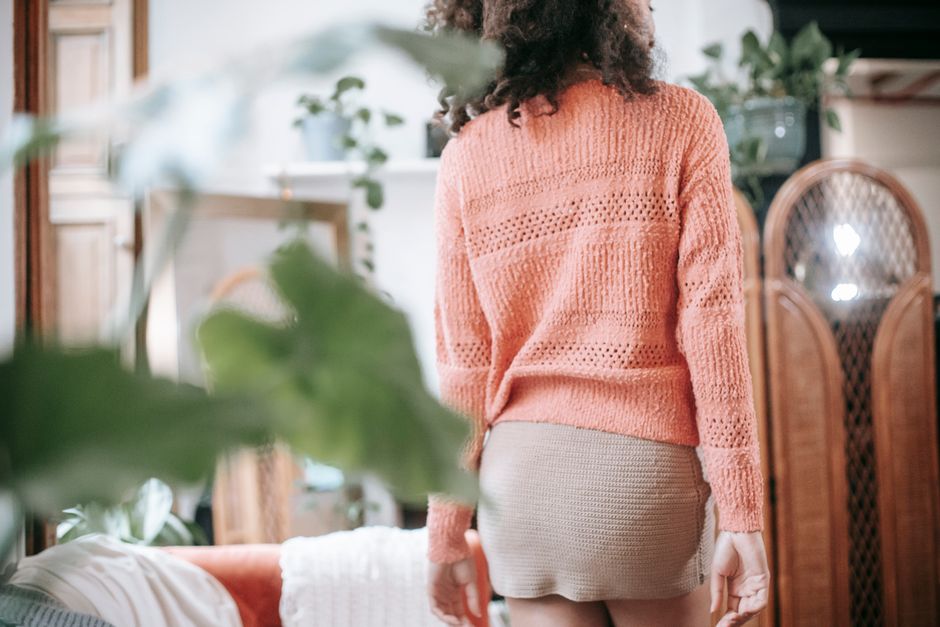
A sweater and a slip skirt can make getting dressed feel wonderfully simple: softness on top, a little movement below, and enough polish for lunch or an evening out. The awkward part often happens where the two meet. A thick hem, a crowded waistband, or a knit that keeps catching can turn an easy pairing into something you adjust all day. Wearing a sweater over a slip skirt without waist bulk starts with understanding how the fabrics sit together. You do not need a tightly defined waist or a complicated styling trick to make this combination work.
Check the skirt before adding the sweater
Put on your slip skirt with a lightweight top first and let it settle where it naturally wants to sit. The waistband should feel secure without digging in, rolling, or pulling the fabric into horizontal lines. If the skirt already bunches at the waist, adding a sweater will make that area feel more crowded. Moving the waistband higher to accommodate a top is rarely helpful if that position feels uncomfortable.
Look at the side seams and the fabric over your hips. A fluid skirt needs enough room to fall rather than grip. Bias-cut styles can shift as you move, so take a few steps before deciding whether the fit works. The aim is a comfortable foundation with a waistband you can leave alone once the sweater is on.
Choose a sweater hem that can rest lightly
The bottom of the sweater matters more here than the neckline. A heavy ribbed band can grip the skirt and create a shelf of knit above it. A softer band or a straight, relaxed hem usually settles with less fuss. Fine and medium-weight knits are useful starting points, especially when their fabric has some drape rather than a stiff, boxy shape.
You can still wear a substantial sweater. Keep its volume outside the skirt, and check that the hem hangs freely instead of clamping around your hips. Side slits may help the front and back panels move independently. With a thick cable or dense rib, trying to hide the lower portion inside a delicate waistband usually creates more fabric than that waistband can comfortably hold.
Find a useful meeting point
Try a hem that ends near the skirt waistband, then compare it with one that falls a little below. The shorter option can show the skirt’s shape without a tuck, while the longer one gives more coverage. Neither is automatically better. Look for the point where the sweater hangs smoothly and the skirt can begin moving freely beneath it.
Start with the sweater completely untucked
Before folding or fastening anything, wear the sweater as it is. Let the hem drop, relax your shoulders, and look from the side as well as the front. A softly shaped sweater over a fluid skirt often needs no adjustment. If you prefer coverage through your middle, this can be the most comfortable version of the outfit.
Pay attention to where the knit makes contact with the skirt. If it rests gently over the waistband, leave it alone. If the hem catches and creeps upward, try a sweater with a looser opening or a shorter body. Pulling the same tight band down repeatedly will not give you the relaxed line you want.
Use a shallow fold when the length needs adjusting
A sweater that is only slightly too long may work with a small inward fold at the hem. Turn the lower edge underneath once, keeping the fold shallow and even. Let it sit over the skirt rather than pushing it into the waistband. This works best when the knit has enough body to hold the fold without creating a thick roll.
Check the back carefully. A tidy front can hide a large pouch of fabric behind you, particularly if the sweater is long. If the fold keeps dropping or needs constant arranging, choose a different length. A styling adjustment should make the outfit easier to wear; it should not become another thing to monitor throughout dinner.
Keep any tuck small and optional
If a fine sweater needs a little anchoring, try slipping just its bottom edge into a short section of the front waistband. Ease it back out slightly so the knit is not stretched tight. Stop if the waistband bows outward or the skirt develops diagonal drag lines. With this pairing, an untucked hem often looks cleaner than a tuck that strains the skirt.
Reduce friction between the layers
Sometimes what looks like waist bulk is fabric catching rather than excess volume. A textured sweater can cling to a smooth skirt, especially when the knit extends over the hips. Run your hand gently between the two layers to release them, then move again. If the same bunching returns immediately, the fabrics may simply be awkward partners.
Check your underlayers too. A camisole rolled at the waist, a tucked vest, or a thick underwear edge can create ridges beneath a fluid skirt. Choose comfortable, smooth layers that stay in place, and avoid stacking several hems at the same level. Shaping garments are optional; a well-fitting skirt should not depend on compression to hang properly.
Let the rest of the outfit support the line
Once the sweater and skirt sit comfortably, keep accessories from pressing extra fabric into the middle. A crossbody bag resting directly against the sweater hem can push it upward as you walk. Adjust the bag so it sits clear of that meeting point, or carry a handbag if that feels easier. A belt is optional and can add another layer where you are trying to keep things light.
Color can make the transition feel quieter, too. Similar shades allow the eye to move easily from knit to skirt; stronger contrast makes the sweater’s finishing point more noticeable. Both can look lovely. Choose contrast when you like the hem placement, and closer tones when you want a softer, less defined transition.
Try these combinations with what you own
- For an easy daytime outfit: Pair a fine crewneck that ends just below the waistband with a fluid midi slip skirt and comfortable loafers. Leave the sweater untucked.
- For more coverage: Try a relaxed sweater with a straight hem and small side slits over a skirt that moves freely at the hips. Add simple ankle boots.
- For dinner: Choose a softly draped knit in a shade close to the skirt, with earrings and a small handbag. Let the difference in texture provide the interest.
Give the outfit a seated check
Before heading out, sit down, stand up, and walk across the room. Notice whether the waistband stays comfortable and whether the sweater settles without being pulled into place. Check that any shallow fold remains soft rather than becoming a thick ridge. You should be able to reach for your bag and enjoy your plans without repeatedly rearranging your clothes.
If the outfit still feels crowded, remove the styling adjustments and return to the simplest pairing: a sweater hem that hangs freely over a comfortable skirt. The most useful result is one that feels natural in motion. A little ease at the waist gives the knit room to soften and the skirt room to sway.