
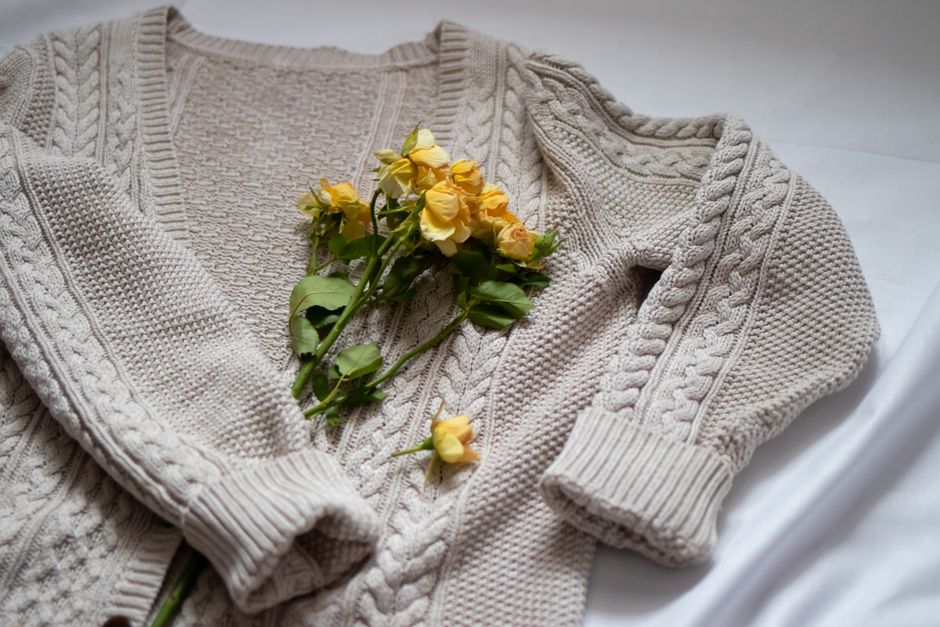
A cable-knit sweater and satin trousers bring two very different textures into one comfortable outfit. Raised cables feel familiar and relaxed, while satin catches the light and moves softly as you walk. That contrast can be enough to make an ordinary sweater feel ready for lunch out or an evening gathering. Getting dressed becomes easier when you start with the way the two fabrics hang together, then choose shoes and accessories that support the combination.
Choose trousers with an easy drape
Start with the trousers because their shape determines how much sweater volume feels comfortable above them. Satin is a fabric construction rather than a particular fiber, so one pair may feel light and fluttery while another has a heavier, more substantial fall. A fluid fabric with some weight can sit particularly well beneath a cable knit. If you prefer a quieter finish, choose satin with a gentle luster instead of a very reflective surface.
Try the trousers sitting down as well as standing. The waistband should feel comfortable, and the fabric should have room to move across your hips and thighs. Look for pockets that lie reasonably flat and a front that hangs without pulling. These details matter because light can make tension in satin especially noticeable. Choosing enough ease gives the fabric a better chance to fall naturally.
Check coverage in daylight, including from behind. Underwear with discreet edges and a suitable color can help the trousers look smooth without adding another substantial layer. You do not need shaping garments unless you like wearing them. Start with trousers that feel good on their own before introducing the sweater.
Balance cable size with trouser width
A cable-knit sweater has a visible pattern even in a plain neutral shade. Wide, deeply raised cables create more volume than smaller, flatter ones. Neither is automatically better, but it helps to notice how much space the knit occupies beside the satin. If both pieces are generous, a clearly defined sweater hem can keep their shapes easy to read.
For a wide leg
Try a sweater that finishes around the upper hip, adjusting the length to suit your trouser rise and preferred coverage. A tidy lower edge allows the wide legs to open out beneath it. The body can still be relaxed. Check that the ribbing does not grip so tightly that the sweater balloons above it or catches awkwardly on the waistband.
For a straight or tapered leg
A slightly longer sweater can work well with a narrower trouser shape. Look for a hem that drops freely rather than clinging around the hips. Side slits may help, provided they lie smoothly. Turn sideways in the mirror and take a few steps. The outfit should feel balanced in motion, with the satin visible beneath the knit instead of disappearing under it.
Let the hem settle naturally
You do not have to display your waist to make this pairing look finished. An untucked sweater can create a lovely transition between the two fabrics. Let the lower edge rest lightly against the trousers, then move around before adjusting it again. If the sweater needs constant rearranging, try a different length or a less restrictive ribbed hem.
A supple sweater may allow you to fold its hem inward once for a shorter shape. Check that the fold stays in place without becoming a bulky roll. Thick cables pushed into a delicate waistband can distort the satin and make sitting uncomfortable. Choosing a sweater that already ends where you want it is often easier than trying to control excess fabric.
A belt makes sense when the trousers have loops and the waistband remains visible. Keep the buckle simple so it sits comfortably near the knit. If the sweater covers the belt completely, check whether the hardware creates an unwanted bump. There is no need to add a belt merely to make the outfit seem complete.
Use color to set the mood
Similar colors let the surface contrast become the main attraction. Navy cables with navy satin feel calm, while cream with taupe creates a softer distinction. You do not need an exact match. Compare the pieces in natural light and look for colors that sit comfortably together, especially when one fabric reflects much more light than the other.
A dark sweater over lighter satin creates a stronger division between the two pieces. If you already own colored trousers, try them with a familiar neutral sweater before adding more color. The cables supply pattern and the satin supplies shine, so a quiet bag and shoes can give both fabrics room to be appreciated.
Check the shoes while walking
Put on your intended shoes before deciding whether the trouser length works. A wide satin hem should clear the ground and stay out from under your heel. Walk forward, turn, and sit down. Soft fabric can shift more than you expect, so standing still gives only part of the picture. If needed, have the hem adjusted for the shoes you expect to wear most.
Loafers bring an everyday feel to straight satin trousers. A smooth ankle boot can add enough visual weight to sit comfortably beneath a chunkier sweater, as long as the trouser opening passes over it freely. For an evening plan, a simple closed-toe flat or low heel can feel dressy enough. Choose a shape you can walk in comfortably and let the satin provide the decoration.
Give the pairing a destination
A relaxed lunch outfit
Try an oatmeal cable knit with dark straight-leg satin trousers and leather loafers. Add a bag with a defined shape to complement the soft clothes. Small earrings work well when the sweater has a substantial neckline. This combination keeps the ease of a familiar knit while giving the lower half a different texture from everyday denim.
An easy dinner outfit
Choose a darker sweater and fluid satin trousers in a similar depth of color. Add one piece of jewelry you enjoy, such as earrings or a bracelet visible below the cuff. Keep the shoes simple. The changing sheen of the trousers brings interest as you move, so the outfit can feel ready for dinner without several additional decorative details.
Make the final checks practical
Try your coat over the complete outfit. Cable-knit sleeves need room, and a tight armhole can compress them uncomfortably. Check bag clasps, rings, and exposed zipper pulls for rough edges that could catch the satin. Follow each garment’s care label for cleaning and removing creases. Finally, sit, reach, and walk once more. When the sweater settles easily and the trousers fall freely, the combination is ready to wear.