
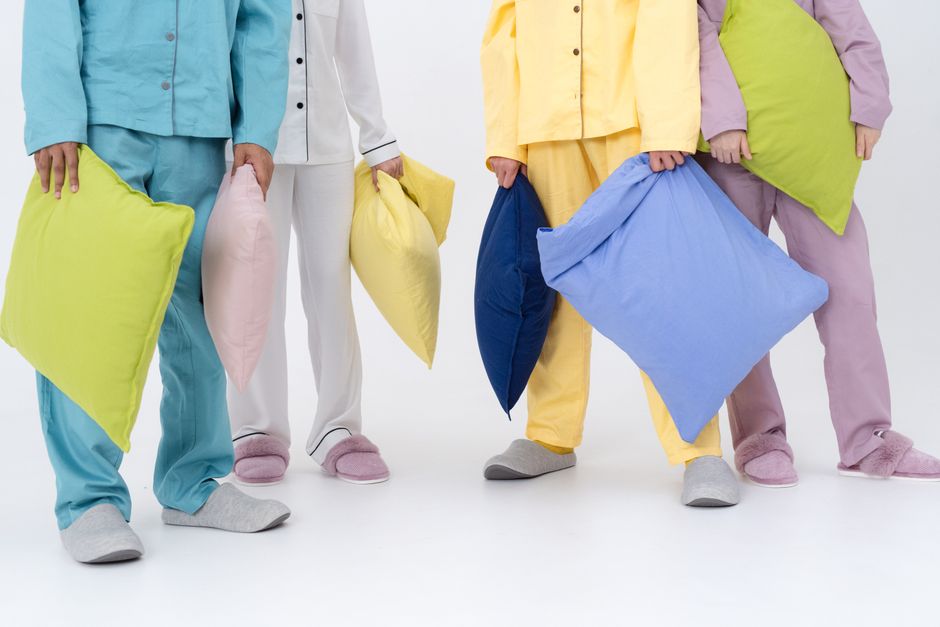
On a warm night, even pretty pajamas can become a distraction if the waistband presses, the sleeves cling, or the fabric gathers beneath your back. Choosing breathable sleepwear for warm nights means looking at the whole garment, from its fiber content to the way it moves when you turn over. You can have something lovely to wear while giving comfort the deciding vote. Start with what bothers you about your current sleepwear, then use that information to make a more useful choice.
Think beyond the fabric label
Breathability describes how readily air and moisture vapor can pass through fabric. That matters, but so do the material’s weight, its ability to absorb moisture, and how quickly it dries. A smooth surface that feels cool against your hand in a shop may feel different after several hours against your body. Treat cooling claims as a starting point for inspection, rather than a promise of uninterrupted comfort.
Fiber content and fabric construction work together. A fine cotton weave and a thick cotton knit can behave quite differently, despite sharing the same fiber. Look at how dense the cloth appears, feel its thickness between your fingers, and check for extra layers. A light outer fabric may hide a substantial lining or a supportive inner panel that adds warmth.
Find a fabric you enjoy wearing
Lightweight cotton
Cotton is a familiar place to start if you like a soft, straightforward feel. A lightweight woven cotton can feel crisp and airy, while fine cotton jersey offers stretch and a gentler drape. Check that the jersey is truly light; dense ribbing, brushed finishes, and thick cuffs may feel warmer than you want.
Cotton absorbs moisture, but it can remain damp when you perspire heavily. If waking in damp clothing is your main frustration, consider that tradeoff. A loose shape can keep the cloth from resting tightly against you, but the cotton label alone cannot tell you whether a particular garment will feel comfortable through the night.
Linen with a comfortable finish
Lightweight linen can suit you if you enjoy a little structure and room around your skin. Feel the inside before buying, especially at the collar, underarms, and seams. Linen varies in texture, and a softened fabric may be more comfortable for sleeping than one that feels crisp or coarse.
Expect wrinkles rather than a permanently smooth appearance. That relaxed look can be attractive in a simple nightshirt or loose pajama set. Still, check the stitching carefully: a breathable main fabric will not make a thick seam comfortable when it folds beneath your shoulder or hip.
Soft, fluid fabrics and blends
Viscose, modal, and lyocell can make soft fabrics with a fluid drape. You may love their smoothness, or you may find that a very drapey top rests too closely against your skin. Judge the weight and cut alongside the fiber name. Sleepwear described as bamboo may be labeled as viscose or rayon made from bamboo, so read the full composition.
Silk can feel light and smooth, although its care requirements deserve attention if you wash sleepwear frequently. Remember that satin describes a fabric construction, not a fiber. A satin set could be silk, polyester, or a blend. Synthetic fabrics also vary, so examine the actual garment rather than assuming every shiny fabric feels alike.
Give yourself room without excess fabric
A relaxed fit leaves space for movement, but buying several sizes larger is not necessarily the answer. Too much cloth can twist around your legs or bunch beneath you. Look for ease across the shoulders, bust, seat, and thighs, with enough room to sit and curl up without pulling at the seams.
Try a few bedtime movements while wearing the garment. Lift your arms, bend a knee, sit down, and gently hug yourself. Notice whether the neckline shifts uncomfortably or the crotch pulls. If you shop online, compare available garment measurements with sleepwear you already like, rather than relying entirely on your usual clothing size.
- Check that armholes allow movement without exposing more than you prefer.
- Choose a waistband that feels comfortable when you sit and bend.
- Make sure leg openings do not grip your thighs or calves.
- Look for hems that stay clear of your feet when walking.
Choose a shape for the way you sleep
A loose nightshirt removes the waistband entirely, which can be welcome if pressure around your middle bothers you. Test the length with your knees bent because a longer hem can catch beneath your legs. Side openings may help you move, provided the edges are soft and the openings give you coverage you feel happy with.
A shorts set lets you balance coverage and freedom of movement. Longer shorts may suit you if your thighs touch, while a sleeveless top leaves your shoulders uncovered. If you prefer sleeves, a short, loose sleeve in light fabric can still feel comfortable. Separates are useful when your ideal top and bottom sizes differ.
Full-length trousers are worth considering if you like covered legs or your room cools toward morning. Choose lightweight cloth and a straight or gently wide leg. Tight ankle cuffs can feel restrictive and make it harder to push the hems up. Your best shape depends on how you move and where you prefer coverage, rather than any rule about dressing for your age.
Inspect everything that touches your skin
Run your fingers along lace, piping, embroidery, internal labels, and seam allowances. Decorative details should feel pleasant on the inside as well as look appealing outside. A scratchy edge beneath your arm can become more noticeable as you get warm. Soft finishes and minimal bulk are especially helpful at pressure points.
Check buttons if you sleep on your stomach, since raised or oversized ones may press into you. An adjustable drawstring should secure comfortably without a bulky knot. If you like built-in bust support, assess its elastic and lining separately. Those extra layers may change the warmth and feel of an otherwise lightweight top.
Make changing temperatures easier
If your comfort changes during the night, keep a light, loose layer nearby. You can put it on when you get up without choosing a heavier base set for the whole night. Mixing different tops and bottoms is perfectly reasonable if that gives you a better combination of coverage and airflow.
A clean change within reach can also help when damp sleepwear wakes you. Clothing may improve comfort, but persistent night sweats deserve attention beyond your wardrobe. Discuss new, frequent, or unexplained episodes with a healthcare professional instead of relying on a fabric change alone.
Choose care you can keep up with
Read washing and drying instructions before buying. Follow the care label, allow garments to dry fully, and check their fit after washing. Shrinkage, twisted seams, or tightened elastic can change how a set feels. Easy care matters when you want to keep fresh sleepwear in regular rotation.
Let your favorite color, a quiet print, or simple piping provide the style. The most useful sleepwear is something you enjoy putting on and can comfortably forget about once you settle into bed: light enough for your room, soft against your skin, and roomy enough to let you move.