
A useful beauty collection does not need to resemble a shop display. It needs to let you reach the product you intend to use without digging through loose powder, damp tools, and unlabeled containers. Organizing makeup and toiletries is most valuable when it supports clean handling and makes the condition of each item easy to see. Start with the products you own and the space where you actually apply them. This is a working beauty setup, not a packing guide or a general decluttering project.
Sort by cosmetic role before choosing containers
Lay the collection on a clean, dry surface and group it into complexion makeup, eyes and brows, lips, skincare, and application tools. Keep products in their original labeled packaging where possible. This shows which categories need easy access and which contain several near-duplicates. It also prevents you from buying dividers before knowing what has to fit.
Separate daily products from occasional choices without treating occasional use as a fault. A deep lipstick used for certain looks can stay in the collection while a daily concealer belongs within easier reach. The point is to stop every application from beginning with a search through unrelated cosmetics. Each grouping should answer a beauty-specific question, such as where the clean eye brushes are.
Read labels and inspect condition as you sort
Check expiration information where provided, period-after-opening symbols, storage directions, and any date notes you already have. The FDA explains that cosmetic shelf life varies and that heat, moisture, and other storage conditions can affect products. There is no single universal deadline that makes every powder, cream, and eye cosmetic equally suitable to keep.
Set aside items with unexpected odor, color, or texture changes rather than returning them simply because there is room. An unchanged appearance does not prove a product is suitable indefinitely, so label guidance still matters. Do not try to revive dried cosmetics by adding water. For sunscreen and other products with expiration dates, keep those dates readable instead of covering them with decorative storage labels.
Give the daily collection a shallow, visible home
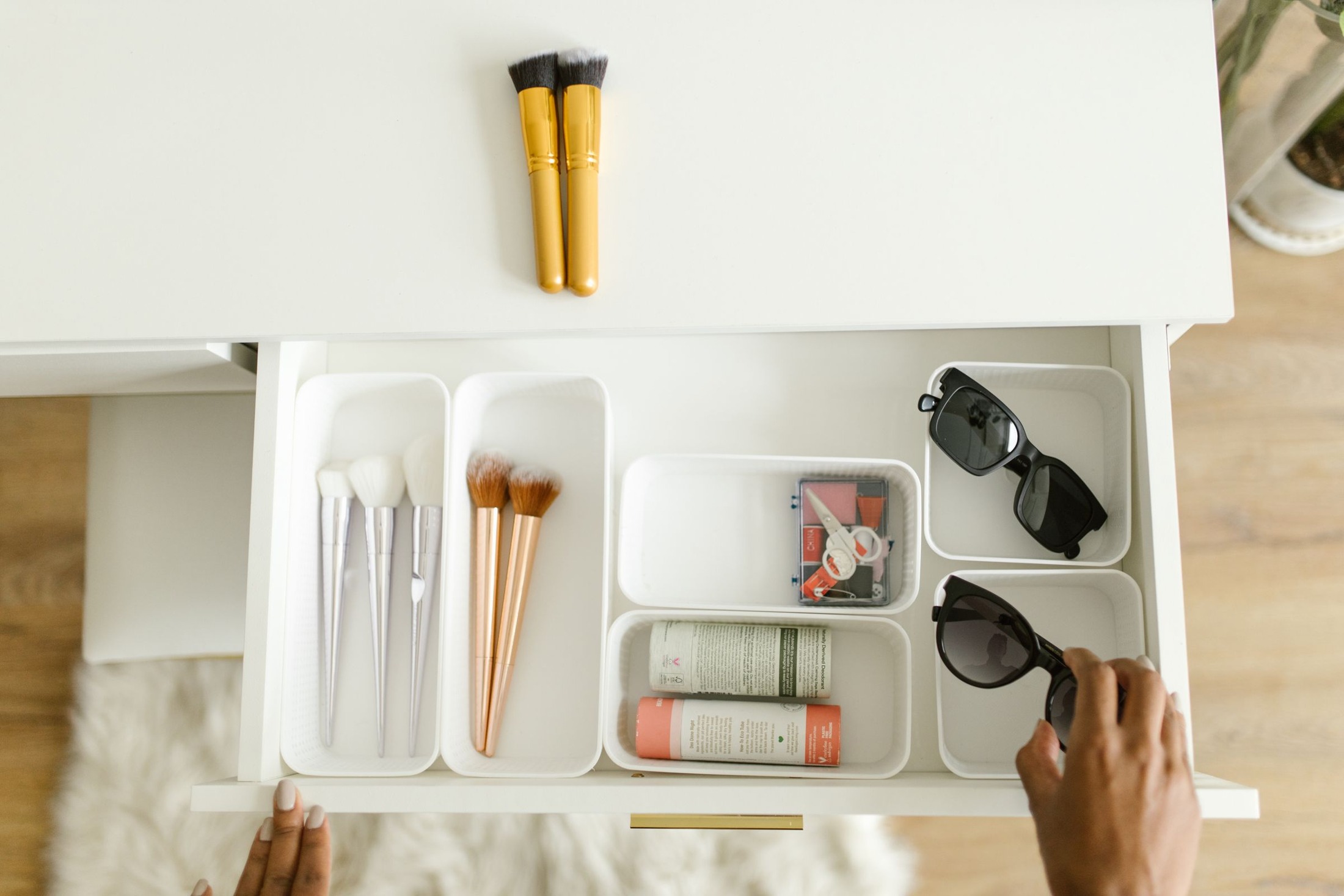
A shallow washable tray can make small products easier to identify than a deep bin. Place taller capped bottles behind shorter items, with the names facing where you can see them. Do not crowd the tray so tightly that removing one foundation bottle knocks over three others. A little space between products makes it easier to notice a leak or a loose cap.
For example, a daily group might contain one foundation, concealer, brow pencil, mascara, blush, and lip product, with skincare nearby but not stacked over the makeup. The exact number is yours. What matters is that the arrangement reflects the actual application routine, rather than forcing every product into a color-coded display that hides its name and instructions.
Keep clean, dry tools distinct from used ones
Store fully dry brushes where the bristles will not be crushed or covered in loose cosmetic residue. Give used tools a clearly different place until they are washed. A small separate tray can work better than returning every brush to the same cup immediately. Follow the tool manufacturer’s care directions and do not close damp tools inside a pouch.
The AAD recommends washing makeup brushes every seven to ten days. Make the arrangement support that habit by keeping brushes visible enough to assess, not buried underneath palettes. This is not a claim that storage replaces washing. A tidy container cannot make a used brush clean, and a brush that looks organized still needs proper care.
Use a cosmetic pouch without making it a catchall
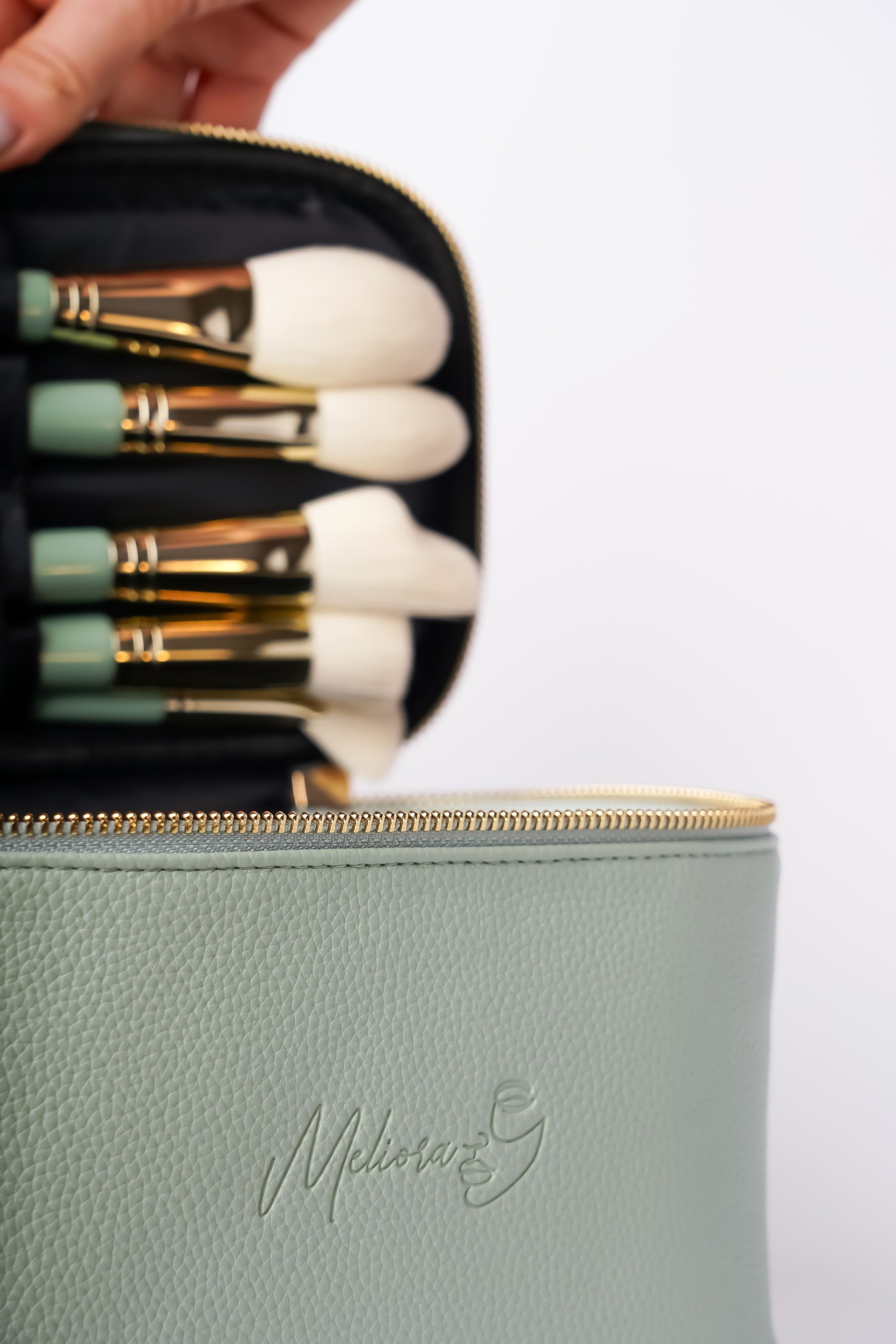
A pouch is useful for a small selection, even when it stays at your usual makeup spot. Choose one whose opening lets you see the contents without emptying everything. Put only capped, dry items inside, and keep pencils from pressing directly against loose brush heads. If the lining collects powder or lipstick residue, clean it according to its care instructions and let it dry fully.
A practical example is a pouch containing your current lip color, a brow pencil, and a compact, while larger skincare bottles remain upright elsewhere. This keeps the pouch from becoming a heavy mixed bag of toiletries and makeup tools. If a container leaks, address that product and clean the affected area rather than moving the residue into a new pouch.
Choose storage conditions before display value
Read each product’s storage instructions and keep the collection away from unnecessary heat and direct sunlight. The FDA notes that moisture and temperature changes can affect cosmetics. A bright windowsill may look attractive in a photograph but is not automatically a suitable place for your actual products. Keep containers closed and exterior openings free of visible buildup.
If your application area is humid, consider storing the closed collection in a drier nearby location where labels remain easy to read. Avoid decanting products into anonymous matching jars merely to make the arrangement look uniform. Original packaging preserves directions, ingredient information, and identification. Cosmetic containers can coordinate visually without sacrificing the information that makes them useful.
Maintain the collection through small beauty checks
When a product runs out, remove the empty container rather than returning it to its slot. When you open a replacement, note the date if useful and retain the label’s own guidance. During routine use, check for a sticky opening, a cracked compact, or a tool that needs washing. These small observations keep the collection functional without requiring a dramatic reset.
Finally, rehearse one ordinary application. Can you find the right shade, identify a clean brush, and put each closed product back without disturbing the rest? If not, change that specific arrangement. The successful result is not the emptiest tray or the prettiest pouch. It is a beauty collection in which the products are identifiable, their condition is visible, and clean tools remain easy to distinguish from the ones waiting to be washed.