
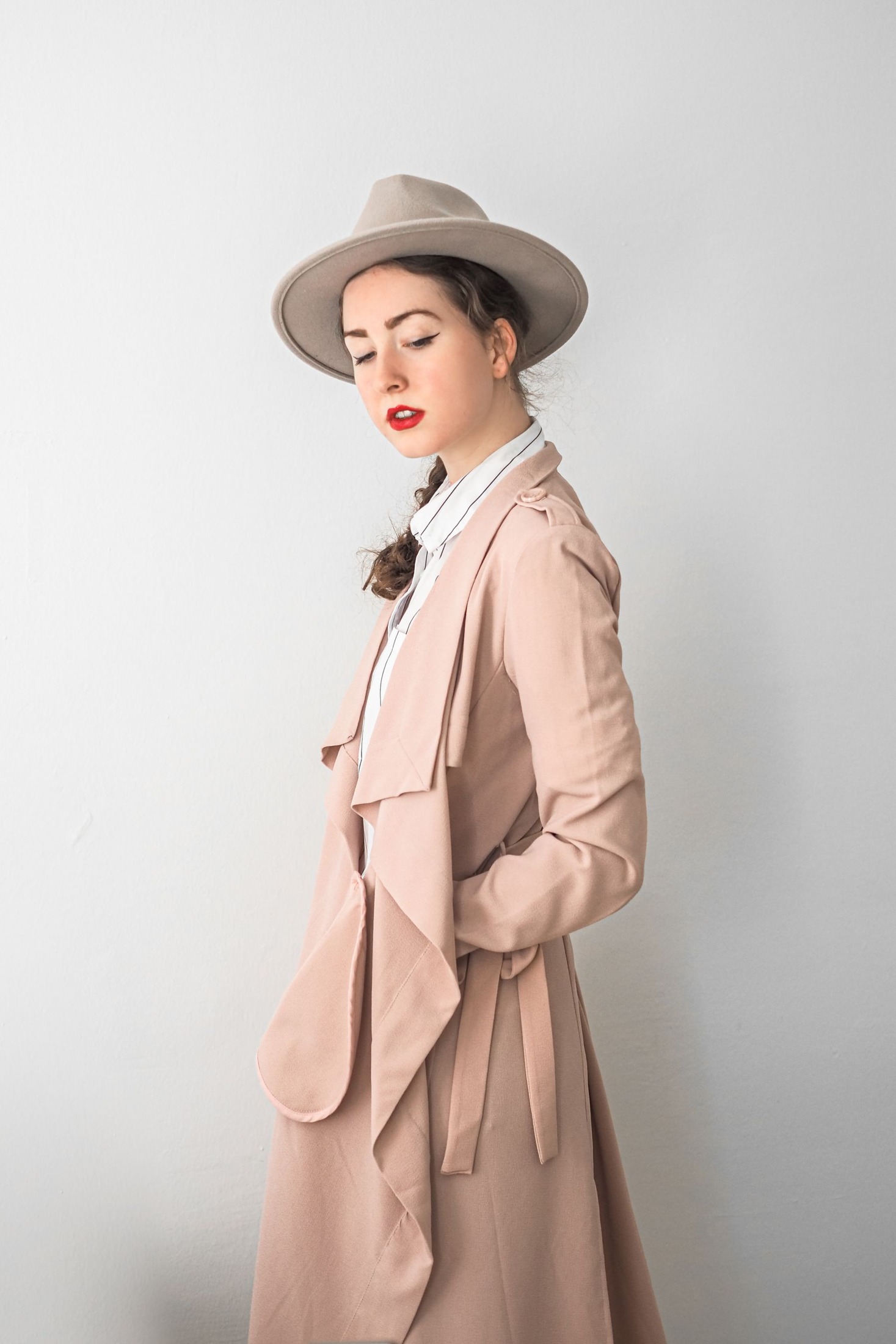
A brimmed hat becomes easier to wear when you separate two decisions: whether it fits your head and whether its shape suits your clothes. A hat that looks appealing on a shelf may sit too high, slip when you look down, or feel unexpectedly formal beside your usual jacket. Start with ordinary outfits rather than an imagined special occasion. You are looking for a hat that belongs with the clothes and movements of your actual day.

1. Measure where the hat will sit
Follow the maker’s measuring instructions, since sizing systems can differ. Use a flexible tape around the part of your head where the hat’s band is intended to rest, keeping it level and comfortably close rather than pulled tight. Compare the result with that manufacturer’s size guide instead of assuming a familiar small or medium will translate across brands.
If you are between sizes, check the maker’s advice on adjustment and fit. Do not automatically choose a tight hat on the assumption it will stretch. Consider your normal hairstyle too. A measurement over loose hair may not predict the fit when it is tied differently, especially if the style changes where the band sits.
2. Test the band and crown separately
The band can feel appropriately sized while the crown is too shallow or deep for the way you want the hat to sit. Put it on without forcing it downward. Notice whether the crown meets the top of your head before the band reaches its intended position, or whether the hat sinks low enough to crowd your eyebrows or ears.
Look down, turn your head, and walk a few steps where permitted. The hat should not need constant gripping to remain in place. A fit adjuster may refine a suitable size if the manufacturer allows it, but it cannot change every aspect of the crown. If the shape feels wrong, compare another model rather than treating the size label as the whole answer.
3. Check the brim from useful angles
Look at the brim in a mirror from the front and side. A wide brim occupies more space around the shoulders, while a narrower brim leaves the face and collar more exposed. Think about visibility as well as appearance. Turn your head and look toward the ground without tipping the hat into a position you would not normally wear.
A brim that looks dramatic in a close-up can feel more balanced in a full-length view. Compare it against the width of a jacket, the volume of a skirt, or the straight line of trousers. There is no required brim width for a particular face shape. Your preferred silhouette and the practical view beneath the brim are more useful starting points.
4. Match the level of structure to the clothes
A crisp structured hat can add definition to relaxed clothes, but it also brings formality. A soft cotton brimmed hat may feel more natural with a casual shirt and loose trousers. A textured woven hat can relate to an airy dress without needing a matching bag. These are visual relationships rather than fixed seasonal rules.
Try the hat with your most-worn outer layer. A rigid brim beside a tall stiff collar may create competing edges, while an open shirt collar leaves more space. If both the hat and jacket are strongly shaped, keep another part of the outfit simple. You want to see the clothing clearly rather than a collection of separate statement pieces.
5. Use color without making everything match
A hat can repeat a color already present in your shoes, a stripe, or a jacket. It can also provide contrast. A dark green hat with a white shirt and faded denim creates a different effect from a pale hat with the same clothes. Neither requires buying other accessories in exactly the same shade.
For a printed dress, look for a quiet color from the print if you want an easy connection. With a plain outfit, a contrasting hatband may provide enough interest on its own. Check the band and crown together: a highly decorative band can make an otherwise simple shape feel more dressed up. Evaluate the complete item rather than choosing only by the crown color.
6. Build three casual outfit trials
First try a brimmed cotton hat with straight jeans, a plain T-shirt, and an open shirt. This shows whether the hat can work in your simplest clothes. Next pair it with a casual midi dress, keeping jewelry restrained so you can judge the hat and dress relationship without extra visual noise.
Finally, add your regular jacket or overshirt to either outfit. Check whether the brim catches the collar or whether the outfit suddenly feels much more formal than you want. Photograph each full look if that helps comparison. A hat that works only with a specially assembled outfit may be less useful than a quieter one that fits several existing combinations.
7. Check handling and realistic wear
Read the maker’s care and handling instructions before folding, rolling, cleaning, or packing the hat. Some shapes are intended to hold their structure and should not be treated as packable just because they appear flexible. If the hat includes a strap or adjustment system, check how it works without improvising a modification.
Before choosing, confirm that the band feels comfortable, the crown sits naturally, and the brim allows a clear view. Then name two outfits you already own that work with it. Do not infer a sun-protection rating merely from the presence of a brim; rely on verified product information for any such claim. The styling goal here is a well-fitting hat that feels like clothing, not a costume you need to manage.