
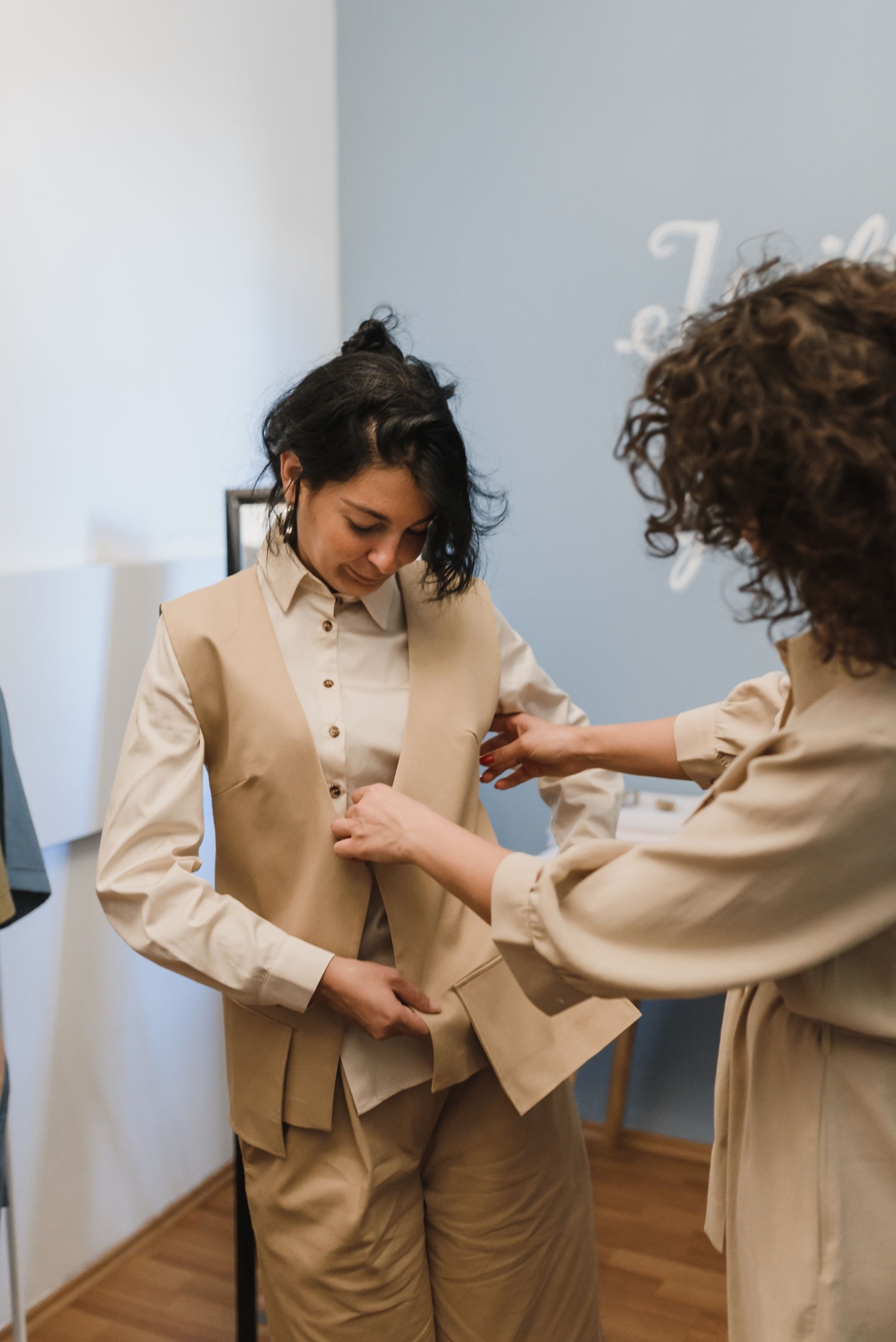
A tailored vest adds structure to a blouse while leaving the sleeves visible. That makes it a useful alternative to a jacket, but it also exposes any mismatch between the two layers. Blouse fabric can balloon through the armholes, a collar can crowd the vest neckline, and a pointed vest hem can fight the waistband below it. Start with room and alignment, then decide how formal or relaxed you want the finished outfit to feel.
Choose the blouse volume the vest can accommodate
A softly fitted blouse is the easiest starting point because there is less material to distribute under the vest. It need not be tight. You want enough room to move without deep folds being pressed into the torso. Try a plain ivory blouse beneath a charcoal vest and watch where the fabric gathers when the buttons close.
A voluminous blouse can also work, especially if you want the sleeves to be the feature. However, bishop sleeves, dropped shoulders, and gathered yokes need more space around the vest’s armholes. Do not assume that sizing down the blouse will solve the issue. That can create pulling through the shoulders while leaving the sleeve gathers unchanged. Choose compatible cuts rather than forcing one garment into the other.
Inspect the armholes from front and side
The vest should cover what you want covered without cutting into the blouse sleeve. A low armhole may reveal a generous section of fabric at the side, while a high armhole can trap a full sleeve at its base. Look in a side mirror and lift each arm. The blouse should not be pulled into a tight ridge under the vest edge.
After lowering your arms, see whether the blouse settles naturally. If it remains bunched at the armhole, try a smoother sleeve shape or a vest with a different opening. Pulling the sleeve downward each time is not a reliable solution. Also check the vest shoulder: if it extends far beyond your shoulder line, decide whether that broader shape is intentional or simply the wrong fit for this layering plan.
Give the collar a definite arrangement
A pointed blouse collar can sit outside the vest neckline or remain mostly within it, depending on the cuts. Try both and choose the arrangement that stays put. If one point continually flips inward while the other sits outside, the collar and neckline may be competing for the same space. A smaller collar or a slightly more open vest can make the relationship clearer.
A tie-neck blouse needs a separate decision. A large bow directly over several vest buttons can crowd the center front. Try a soft, modest tie if the fabric permits, or choose a plain band collar instead. Do not fasten the blouse higher than is comfortable just to create a particular picture. Coverage and ease should still work when you remove the vest.
Button the vest without flattening the blouse
Fasten the vest as you intend to wear it and look for horizontal pulling around the buttons. Slight shaping is normal in a tailored garment, but strained buttonholes and sharply opening fronts suggest insufficient room. Check the fit over the actual blouse rather than over a thin vest top, because the extra fabric changes how the vest closes.
You can wear a vest open for a more relaxed arrangement, but it should look intentional rather than like a garment that cannot fasten. Notice how its fronts fall when unbuttoned. If they curl away or swing widely around the hips, try a different length or cut. Buttoning customs vary by garment, so follow the vest’s construction and your preferred fit rather than assuming a universal rule for every bottom button.
Connect the vest hem to the waistband
A short vest over high-waisted trousers can create a clean meeting point, but check for a gap when you raise your arms. Decide whether visible blouse fabric at that point is welcome. A pointed hem adds a different outline from a straight one and may sit awkwardly over a prominent belt buckle. Try the outfit without the belt before changing the vest.
With a longer vest, keep an eye on pockets and hip ease. The blouse beneath it should not form a thick roll at the waistband. Tuck the blouse smoothly if that suits the trousers, or choose a shorter blouse that does not need extensive folding. A longer untucked blouse can be a deliberate extra layer, but make sure its hem is visible enough to read as a choice.
Build one restrained and one softer combination
For a structured office outfit, combine a charcoal vest, an ivory plain-collar blouse, and matching or closely related straight trousers. Black loafers keep the focus on the layered tailoring. Let the blouse cuffs show cleanly and keep jewelry away from any busy collar area. The vest already provides the outfit’s central structure.
For a softer version, try a navy vest over a pale blue blouse with cream wide trousers and brown closed-toe flats. A fluid sleeve contrasts with the tailored torso, provided the armholes allow it to move. Keep the blouse neckline simple if the sleeves are full. This makes the contrast legible instead of surrounding the vest with several unrelated decorative features.
Finish with a desk-and-reach test
Sit as you would at a desk, reach forward, and bend to pick up a bag. Check the armholes, button line, and lower vest edge after each movement. If the blouse collar changes position constantly, simplify that arrangement. If the hem digs into the waistband while seated, the vest may need a different length rather than looser styling.
Keep the pairing when the blouse sleeves remain comfortable, the vest closes or hangs as intended, and the waist area stays clear. Those are more useful criteria than whether the outfit resembles a formal suit. A tailored vest works best as a considered layer with enough room for the blouse beneath it, not as a device for compressing a shirt into a smaller silhouette.