

A crossbody bag can sit neatly over a dress and feel awkward over a coat without anything being wrong with the bag. The extra clothing changes the route of the strap, while pockets, belts, and gathered fabric change the best place for the bag itself. Treat strap length as an outfit adjustment, not a measurement you settle once. Start with the clothing you will actually wear and the belongings you normally carry, then make small changes you can judge while moving.
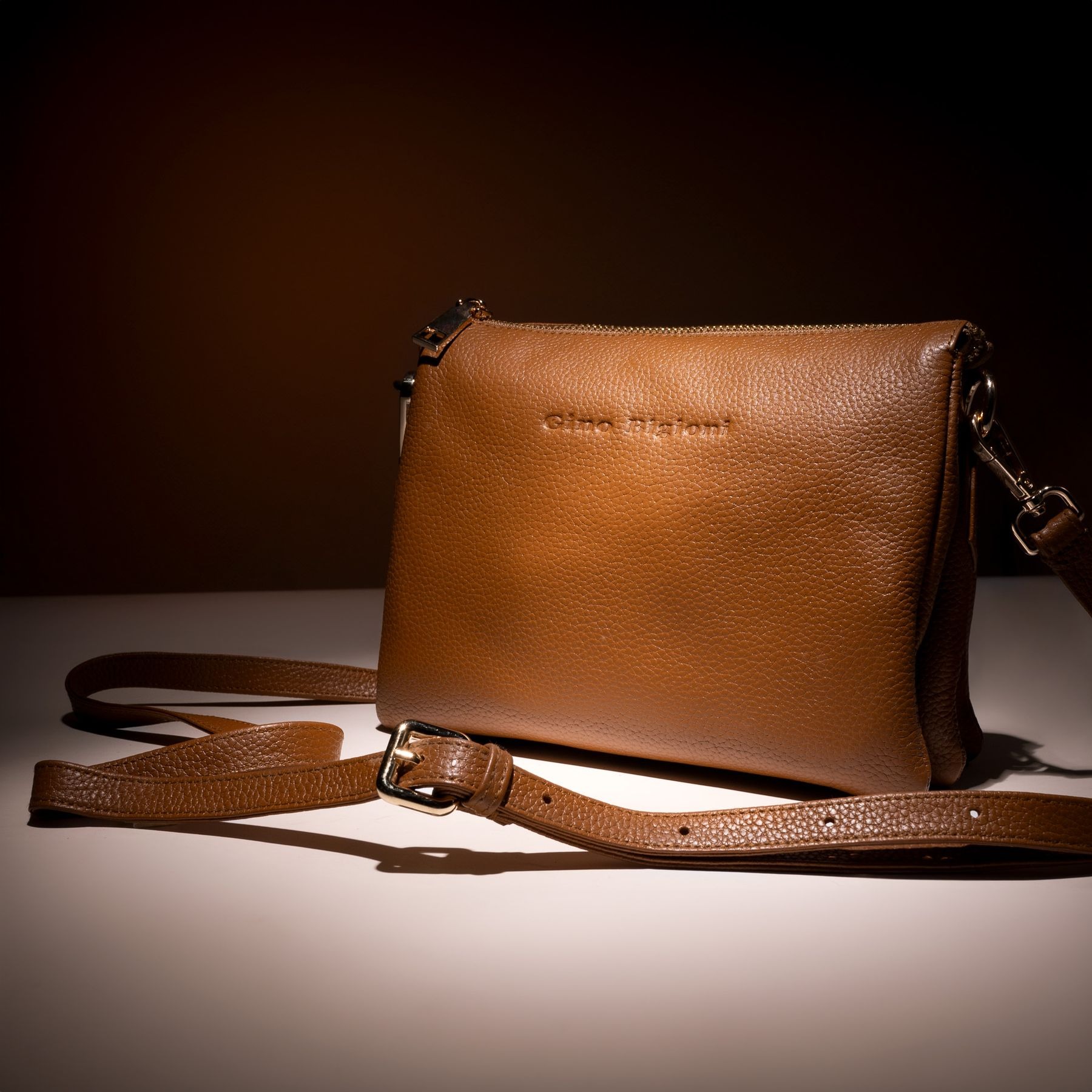
1. Find the bag position before measuring the strap
Put your usual essentials inside the bag and wear it across your body. Slide the bag toward the front of your hip, directly to the side, and slightly behind it. At each position, reach for the opening with the hand you normally use. Notice whether you have to lift the whole bag, twist your wrist awkwardly, or pull against your clothes. A useful position makes access straightforward without leaving the bag swinging into your thigh.
There is no single correct hip height. A shallow rectangular bag and a deep bucket bag can have their openings at similar heights while their lower edges land very differently. Judge both edges and the closure, not just where the center appears in a mirror.
2. Distinguish strap length from strap drop
When comparing bags, check what a measurement describes. Full strap length follows the strap between its attachment points; drop describes a hanging distance and may be presented differently by different sellers. A number without a diagram is not enough to predict how the bag will sit across your body. Ask for the measurement method if you are shopping remotely.
For a bag you already own, use a tape along the adjusted strap and note the setting that works over a light outfit. Record the attachment arrangement too, especially if the strap can be clipped in more than one place. That becomes a personal reference, not a universal buying rule. Two bags with identical straps can sit differently because their bodies and attachment points differ.
3. Adjust over the coat you actually fasten
Try the bag with the coat closed first. A thick collar, broad lapels, or padded shoulders can use up strap length before it reaches your torso. Lengthen gradually until the bag hangs where you want it, then check that the strap does not drag a lapel diagonally across your chest. Move the strap away from a decorative button or raised pocket flap rather than tightening it over the obstruction.
Next open the coat. Walk and turn to see whether the bag pushes one front panel behind you or traps the belt. If you usually alternate between open and closed, choose a workable middle setting or accept a quick adjustment when you unfasten the coat. Convenience matters more than preserving one immaculate mirror pose.
4. Give dress details room to keep their shape
On a gathered dress, a bag can compress the skirt where it meets the waist seam. Raise or lower the bag enough to see which position lets the gathers fall freely. On a wrap dress, keep the bag and strap from tugging at the overlap or knot. A side tie may need the bag on the opposite hip, but check that this remains comfortable for your usual carrying side.
A smooth column dress gives you fewer bulky obstacles, yet its fabric may show every diagonal pull. Try a slightly looser setting before deciding the dress is unsuitable. With a tiered dress, compare the bag against the actual tier join: landing directly on a bulky seam can make the bag tilt outward.
5. Check the strap surface and hardware
A narrow strap, a wide webbing strap, and a chain create different visual lines over the same outfit. Choose by both appearance and how the strap behaves against the garment. A wide contrasting strap can become a deliberate graphic detail on a plain coat. A quieter strap may suit a dress whose neckline and print already provide plenty of structure.
Look at the underside of clips and buckles before wearing them against delicate fabric. Rough edges or protruding hardware deserve attention, particularly near loose knits. Do not knot a strap or punch extra holes just to imitate a shorter setting without checking the manufacturer’s guidance. If the adjustment range is unsuitable, an appropriately compatible replacement strap may be more practical.
6. Run a movement check, not just a mirror check
Walk across the room, sit in a chair, reach forward, and put your hands in your coat pockets. The bag should not repeatedly knock a fastening, catch beneath your elbow, or force you to move it before every ordinary action. Try opening it while standing and while seated. If you use a zip, check that the surrounding fabric stays clear.
Then look at the outfit from the side. A bag that seems balanced from the front may project noticeably because it rests on a coat pocket or dress bow. Shift its position before shortening the strap again. Repeatedly tightening a bag to stop movement can create new pulling elsewhere.
7. Keep two useful settings ready
Make a simple note of your light-clothing setting and bulky-coat setting, using an existing hole or a measured strap length as the reference. For example, your cotton shirt dress might work with the bag above its gathered skirt, while your straight winter coat needs extra length so the opening remains accessible. The exact difference belongs to those garments and that bag.
Before leaving, check three things: the strap lies smoothly, the opening is easy to reach, and the bag does not distort an important clothing detail. Those checks are more useful than aiming for a prescribed number of inches. A good adjustment lets both the outfit and the bag do their jobs without constant rearranging.