
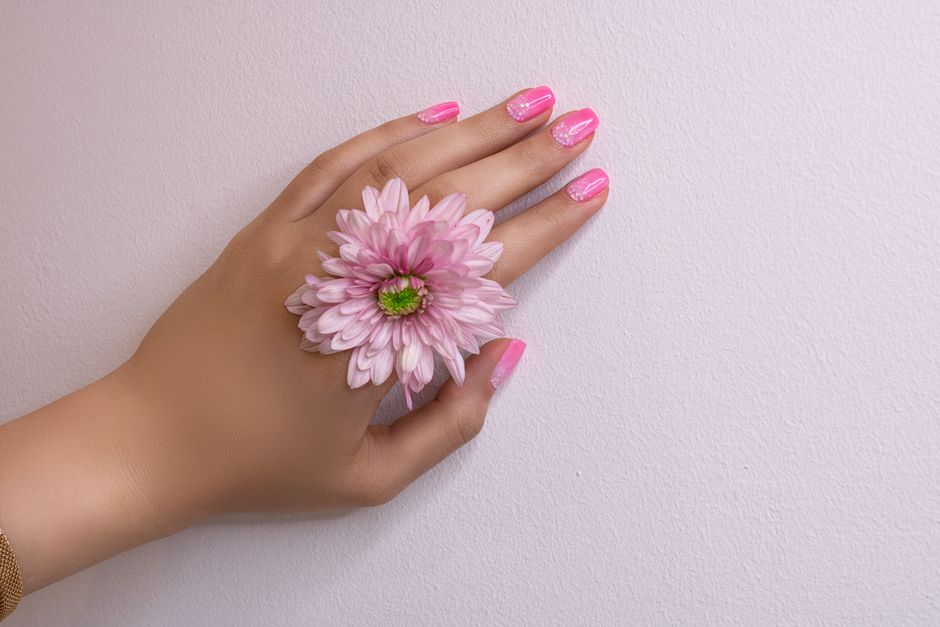
A sheer pink manicure can look lovely with the white tips of your nails still showing. The trick is choosing a color that makes that visibility feel intentional. If you have liked a pink in its bottle but disliked the pale band it created across your tips, you have met the difference between a transparent tint and a softly concealing polish. Finding your preferred balance starts with deciding how much of your natural nail line you want to see.
Decide what sheer should mean on your nails
Here, the nail line means the curved boundary where the pink nail bed meets the pale free edge. A sheer polish allows that boundary to remain visible. It may tint both areas pink, but it will not necessarily make them look like one continuous color.
That is part of its appeal. You get a light, finished look that still resembles your own nails. A visible line does not make a manicure unfinished. Your preference might be a clear pink wash, a gently blurred boundary, or something between the two.
- Clearly visible tips: Look for a transparent pink tint with little white pigment.
- A softer boundary: Consider a slightly milky pink that offers some coverage while keeping the nail underneath visible.
- An almost hidden line: You may prefer a more concealing formula, even if the bottle describes it as sheer.
These are different finishes, rather than different levels of success. Choosing the effect first saves you from repeatedly adding coats to a polish that was never meant to conceal.
Separate pink tone from white pigment
Two pale pink polishes can look similar in the bottle and behave differently on your hands. One may be a clear rosy tint. Another may contain enough white pigment to leave a cloudy veil. Both can be called soft pink, but seeing the color spread out reveals the difference.
A transparent pink keeps the natural contrast
A clear, jellylike pink lets the nail bed and tip remain distinct. It can give the whole nail a rosy cast without disguising the white edge. If you enjoy that contrast, this is a useful starting point. A stronger pink tint does not automatically mean stronger coverage; it may simply make the visible nail look pinker.
A milky pink changes the balance
A pink with some white pigment can soften the boundary, but the result depends on its coverage and your natural nails. If the nail line still shows through a pale, cloudy layer, it may become more noticeable to your eye. Choose milkiness because you like that finish, rather than assuming it will erase the line.
Descriptions such as nude, ballet, or natural cannot tell you exactly how a polish will cover. Treat shade names as a starting point and look for a sample showing the actual finish.
Choose the pink beside your own skin
You do not need a strict undertone category to choose a flattering sheer pink. Because your nail color shows through, the finished shade combines polish, nail bed, and surrounding skin. A swatch on someone else’s hand can suggest a direction, but it cannot settle the choice for you.
Compare a warmer pink with a cooler one if samples are available. A peach-leaning pink may look gentle beside warm skin, while a blue-leaning rose may give a clearer pink effect. A neutral rose is another option. None of these is reserved for a particular age or skin tone.
Look at your whole hand, not just the painted nail. Does the pink feel harmonious? Does it look chalkier than you expected? Do you like how the white tip appears through it? Those observations are more useful than trying to obey a rule about which pink you should wear.
Read a sample for coverage as well as color
A bottle concentrates the color into a thick pool, so it can make a transparent polish appear more substantial than it looks on a nail. A painted display tip helps, but its background matters. Clear plastic does not reproduce the contrast between your nail bed and white edge.
If you can view a sample against both a pale and a pink background, notice whether the difference remains visible underneath. That gives you a better sense of its transparency. When looking at photographs, favor examples where you can see the natural tips rather than judging only the pink hue.
For a salon manicure, describe the result directly: you want a sheer rose with visible white tips, or a softly milky pink that blurs the boundary. Ask to see the proposed shade on one nail before committing to the full set. This makes the conversation about the finish you actually want.
Let your natural nail line inform the choice
Your nails may not all have identical white edges. One tip might be wider, another more curved, and another slightly less bright. Transparent polish preserves those differences. You can decide that they are comfortable to see without making every nail match.
Length also affects the overall impression. A longer free edge gives you a larger pale area beneath a sheer pink. If that feels too prominent, a shorter length may suit your preferred look better. There is no need to change the shape of the attached nail to suit a polish.
If matching coverage matters more to you than transparency, a slightly more concealing pink may be the easier choice. Let the formula do that work instead of expecting a transparent shade to disguise every variation.
Judge the dried result before adding more
When trying a new shade at home, follow the label directions and assess the color once it has dried. Look in indirect daylight as well as your usual indoor lighting. Warm lamps can make a pink seem peachier, while other lighting can bring out its cooler side.
If you add another coat as directed, check what changes. Is the nail line softer, or is the entire nail simply a deeper pink? Stop when you like the effect. Repeated layers can change the character of a sheer manicure without delivering the concealment you hoped for.
Follow product safety directions, avoid getting polish on surrounding skin, and patch test new products where appropriate according to their instructions. Stop using anything that causes irritation. Persistent nail changes, discomfort, or skin problems deserve a dermatologist’s advice rather than another layer of polish.
Remember the finish you enjoy
Once you find a result you like, remember its qualities: warm or cool pink, transparent or softly milky, clearly visible tips or a gently blurred line. That description will help you choose again even when shade names differ.
The right sheer pink lets you enjoy the appearance of your nails at an ordinary glance. When the color and the visible nail line feel good together, you have found a finish worth keeping.