
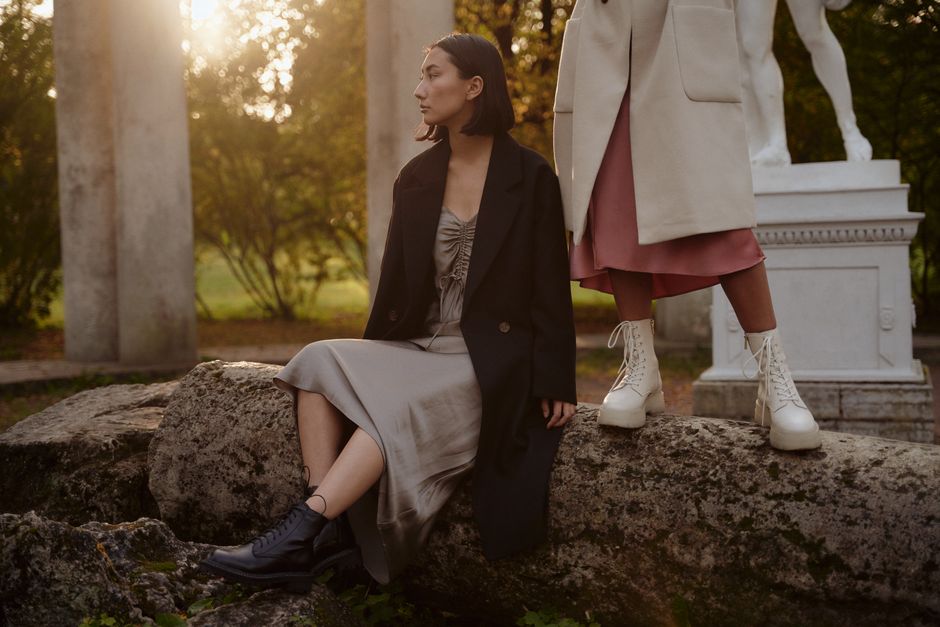
A dressy coat earns its place the moment you step outside in an outfit you have taken care to put together. It should feel at home over your evening clothes, keep you comfortable on the journey, and come off without a struggle at the door. Choosing one becomes easier when you think about the whole evening: what you are wearing underneath, how far you will walk, and where the coat will go once you arrive. The best choice brings those practical needs together with a shape and finish you enjoy wearing.
Begin with the evening you actually have planned
A restaurant dinner with a short walk from the car asks something different from a theater visit involving public transport and an outdoor queue. Before considering color or decorative details, picture the coldest and most exposed part of your evening. A beautiful coat that leaves you shivering will be difficult to enjoy, however well it suits the dress.
Think about the destination, too. At a relaxed dinner, a cleanly tailored coat can provide all the polish you need. For a more formal reception, a longer, quieter silhouette may sit more naturally with the clothes beneath it. You do not need an entirely separate outerwear wardrobe for every invitation; look for the degree of formality that fits your usual plans.
Look for a composed shape
Dressy outerwear often gets its character from restraint. An even hem, a collar that settles neatly, and a front that hangs smoothly can make more difference than elaborate decoration. Look at the coat from the side as well as the front. If the fabric collapses around the fastening or the back pulls upward, the overall shape may lose its intended ease.
A straight coat for flexible dressing
A straight or gently shaped coat works well when your evening wardrobe includes both dresses and trousers. It creates a continuous outer line without requiring the waist of every outfit to sit in exactly the same place. Try it closed and open: both views should feel deliberate, since you may wear it differently during the journey and on arrival.
A defined waist for a more shaped outline
A fitted or softly belted coat can feel elegant over a relatively smooth outfit. Check that its waist shaping agrees with the clothes underneath. If a dress has a raised seam or a substantial tie, an outer belt may bunch the fabric. Choose the version that settles comfortably rather than tightening the belt to force everything into place.
Judge the hem with your outfit on
There is no single coat length that makes every evening outfit work. What matters is the relationship between the outer hem and the clothing you can see beneath it. Bring a likely outfit to the fitting room, or recreate its length and volume as closely as you can. A small section of skirt showing can look intentional; another combination may feel interrupted at an awkward point.
With a knee-length dress, a coat that finishes near or below the dress hem often creates a calm outline. With a longer dress, let enough of the skirt show to make the difference in length clear, or explore a coat that covers it. Neither option needs to follow a rigid rule. Step back from the mirror and look at the complete shape, including your shoes.
A full skirt needs room to fall beneath the coat without being squeezed into folds. A narrow dress usually offers more flexibility, while wide evening trousers benefit from a coat hem that moves freely around your legs. Walk and turn before deciding. The way the layers move together can reveal more than a still photograph.
Choose fabric for both finish and comfort
A smooth, matte surface can look particularly refined, especially when your outfit already includes shine or embellishment. A softly textured fabric can add interest to simpler clothes. Velvet offers a richer surface, but consider whether it suits the weather and how much handling the coat will receive during the evening.
Feel the fabric rather than relying on its appearance alone. Consider its weight, flexibility, and how it feels at the neck and wrists. A substantial coat may be welcome outdoors but tiring to carry through a crowded venue. A lighter decorative coat may be pleasant for a mild evening yet insufficient for a long wait outside.
Inspect the lining as part of the choice. It should lie smoothly and allow the coat to slide over your clothes without catching. Run your hand gently along the inside seams and look for puckering. If your outfit has beads, sequins, or a delicate surface, try the layers together carefully and stop if anything snags.
Make color work with your evening wardrobe
Start with the colors you reach for when dressing up. Black can be useful if it belongs naturally with those clothes, but deep navy, charcoal, soft taupe, or a rich jewel tone may be just as versatile for you. A dressy coat does not need to disappear; it needs to feel connected to what you enjoy wearing.
If you often choose patterned or embellished outfits, a solid coat gives them breathing room. If your evening clothes are mostly simple, a distinctive coat color can carry the interest. Hold the coat near your face in natural light when possible, then check it under indoor lighting. Choose a shade you like in both settings, especially if the collar sits close to your face.
Check the details that affect arrival and departure
Fasten the coat over the actual thickness of your evening clothes. The front should close without strain, and you should be able to reach forward comfortably. Check that cuffs do not press bracelets painfully into your wrists and that the collar does not push against earrings. These small interactions become noticeable when you are already managing a bag and a doorway.
Decorative buttons and trim deserve a close look. Raised edges can catch delicate fabric, while heavy ornament may make the front hang unevenly. A concealed fastening or simple button can be a useful choice when you want the coat to accompany several different outfits.
- Try the pockets: check that they are comfortable to reach and do not gape when the coat is closed.
- Use the fastening: make sure you can manage it easily without needing to study it.
- Carry your evening bag: see whether the handle or strap catches against buttons or trim.
- Practice taking it off: the lining should release smoothly from your sleeves and shoulders.
Give the final choice a real-life rehearsal
Before committing, wear the coat with an evening outfit and the shoes you expect to use. Walk through a doorway, sit briefly, and lift the bag you will carry. If the coat only looks right while you stand perfectly still, keep looking. Small tailoring adjustments may help with sleeve length, but ask what is feasible before assuming a difficult fit can be changed.
Finally, imagine reaching for it when you are nearly ready to leave. A well-chosen dressy coat should make that last decision easy. It closes comfortably, sits well over your clothes, and suits the journey ahead. When those things are settled, you can spend less time adjusting your outer layer and more time enjoying the evening you dressed for.